Clear Sky Science · en
Success rates of American clinical oncology trials by geographic factors
Why the Place of a Cancer Trial Matters
Cancer clinical trials test new treatments that may become tomorrow’s standard care. But these studies don’t happen everywhere—most are clustered at certain hospitals and cities. This paper asks a deceptively simple question with big implications: does where a trial is run, and how widely it is spread across the country, change its chances of success? The authors sifted through tens of thousands of U.S. cancer trials to see how geography, local income, and access to cancer specialists relate to whether trials meet their goals.
Putting the Puzzle Pieces Together
To tackle this question, the researchers built a large integrated dataset from six different sources. They started with more than 23,000 completed cancer trials and narrowed this to 15,658 that had clear outcomes and usable U.S. ZIP codes for at least one trial site. From federal databases, they added information on local household income, poverty, and population, the number of oncologists in each ZIP code, how rural or urban each county is, and an index that scores neighborhood disadvantage. 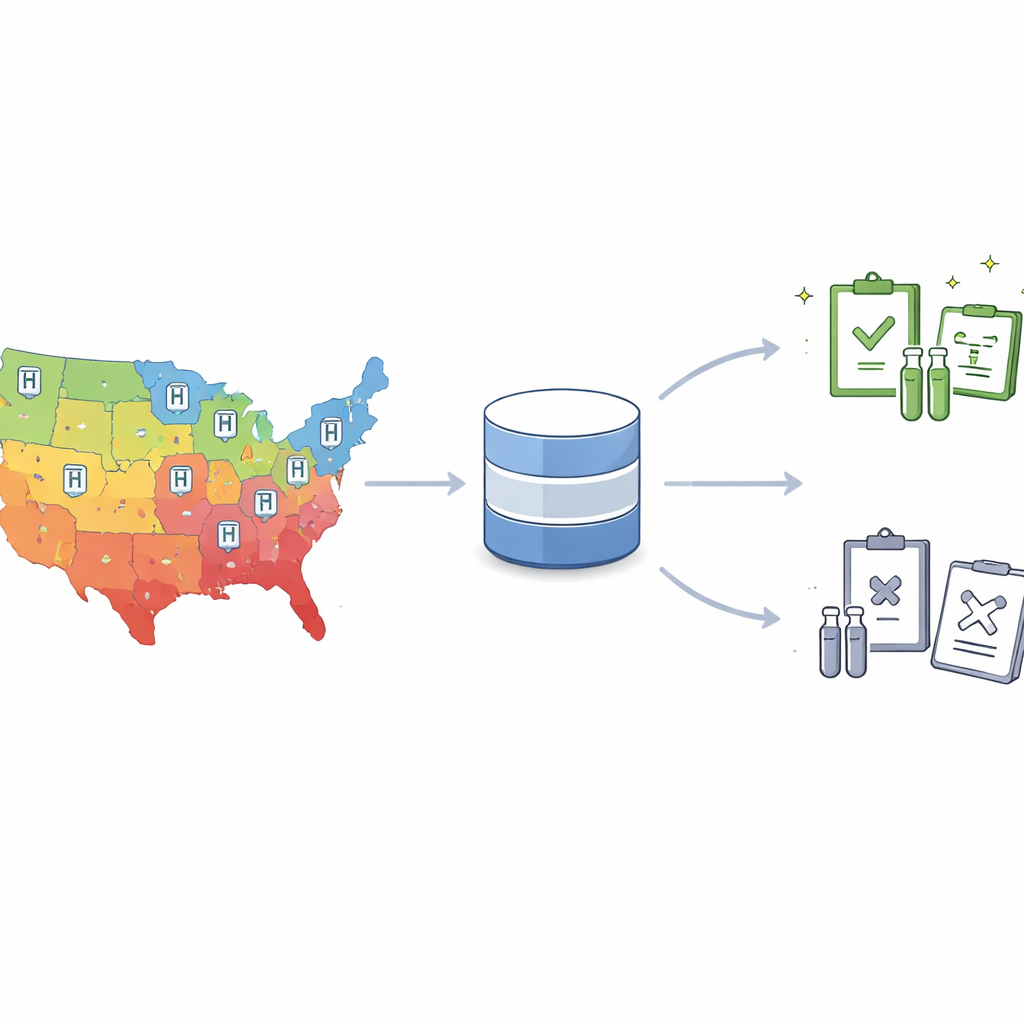
Who Gets Trials—and Who Doesn’t
The first finding is about where trials are located at all. ZIP codes that have hosted at least one oncology trial tend to be wealthier than the average ZIP code in the United States. In other words, communities with lower median incomes are underrepresented as trial sites. Yet when the authors looked at poverty rates and the share of oncologists per person, the differences between trial-hosting ZIP codes and all ZIP codes were not as stark. This suggests that income, rather than poverty alone or raw doctor counts, is a key driver of where trials take place, even before considering whether those trials succeed.
How Income and Reach Shape Success
The team then focused on success rates—whether trials met their primary goals. They found that ZIP codes in the lowest third of median income had meaningfully lower success rates than those in the middle and highest thirds. The effect was statistically strong but modest in size: richer areas had better odds of successful trials, but the gap was not enormous. Trials that took place in ZIP codes with at least one oncologist also did better than those in areas with none, again with a modest increase in odds. Another robust pattern was scale: trials that recruited patients from more ZIP codes or more states were more likely to succeed than those confined to only a few locations. This trend held across different trial phases. Interestingly, broad measures of rural versus urban counties did not show clear differences in success, hinting that rural areas can host effective trials when other support is in place.
What Drives Outcomes Beneath the Surface
To separate the influence of place from other factors, the researchers used statistical models and machine learning. They compared geographic features—income, rurality, number of oncologists, deprivation scores, and how many ZIP codes or states were involved—with non-geographic features such as trial phase, type of sponsor, treatment category, and start year. Models using only geography could predict success somewhat better than chance. Models using only non-geographic information did better, and combining both sets of features performed best, suggesting that location adds real but incremental information. In deeper regression analyses, the single most consistent geographic predictor was how many distinct states a trial enrolled from; after accounting for trial phase, sponsorship, and other details, local income and oncologist density no longer stood out on their own.
Finding New Places to Run Trials
Beyond explaining past outcomes, the authors asked whether geography could help plan better trials. They searched for ZIP codes with sizeable populations and relatively many oncologists that have never hosted an oncology trial. Many such areas exist, including some rural communities and smaller cities. These places appear to have enough cancer specialists and patients to support trials but have been overlooked so far. 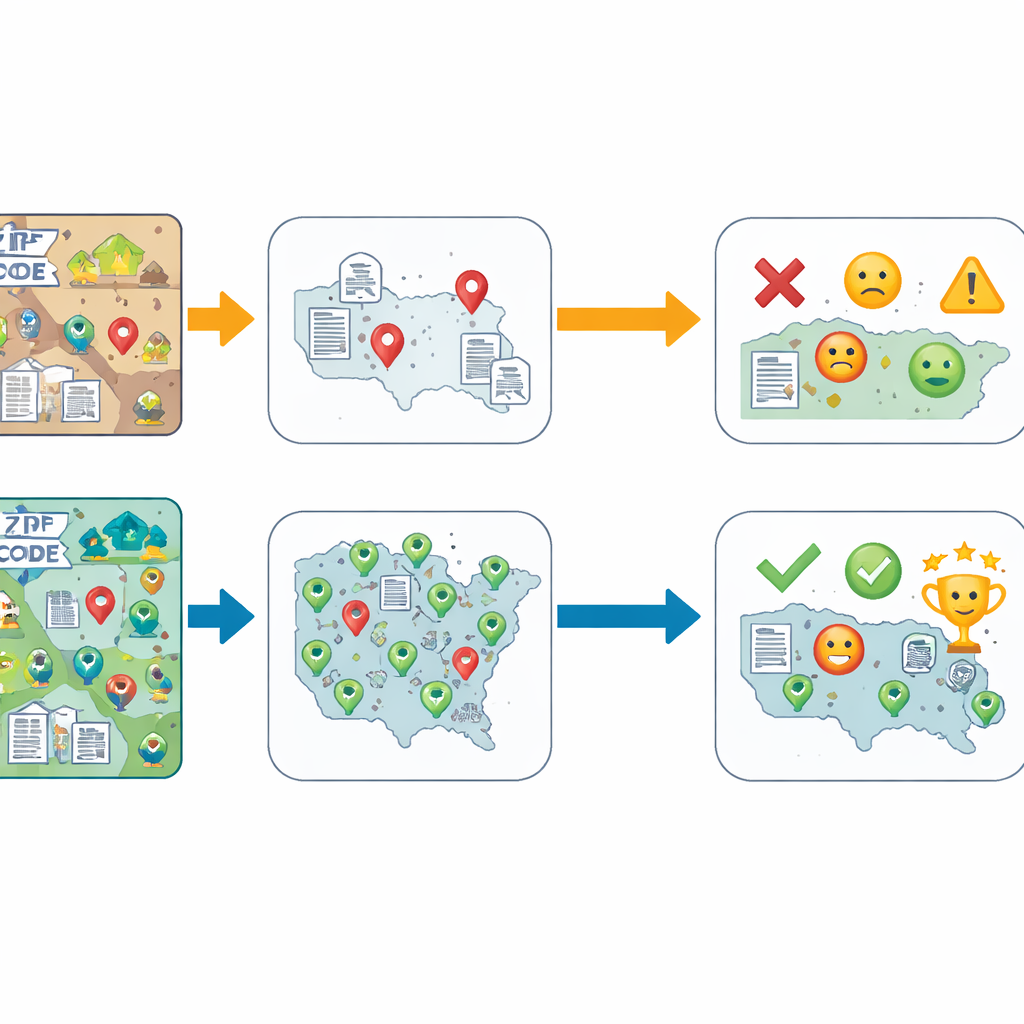
What This Means for Patients and Future Research
For a lay reader, the take-home message is that place matters for cancer trials—but not in a simple rich-versus-poor or urban-versus-rural story. Trials are more often run, and more often succeed, in middle- and higher-income areas and when they draw patients from many locations. However, the size of these effects is modest, and well-designed trials can succeed in a wide range of communities. The study shows that careful use of existing data can highlight both where trials are working well and where opportunities are being missed. By deliberately adding more sites, including underused ZIP codes with adequate cancer specialists, researchers could both improve the chances that trials succeed and make advanced treatments available to a broader slice of the U.S. population.
Citation: Patiyal, S., Schäffer, A.A. Success rates of American clinical oncology trials by geographic factors. Sci Rep 16, 8353 (2026). https://doi.org/10.1038/s41598-026-39609-x
Keywords: cancer clinical trials, geography and health, medical research access, healthcare inequality, oncology outcomes