Clear Sky Science · en
Prognostic evaluation of dirty necrosis and tumor necrosis in gastric cancers
Why some "dead" tumor tissue may be a good sign
Stomach cancer remains one of the world’s deadliest cancers, and doctors are always looking for simple features under the microscope that can hint at how a patient will do. This study explores a surprising idea: that a certain messy-looking type of dead tissue inside stomach tumors—known as "dirty necrosis"—might actually be linked to longer survival, especially when the tumor is packed with immune cells.
A closer look at dead zones inside tumors
Not all dead tissue inside a tumor is the same. Classic tumor necrosis is usually a solid, ghostly area of dead cancer cells caused by the tumor outgrowing its blood supply, and it often signals a worse outlook. Dirty necrosis, by contrast, is seen in the centers of tiny cancer glands and is mixed with flakes of dead material and large numbers of white blood cells called neutrophils. It was first described in colon cancer and has helped pathologists identify where some metastases come from. In several cancers, dirty necrosis has been tied to an aggressive immune process called NETosis, which often goes hand in hand with worse outcomes.
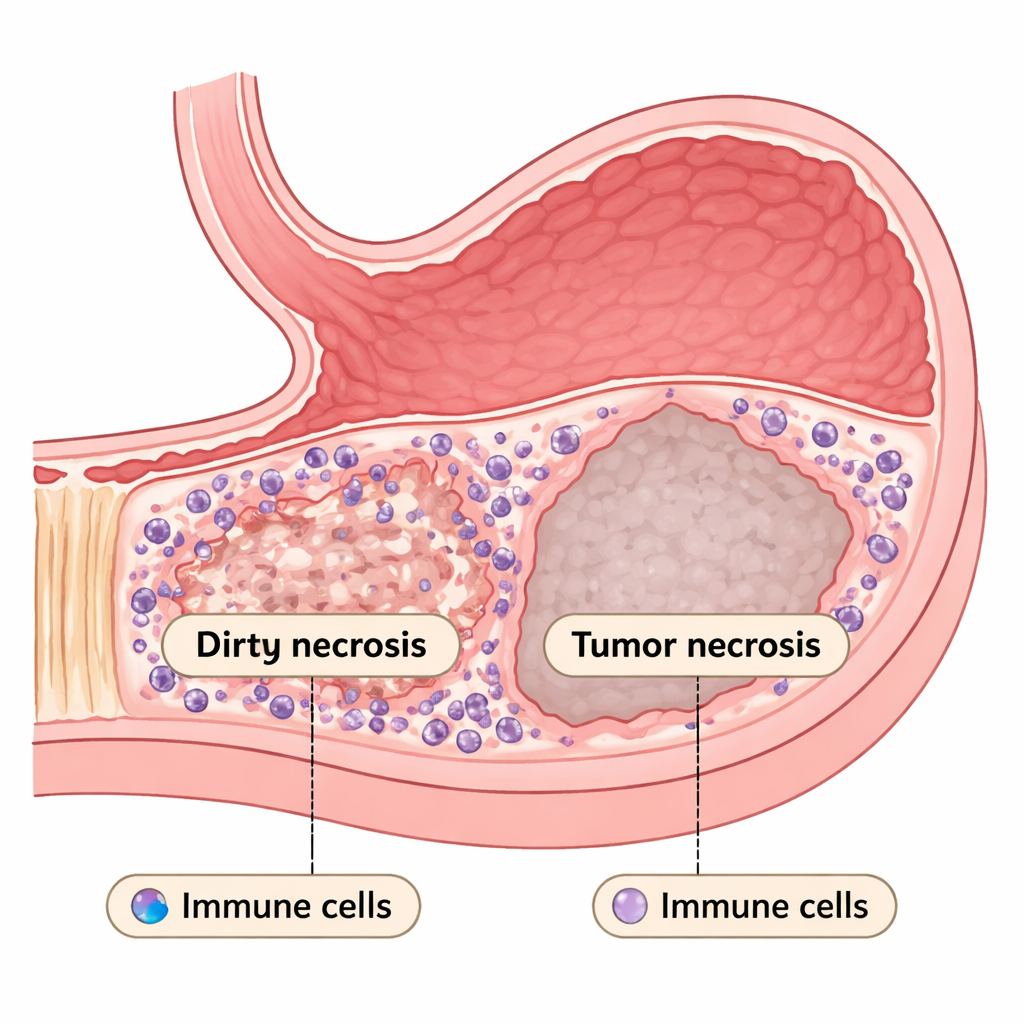
How the study was done
The researchers examined tissue from 187 people who had surgery for stomach cancer at a single medical center between 2013 and 2024. They excluded patients who had chemotherapy before surgery or had other rare tumor types. Two pathologists re‑reviewed all standard slides to record whether each tumor showed ordinary tumor necrosis, dirty necrosis, and how many immune cells—called tumor‑infiltrating lymphocytes (TILs)—were present. Dirty necrosis was graded as rare or extensive depending on how many of the cancer glands contained it, and TILs were scored as almost absent, scattered, or prominent if they filled at least a tenth of the tumor area. The team then compared these patterns with tumor size, grade, spread to lymph nodes, and how long patients lived without the cancer returning.
Dirty necrosis linked to friendlier tumor behavior
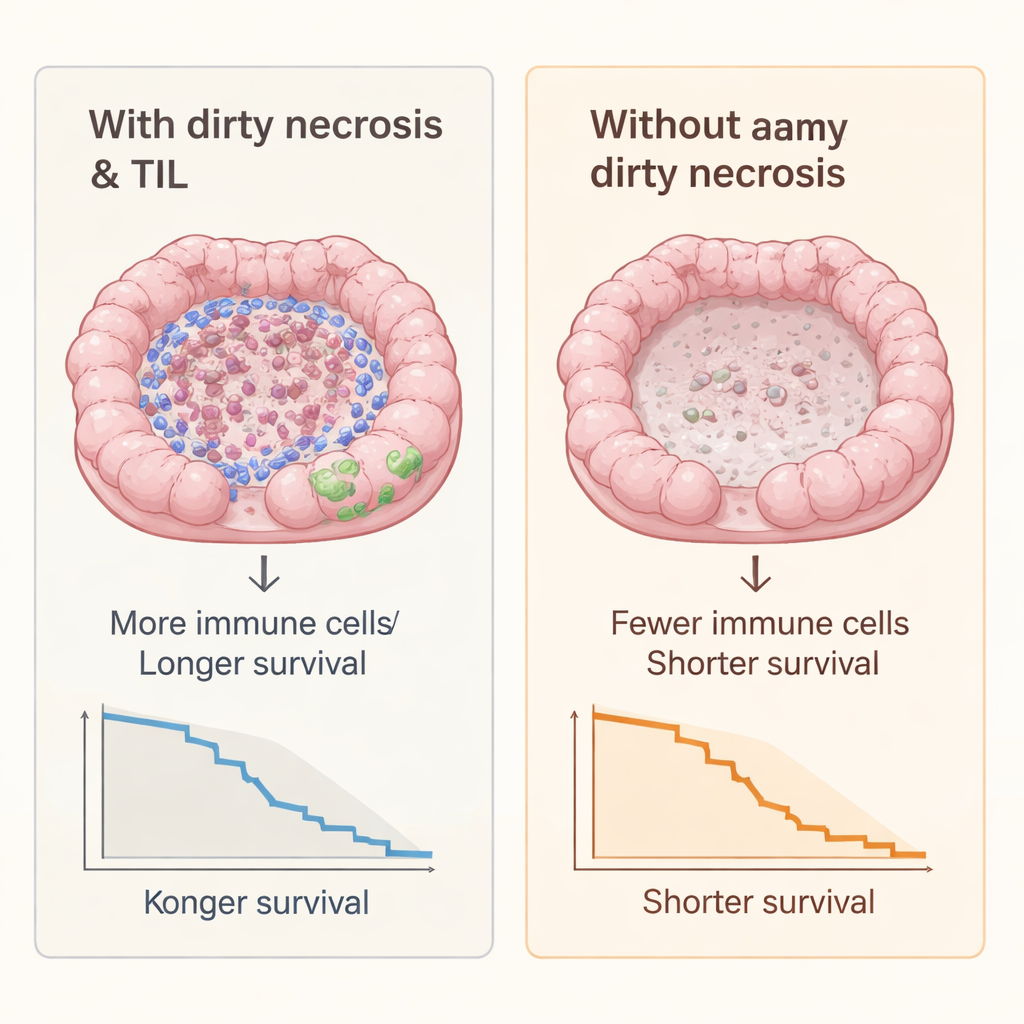
Dirty necrosis was found in almost 40% of the cases, while classic tumor necrosis appeared in fewer than 10%. Surprisingly, tumors with dirty necrosis tended to be better behaved by several measures. They were more often of non‑poorly cohesive types, had lower grade (meaning the cells looked less aggressive), involved fewer lymph nodes, showed less growth along nerves, and were more frequently packed with TILs. Patients whose tumors contained dirty necrosis had longer periods without the cancer returning and lived longer overall than those without it. When the authors repeated their analyses after excluding a particularly aggressive subtype of stomach cancer, the protective association of dirty necrosis became even clearer. In contrast, the mere presence of classic tumor necrosis did not significantly change survival chances, although it was more common in larger tumors.
Immune cells as part of the explanation
The close link between dirty necrosis and dense TILs suggests that this messy pattern may signal an active and effective immune attack on the tumor. In this study, higher levels of TILs themselves were tied to better outcomes, echoing findings from earlier research in stomach cancer and other digestive cancers. The authors propose that when dirty necrosis and abundant lymphocytes occur together, they may create a local environment that slows tumor spread, including along nerves and into lymph nodes. However, when many different factors were analyzed at once, the number of involved lymph nodes remained the single strongest predictor of outcome, underscoring how crucial the spread of cancer still is.
What this could mean for patients
This work suggests that pathologists should pay closer attention not just to whether a stomach tumor has dead tissue, but what kind. Dirty necrosis—especially when accompanied by many immune cells—may be a reassuring sign rather than a dangerous one. While more studies, including ones that directly test the underlying immune processes, are needed, these findings hint that some kinds of cell death inside tumors reflect a successful immune response rather than uncontrolled growth. For patients, this could eventually lead to more refined reports after surgery and better tailoring of treatments, particularly as immune‑based therapies become more common in stomach cancer care.
Citation: Şeker, N.S., Mülkem, O.F., Yılmaz, E. et al. Prognostic evaluation of dirty necrosis and tumor necrosis in gastric cancers. Sci Rep 16, 6376 (2026). https://doi.org/10.1038/s41598-026-39605-1
Keywords: gastric cancer, tumor necrosis, dirty necrosis, immune microenvironment, tumor-infiltrating lymphocytes