Clear Sky Science · en
Sustainable control of Phytophthora capsici in bell pepper using encapsulated Limosilactobacillus fermentum and reduced fungicide doses
Friendly Germs That Help Peppers Fight Disease
Bell peppers are a staple in kitchens around the world, but a water‑loving mold‑like organism called Phytophthora capsici can wipe out entire fields, rotting roots and stems and leaving farmers with nothing to harvest. This study explores an unexpected ally against this disease: a helpful bacterium usually found in yogurt. By packaging these “good germs” in tiny protective beads and pairing them with smaller amounts of chemical fungicide, the researchers show it is possible to protect pepper plants while cutting down on pesticide use.
A Hidden Threat in the Soil
Phytophthora capsici lives in wet soils and attacks many vegetable crops, especially peppers. Once it infects a plant, it can cause root rot, dark lesions at the base of the stem, wilting, and often plant death. Growers have long relied on chemical fungicides to keep this pathogen in check, but heavy use can pollute the environment and encourage the rise of resistant strains. The team behind this study set out to find a cleaner, longer‑lasting way to shield pepper plants by turning to biological control—using one living organism to hold another in check.
Turning a Yogurt Microbe into a Plant Bodyguard
The researchers began by collecting traditional yogurt samples and isolating dozens of strains of lactic acid bacteria, the same broad group that ferments milk and other foods. They tested each strain against the pepper‑killing pathogen in the lab. One standout strain, called GS‑15 and identified as Limosilactobacillus fermentum, cut the pathogen’s growth roughly in half when they were grown together on the same plate. Even the gases released by GS‑15 slowed the pathogen, hinting that this microbe produces a cocktail of natural defensive substances. When the team added pure lactic acid—the sour compound these bacteria often release—they saw the pathogen struggle more and more as the acid concentration rose, showing that this simple molecule is a key part of the protective effect.
Protecting the Protectors with Tiny Beads
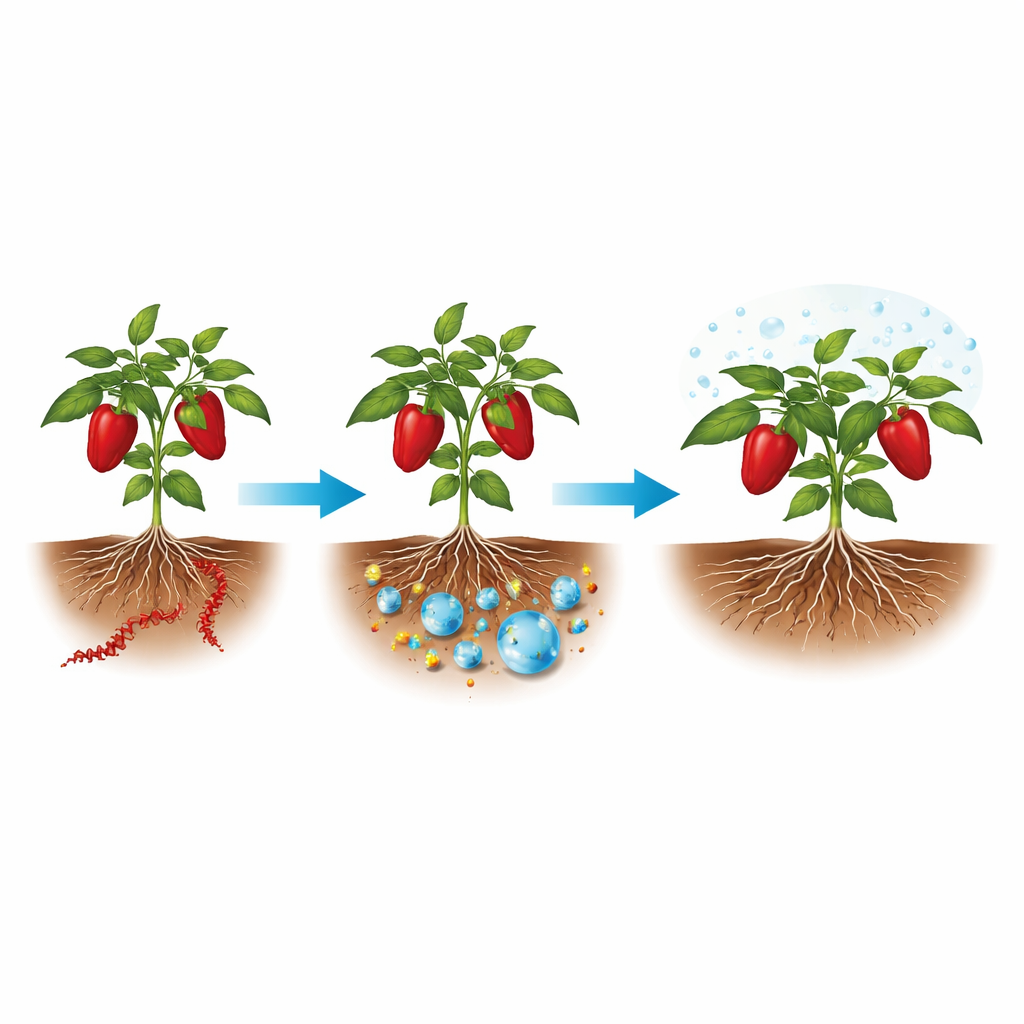
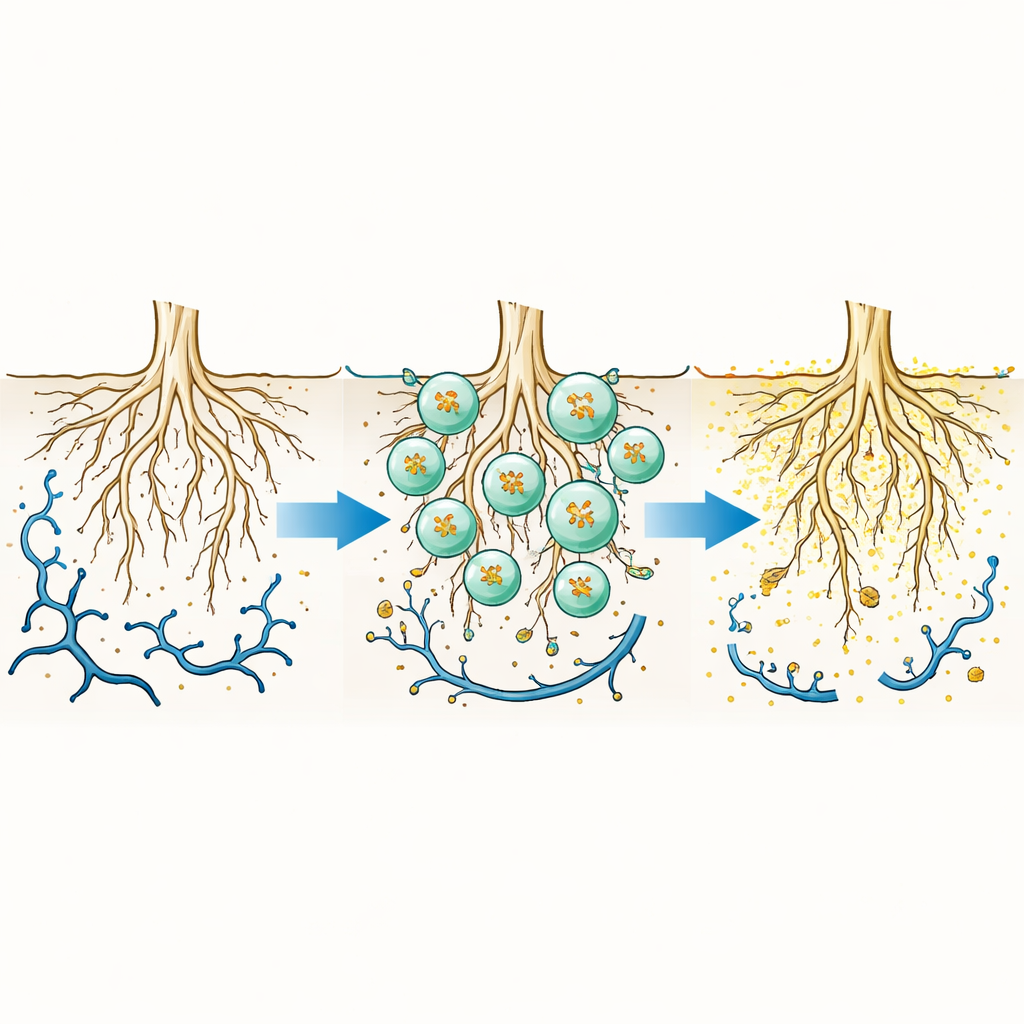
There was a catch: the standard pepper fungicide, Previcur Energy, easily killed the beneficial bacteria, making it hard to combine both tools. To solve this, the scientists trapped GS‑15 inside small beads made from alginate, a gentle gel derived from seaweed that is already used in foods and medical products. Inside these beads, the bacteria survived even when exposed to high fungicide levels. Encapsulation did more than shield them—it actually made them work better. In lab tests, the bead‑protected GS‑15 blocked about three‑fifths of the pathogen’s growth, clearly outperforming the unprotected form. This suggested that the beads allowed more bacteria to stay alive and active near the pathogen.
Greenhouse Trials: Healthier Plants with Less Chemical Help
Next, the team moved into greenhouse experiments with three commercial bell pepper varieties. When plants were challenged with the pathogen alone, they became stunted, with dark, rotting roots and stems and high levels of disease. Treating plants with full‑strength fungicide improved survival but also slightly reduced growth compared with healthy, uninoculated plants. In contrast, adding the GS‑15 bacteria one week before infection sharply lowered disease levels and helped roots and shoots stay closer to normal size. The strongest results came when the researchers used alginate‑encapsulated GS‑15, either by itself or together with only half the usual fungicide dose. In every pepper variety, this combination drove disease incidence down to about one in ten plants or less; in many cases, disease was completely prevented, and plant biomass recovered to near‑healthy levels.
What This Could Mean for Farmers and Food
This work shows that a probiotic bacterium originally known for supporting human health can also serve as a powerful bodyguard for crops. By trapping Limosilactobacillus fermentum GS‑15 in alginate beads and pairing it with reduced amounts of fungicide, the researchers achieved better control of a devastating pepper disease than with full‑dose chemicals alone. For non‑specialists, the takeaway is simple: tiny friendly microbes from everyday foods could help farmers grow peppers more sustainably, using fewer synthetic pesticides while keeping yields high. With further testing in real fields and work on large‑scale production, such microbe‑based treatments could become part of an eco‑friendlier toolbox for protecting many crops from soil‑borne diseases.
Citation: Abdollahi, M., Rahaiee, S., Nami, Y. et al. Sustainable control of Phytophthora capsici in bell pepper using encapsulated Limosilactobacillus fermentum and reduced fungicide doses. Sci Rep 16, 9262 (2026). https://doi.org/10.1038/s41598-026-39603-3
Keywords: biocontrol, bell pepper disease, lactic acid bacteria, sustainable agriculture, plant probiotics