Clear Sky Science · en
Sisal fiber degradation treatment by different methods for cement composite materials
Stronger, Greener Building Blocks
Concrete is everywhere around us, but it has a hidden weakness: it cracks easily. Engineers have begun adding plant fibers, like those from the sisal plant, to help hold concrete together and make it more eco-friendly. However, these natural fibers can slowly rot inside the harsh, alkaline environment of cement. This study looks at simple ways to protect sisal fibers so they can last longer inside concrete, leading to stronger, more durable, and more sustainable buildings.
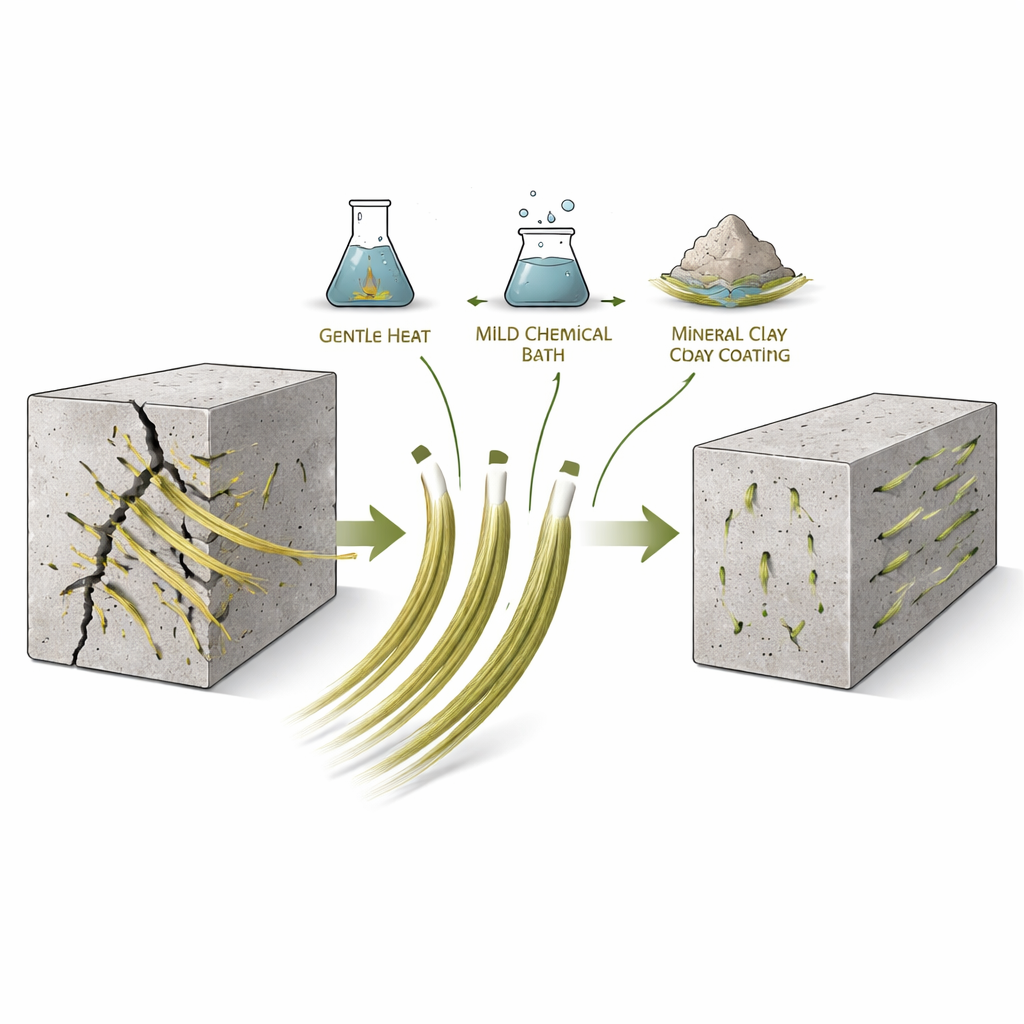
Why Plant Fibers Matter for Concrete
Concrete is strong when squeezed but weak when pulled or bent, which is why cracks appear. Sisal fibers, extracted from the leaves of the Agave-sisalana plant, act like tiny reinforcing threads that bridge these cracks and help the material bend rather than suddenly break. They also come from a renewable, low-cost source, making them attractive for countries seeking both affordable and greener construction materials. The catch is that, over time, the cement environment and trapped moisture attack key components of the fibers, causing them to stiffen, swell, and weaken. If the fibers degrade, the concrete gradually loses the benefits they were meant to provide.
Three Simple Ways to Protect the Fibers
The researchers evaluated three treatment routes that builders could realistically use: heat, a mild alkaline wash, and a thin mineral coating. First, they gently heated sisal fibers in an oven at either 150 °C or 200 °C, which can dry the fibers and change their surface. Second, they soaked fibers in sodium hydroxide solutions at 5% or 10% strength, a common cleaning method that strips away surface layers. Third, they coated fibers with a slurry made from calcined bentonite, a type of clay that reacts with cement. After treatment, the fibers were mixed into mortar at two different amounts, then tested for how much water they absorbed, how well they survived repeated wetting and drying, and how much they boosted strength.
Cleaner, Drier Fibers that Last Longer
At the microscopic and chemical level, all three treatments scrubbed away unwanted surface materials such as waxes, lignin, and other impurities that are most vulnerable to breakdown inside cement. Heat and alkaline soaking reduced these components, while the clay coating not only removed them but also left a protective mineral layer on the fiber surface. Treated fibers absorbed much less water than raw fibers: heating at 150 °C and washing with 5% sodium hydroxide cut water uptake by roughly a third, and the clay coating reduced it by about 60%. In aging tests that cycled the fibers through hot water wetting and drying ten times, fibers treated at 150 °C, treated with 5% sodium hydroxide, or coated with calcined bentonite all carried higher loads before breaking than untreated fibers, with the clay-coated fibers performing best. Importantly, very harsh treatment—such as 10% sodium hydroxide or too much heat—began to damage the fibers’ inner structure.
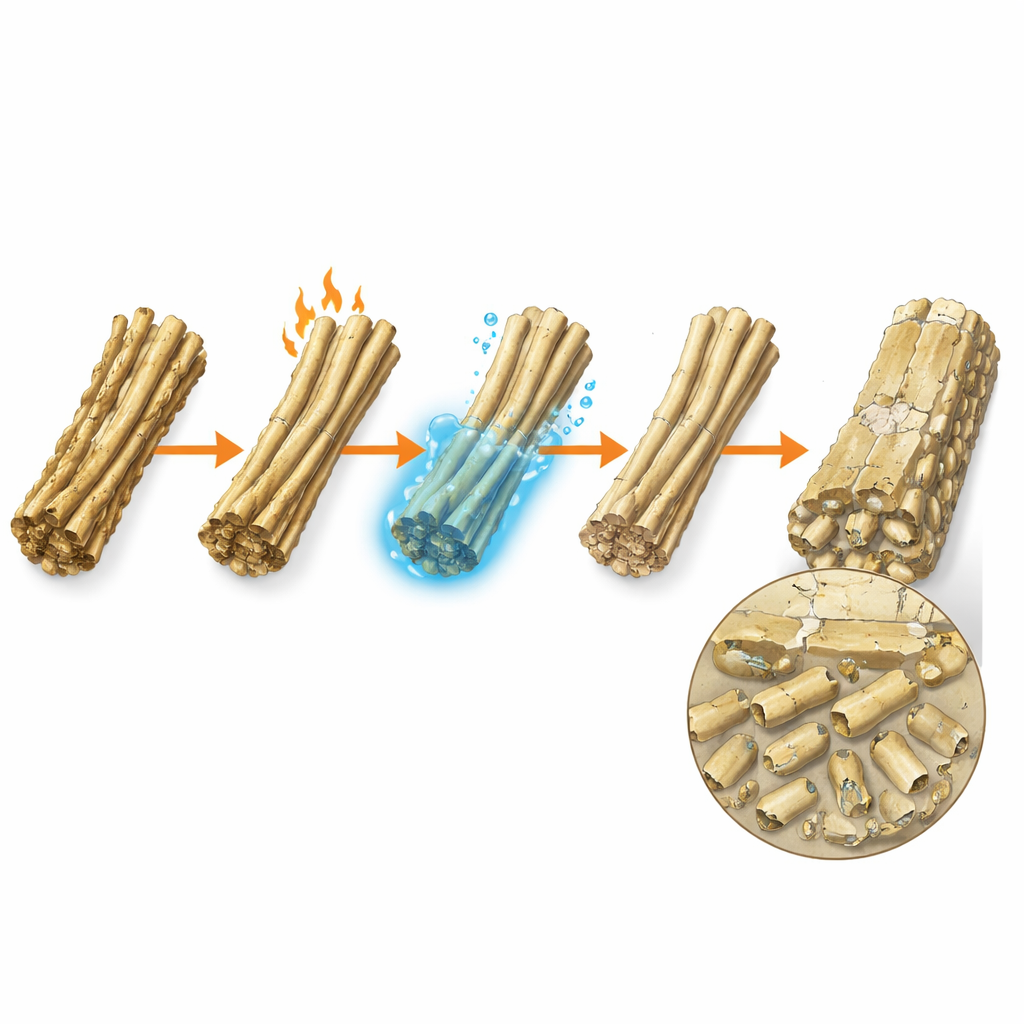
How Treated Fibers Change the Mortar
When the researchers added the treated fibers to mortar, they saw clear changes in the material’s behavior. Because sisal is lighter than sand and cement, any fiber addition reduced the fresh density of the mix, making it slightly lighter. More importantly, mortars with treated fibers showed higher compressive and bending strength than mortars with untreated fibers and even outperformed a fiber-free control mix at the right dosage. The best results came from fibers heated at 150 °C and those coated with calcined bentonite, both of which boosted 28-day compressive strength by about 23% over the control. However, when the fiber content was doubled, the strength started to drop, suggesting that there is an optimal amount beyond which the fibers interfere with how tightly the cement and sand pack together.
What This Means for Future Buildings
The study shows that relatively simple treatments—modest heating, a mild alkaline bath, or a thin clay coating—can make natural sisal fibers much more durable inside cement-based materials. In everyday terms, these treatments clean and armor the fibers so they soak up less water, resist heat and aging, and form a stronger bond with the surrounding mortar. With well-chosen treatment and dosage, builders can create lighter, tougher, and more sustainable concrete elements that make better use of an abundant plant resource while reducing reliance on energy-intensive materials.
Citation: Fode, T.A., Jande, Y.A.C., Kivevele, T. et al. Sisal fiber degradation treatment by different methods for cement composite materials. Sci Rep 16, 9174 (2026). https://doi.org/10.1038/s41598-026-39599-w
Keywords: sisal fiber concrete, natural fiber reinforcement, cement composites, bentonite treatment, fiber durability