Clear Sky Science · en
Enhancement of yield and fruit quality of strawberry under deficit fertigation via sodium hydrosulfide and L-cysteine
Why better strawberries matter
Strawberries are more than just a sweet treat—they are a major source of vitamins and natural plant compounds that support human health. Yet modern greenhouse growers often struggle to save water and fertilizer without sacrificing yield or flavor. This study explores whether two sulfur-based sprays, sodium hydrosulfide and the amino acid L-cysteine, can help strawberry plants cope with reduced watering and feeding, keeping berries plentiful, tasty, and nutritious even when resources are tight. 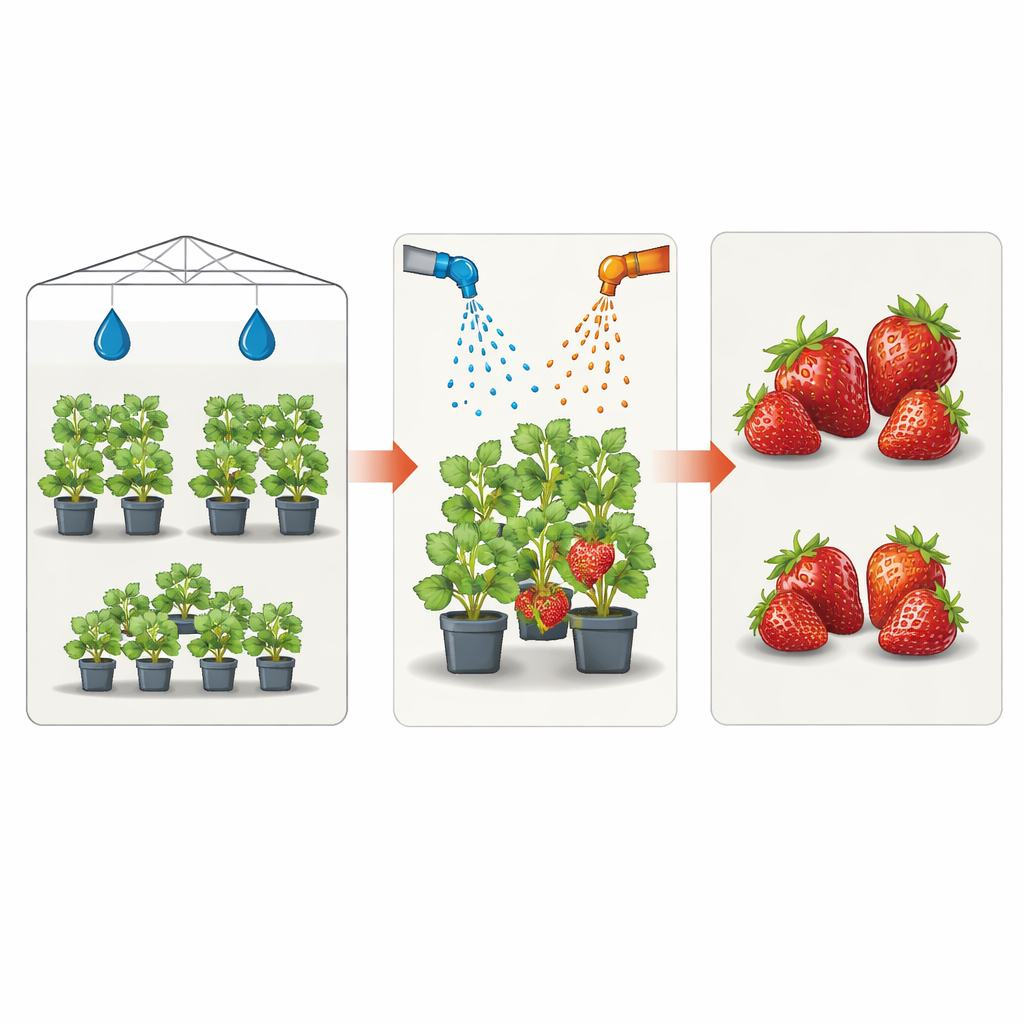
Growing strawberries with less water and fertilizer
The researchers worked with a popular commercial strawberry variety called Sabrina, grown in pots filled with a soilless mix inside a carefully controlled greenhouse. All plants received the same balanced nutrient solution, but in two different volumes: a normal amount and a reduced amount, mimicking a moderate cutback in both water and nutrients. On top of this, plants were sprayed weekly on their leaves with either sodium hydrosulfide, L-cysteine, or plain water. By designing the experiment this way, the team could see how each spray interacted with the fertigation level to influence yield, taste, and nutritional quality of the fruit.
How special sulfur sprays helped stressed plants
Cutting back fertigation alone clearly stressed the plants, lowering yield and affecting fruit traits. However, adding the sulfur-based sprays changed the picture. Both sodium hydrosulfide and L-cysteine boosted the number and weight of fruits per plant compared with unsprayed controls under the same reduced watering schedule. Sodium hydrosulfide at the higher dose generally gave the strongest yield response, even under normal fertigation, showing that the spray not only helped plants survive stress but could also enhance productivity in good conditions. Overall, treated plants turned limited water and nutrients into more marketable fruit than untreated plants could manage.
Making berries sweeter, tangier, and more nutritious
Flavor and nutrition improved alongside yield. The scientists measured sugars (as total soluble solids), acidity, and juice pH—key factors that shape how strawberries taste. Under reduced fertigation, sulfur-treated plants produced berries with higher sugar content and balanced acidity, traits often associated with better flavor. At the same time, the fruits accumulated more health-promoting compounds: total phenolics, flavonoids, anthocyanins (the red pigments), and vitamin C all increased with the sprays, especially at higher doses. L-cysteine was particularly effective at driving up certain antioxidant compounds, while sodium hydrosulfide excelled at boosting vitamin C under many conditions. 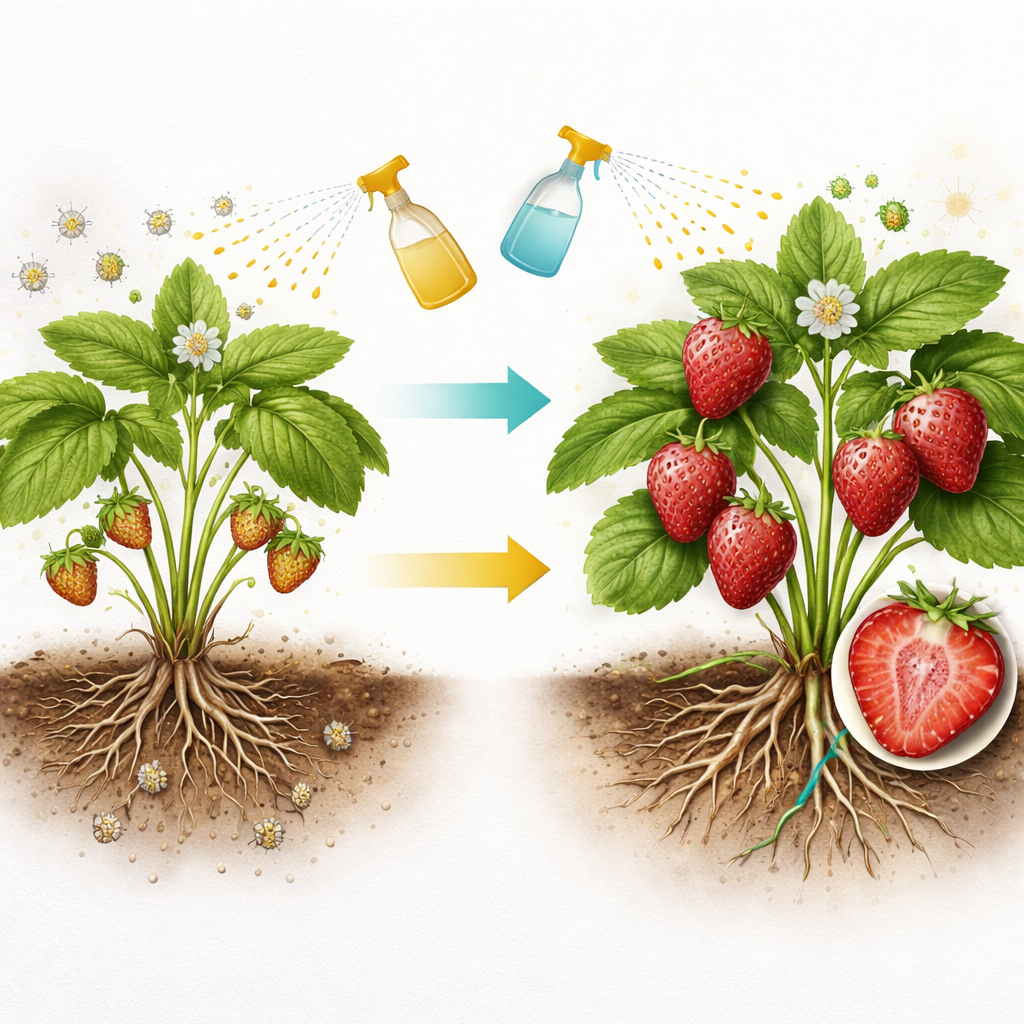
Strengthening the plant’s inner defense system
To understand why these sprays worked, the team looked inside the fruit at enzymes that protect cells from damage caused by reactive oxygen molecules—byproducts that build up under stress. Activities of key defense enzymes, including phenylalanine ammonia lyase, catalase, and ascorbate peroxidase, all rose with sulfur treatments. These enzymes help build protective pigments and detoxify harmful molecules, preserving cell membranes and photosynthetic machinery. The pattern of responses suggested that sodium hydrosulfide, a source of hydrogen sulfide gas within plant tissues, and L-cysteine, a building block for important sulfur-containing molecules, both acted as signals that switched on a coordinated protective program rather than simply changing water status.
What this means for future strawberries
In plain terms, the study shows that carefully applied sulfur-based leaf sprays can help greenhouse strawberries stay productive and nutritious even when growers use less water and fertilizer. By priming the plants’ own defense and repair systems, sodium hydrosulfide and L-cysteine allowed Sabrina strawberries to yield more, taste better, and pack in more antioxidants and vitamin C under moderate stress. Although longer-term and field-scale trials are still needed, these results point to practical, eco-friendly tools that could help growers save resources while maintaining or even improving fruit quality, ultimately delivering better strawberries to consumers with a smaller environmental footprint.
Citation: Abdulazeez, A.M., Hassanpour, H. & Manda-Hakki, K. Enhancement of yield and fruit quality of strawberry under deficit fertigation via sodium hydrosulfide and L-cysteine. Sci Rep 16, 8011 (2026). https://doi.org/10.1038/s41598-026-39598-x
Keywords: strawberry cultivation, deficit irrigation, antioxidants, sulfur-based biostimulants, greenhouse horticulture