Clear Sky Science · en
Strengthening human infrastructure for smart farming through competency-based assessment of extension agents in precision agriculture
Why Smarter Farming Needs Skilled People
As farms adopt drones, sensors, and GPS-guided tractors, it is easy to focus on the gadgets and forget the people who make them useful. This article looks at a less visible but crucial part of smart farming: the county and regional advisors, known as Extension agents, who help farmers understand and use precision agriculture tools. By examining which skills these agents have—and which they lack—the study shows how investing in human know-how can speed up the shift to more productive and sustainable agriculture.
From Traditional Fields to Data-Driven Farms
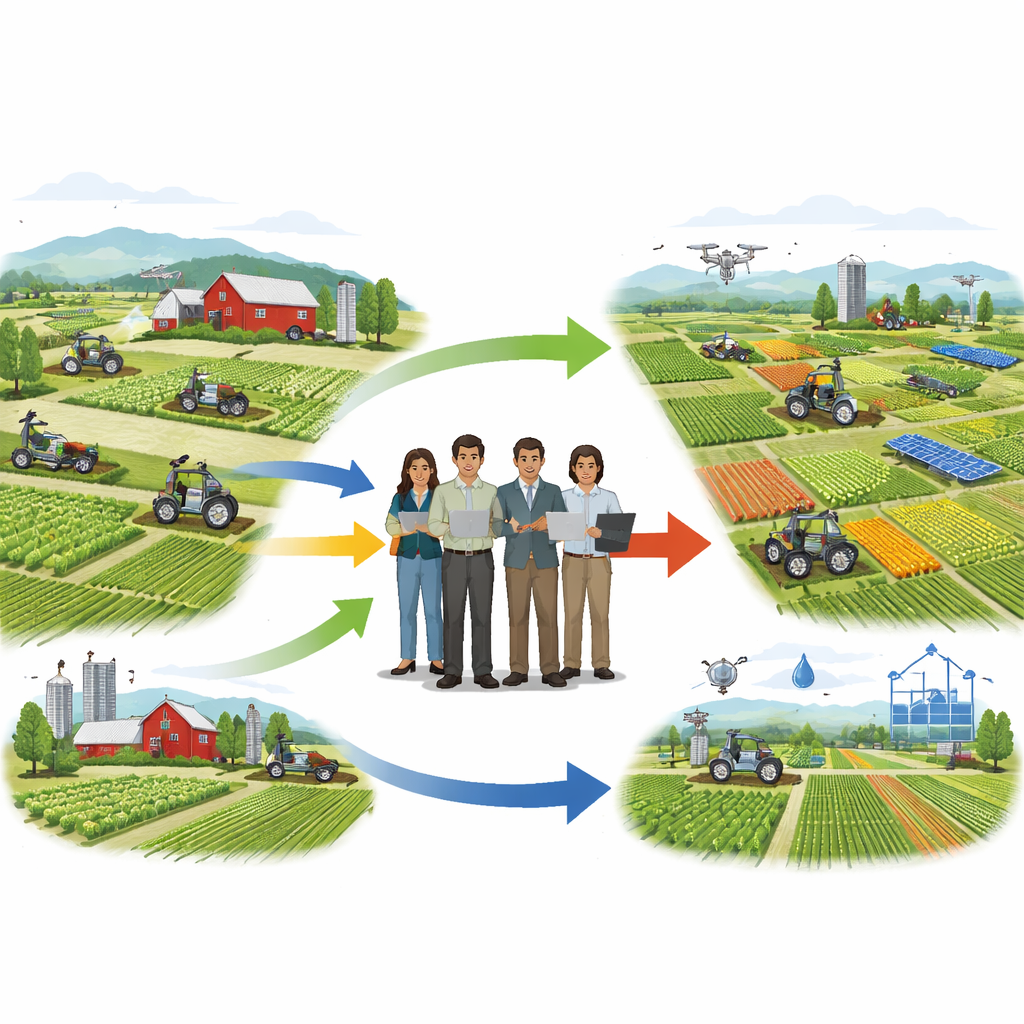
Modern “smart farming” builds on precision agriculture, an approach that gathers detailed information about soils, crops, and animals to guide day-to-day decisions. Instead of treating a whole field the same, farmers can adjust water, fertilizer, and pesticides to the needs of each area, boosting yields while cutting waste and pollution. In the United States, this change has moved fastest on large row-crop farms, but many regions—such as parts of Georgia—are still behind. To close this gap, farmers rely on trusted guides: Extension agents who translate university research into practical advice tailored to local crops and conditions.
The People Connecting Science and Soil
Extension agents act as “change agents,” sitting between researchers, technology companies, and farmers. They introduce new tools, explain how they work, and help farmers judge whether an investment makes sense. Yet until now, little work has been done to spell out exactly which abilities these agents need to support precision agriculture, or how well their organizations help them build those abilities. This study focuses on 13 core skills, ranging from hands-on equipment operation and digital literacy to problem-solving, communication, and knowledge of local crops. The authors surveyed more than 80 agriculture and natural resource agents across Georgia to see how important each skill is for serving farmers and how much support the agents feel they receive to develop it.
Where Skill Gaps Are Holding Back Smart Farming
The results reveal clear gaps between what agents believe farmers need and the training their organizations provide. The largest shortfall is in equipment operation: agents say farmers heavily depend on them for help with complex tools like variable-rate sprayers and sensor systems, yet they feel underprepared and under-supported to master this hardware themselves. Two other areas—strategy execution and problem-solving—also stand out. Agents are expected to help farmers turn broad ideas about smart farming into concrete plans and to troubleshoot when things go wrong in the field, but they report limited backing to strengthen these abilities. By contrast, some more technical or background skills, such as basic awareness of precision agriculture and general innovativeness, appear well supported; many agents feel their organizations already emphasize these topics heavily.
Different Regions, Similar Needs
Because Georgia’s agriculture varies from poultry-dominated farms in the north to diverse row crops and specialty plants in the south, the researchers also looked for regional differences. Southern agents tended to rate many skills—and the need for support—a bit higher, likely reflecting the broader range of crops and equipment they encounter. However, once stricter statistical checks were applied, these regional contrasts were small. The overall picture is that Extension agents across the state share a similar profile: they value all 13 competencies, recognize important gaps in several of them, and particularly need more help with operating equipment, putting strategies into action, solving complex on-farm problems, and deepening their knowledge of local commodities.
Turning Insight into Better Support
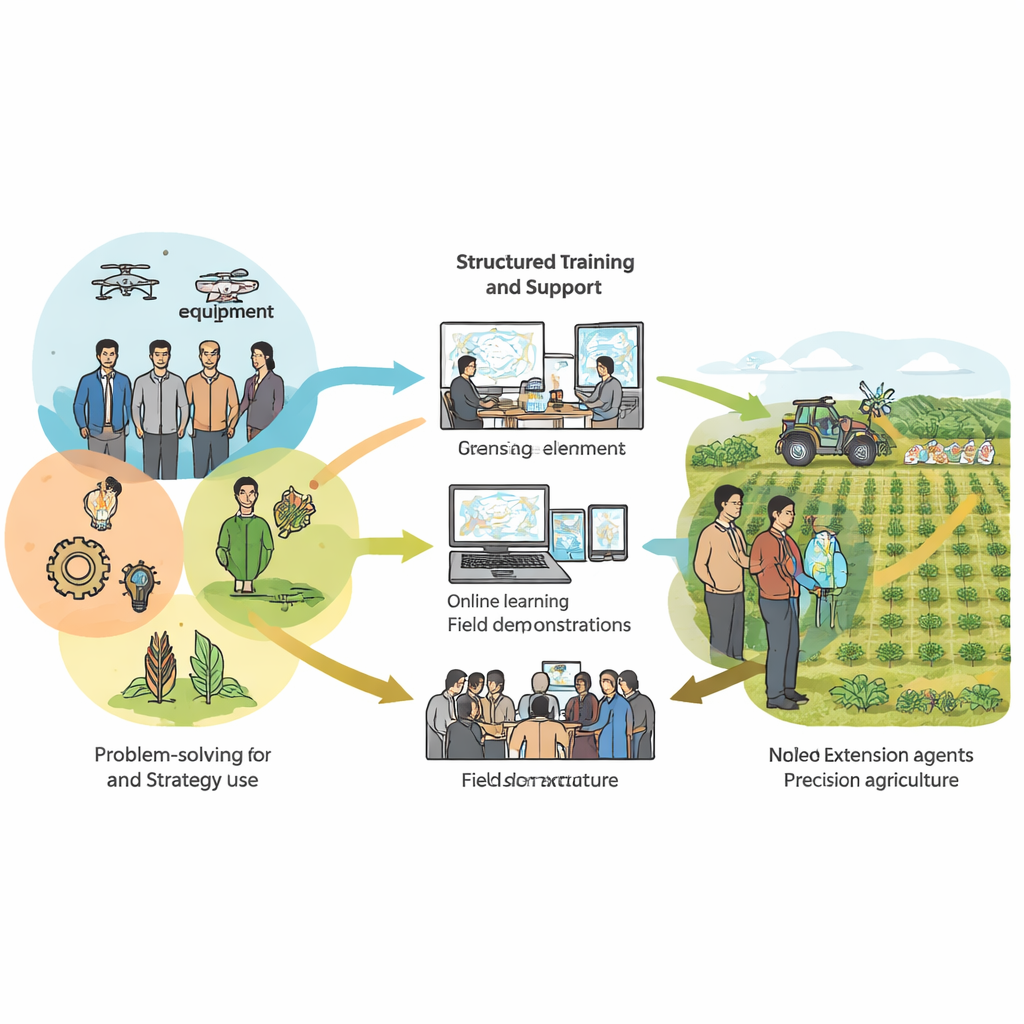
The authors conclude that smart farming will not reach its full promise through technology alone; it also requires targeted investment in the people who help farmers use that technology well. They recommend that Extension systems take stock of existing training, shift resources toward the most pressing gaps, and design programs that blend technical skills with problem-solving, communication, and region-specific crop knowledge. By strengthening Extension agents in these areas, organizations can better guide farmers through the rapid evolution of precision tools, helping them adopt practices that boost productivity, cut environmental impacts, and move agriculture toward a more sustainable future.
Citation: Lee, CL., Orton, G. & Oliveira, L. Strengthening human infrastructure for smart farming through competency-based assessment of extension agents in precision agriculture. Sci Rep 16, 9048 (2026). https://doi.org/10.1038/s41598-026-39596-z
Keywords: precision agriculture, extension agents, smart farming, capacity building, sustainable agriculture