Clear Sky Science · en
Home gardening and fruit and vegetable intake in rural settlements in Northeast Hungary
Why Growing Your Own Food Matters
For many people, eating enough fruits and vegetables each day is a struggle, yet it is one of the simplest ways to protect long-term health. In Hungary, where produce consumption is among the lowest in the European Union, this shortfall contributes to high rates of heart disease, diabetes, and other chronic illnesses. This study asks a practical question with big implications: could something as down-to-earth as keeping a home garden help people in rural areas eat more fruits and vegetables—and come closer to a healthier diet?
Life in Two Small Towns
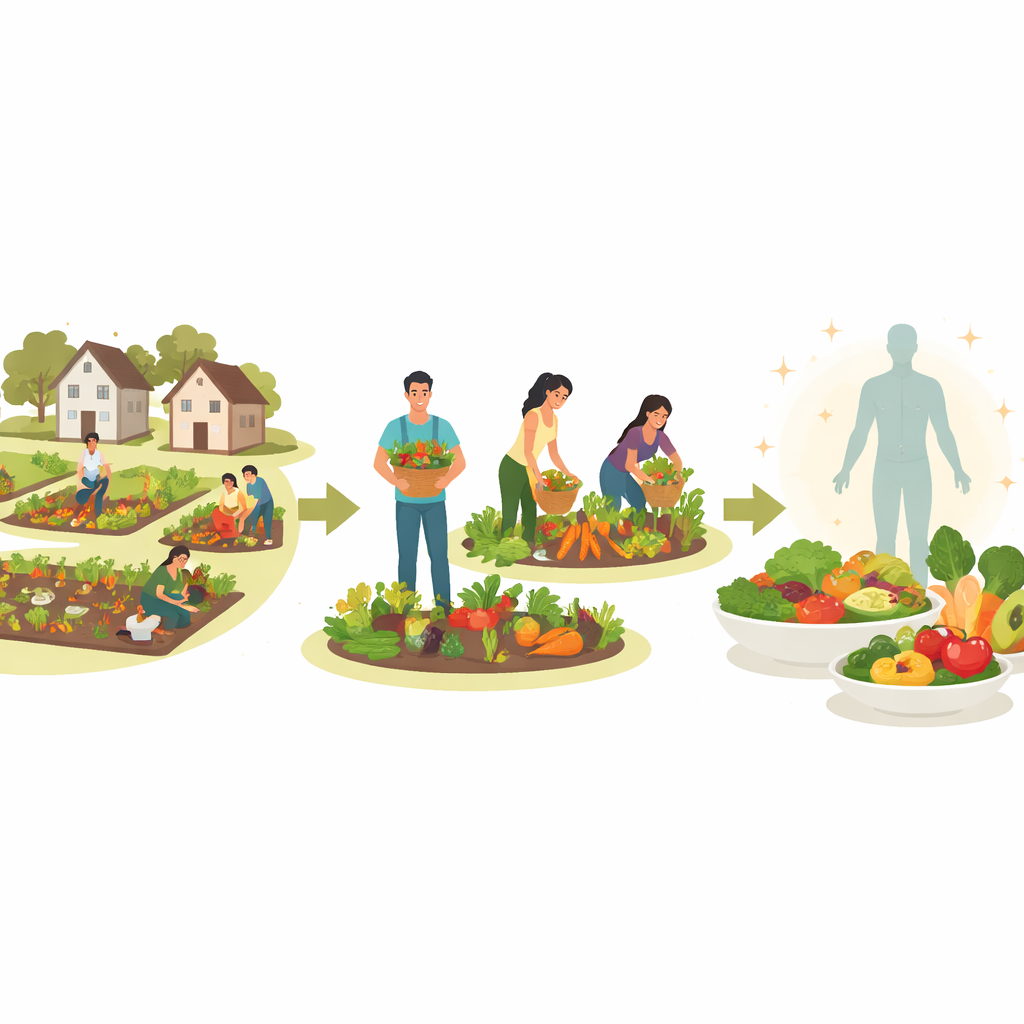
The research took place in two small settlements in Northeast Hungary, areas where most people live in detached houses with enough yard space to plant a kitchen garden. Between late 2021 and mid-2022, 269 adults completed an online questionnaire about their daily eating habits, physical activity, general health, and whether their household grew fruits and vegetables for their own use. About two-thirds of respondents reported having a home garden. Gardeners tended to be women, better educated, married, and more likely to have children under 18 at home, and they were somewhat more likely to live in the smaller rural town than in the suburb.
How Much Produce People Actually Eat
The survey dug into how often participants ate fruits and vegetables and how large their typical portions were. These answers were converted into average servings per day and compared with widely used advice to eat at least five servings of fruits and vegetables daily, including about two servings of fruit and three of vegetables. Overall, the median intake was only 2.3 servings a day—less than half the recommended amount. Just one in four people met the five-a-day target. Yet among this group of higher consumers, the vast majority—nearly 87 percent—had a home garden, hinting at a strong link between growing food and eating it.
What Home Gardens Change
When the researchers compared gardeners with non-gardeners, the differences were striking. People with a home garden typically ate about 1.4 servings of fruit and 1.4 servings of vegetables each day, while those without a garden ate around 0.3 servings of fruit and 0.6 servings of vegetables. After taking into account age, sex, education, family situation, and whether people lived in the rural town or the suburb, gardeners were more than four times as likely to meet the five-a-day guideline as non-gardeners. They were also more than three times as likely to reach the separate targets for fruit and for vegetables. In contrast, gardening did not clearly separate people in terms of weight, smoking, physical activity, or self-rated general health, although gardeners reported slightly higher life satisfaction.
Limits and Open Questions
Because the study captured a single moment in time, it cannot prove that gardens directly cause people to eat more fruits and vegetables—health-conscious people might simply be more inclined both to garden and to make healthier food choices. The survey also did not measure how large the gardens were, what they produced, or how much of the harvest people actually ate. Responses on diet and body weight were self-reported, which can be imprecise. And because the sample was relatively small and limited to two settlements, the findings cannot automatically be extended to all of Hungary or other countries. Even so, the association between home gardening and higher produce intake was strong enough to suggest that the effect is real and meaningful.
What This Means for Everyday Life
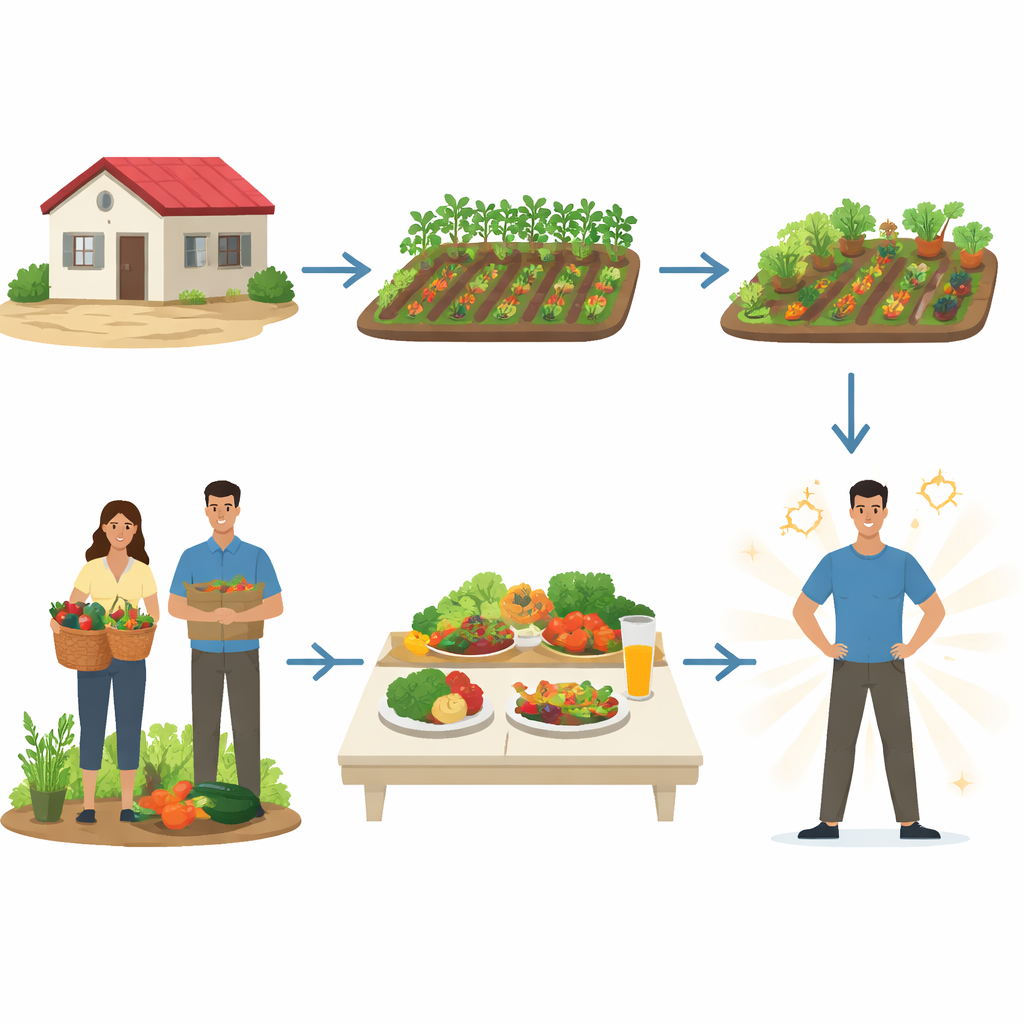
For readers wondering how to nudge themselves or their communities toward healthier eating, this study offers a simple, place-based idea: growing food at home may be a powerful way to put more fruits and vegetables on the table, especially where baseline intake is low. In rural Northeast Hungary, households with gardens were far more likely to come close to nutrition guidelines than those without. If future long-term and experimental studies confirm that creating and supporting home gardens leads to lasting changes in diet, encouraging people to plant even modest plots of fruits and vegetables could become a practical public health strategy—one that starts right outside the back door.
Citation: Simon, A., Bárdos, H. Home gardening and fruit and vegetable intake in rural settlements in Northeast Hungary. Sci Rep 16, 7903 (2026). https://doi.org/10.1038/s41598-026-39593-2
Keywords: home gardening, fruit and vegetable intake, rural health, diet and chronic disease, Hungary