Clear Sky Science · en
A novel integration of cross variable transformer and signal decomposition for real-time prediction of river water level: an implication for sustainable water resources management
Watching the Rivers That Guard Coastal Cities
For millions of people living along river deltas, a sudden rise in water can mean flooded homes, damaged crops, and disrupted cities. Yet many at‑risk rivers, especially in poorer or remote regions, lack the detailed weather and flow measurements that today’s forecasting tools usually require. This study introduces a new way to predict daily river water levels using only past water‑level readings themselves, offering a promising path to better flood preparedness in data‑scarce areas.
Why Simple River Records Are Not So Simple
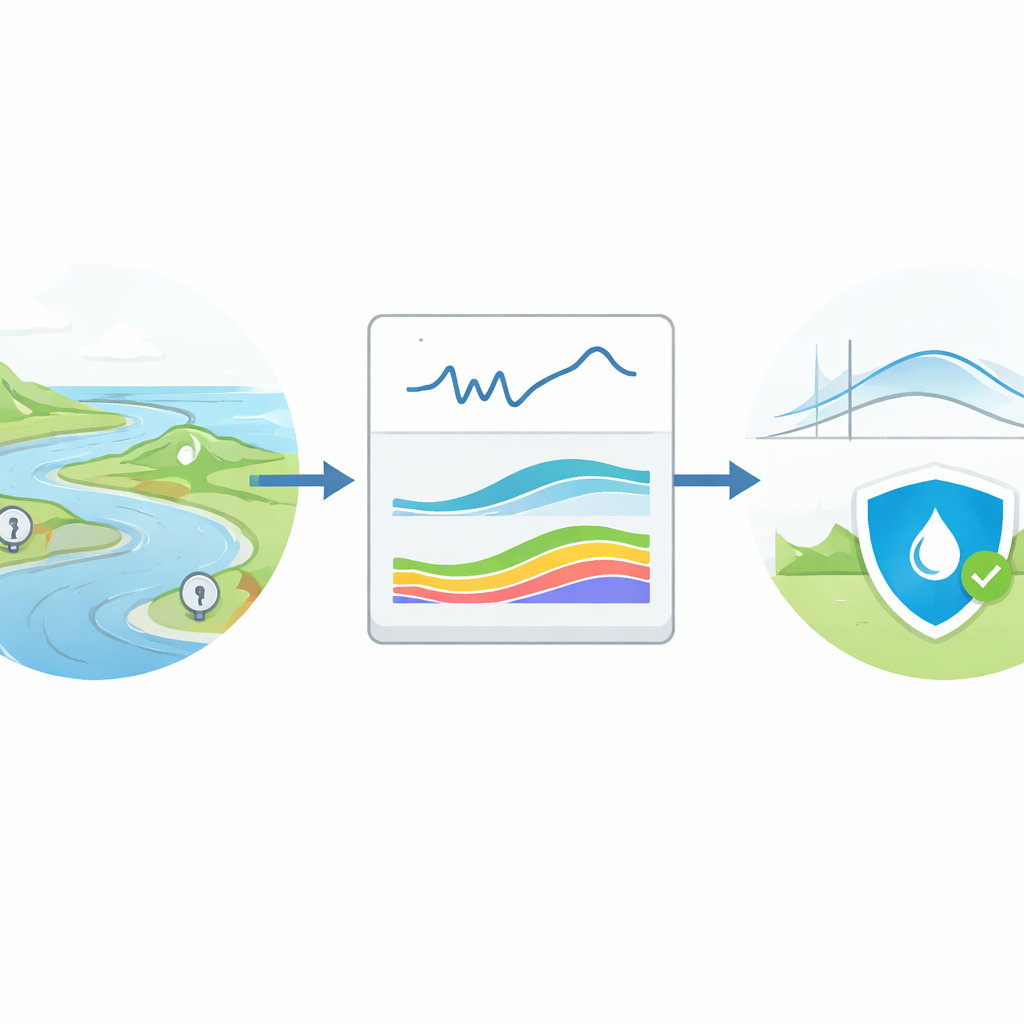
River water levels rise and fall under the push and pull of tides, rainfall, upstream dams, and even distant climate patterns. These ups and downs create time series that look noisy and irregular, with sudden peaks during storms or high tides. Traditional computer models often expect many different inputs—rain, temperature, evaporation, and more—and struggle when only water‑level records are available. In Bangladesh’s Rupsa‑Pasur River, which passes the coastal cities of Khulna and Mongla, this is exactly the situation: high flood risk, but limited supporting data. The authors set out to answer a practical question: can we still make highly accurate, real‑time predictions of daily water levels when all we have is a single, bumpy line of past measurements?
Breaking a Complex Signal into Manageable Pieces
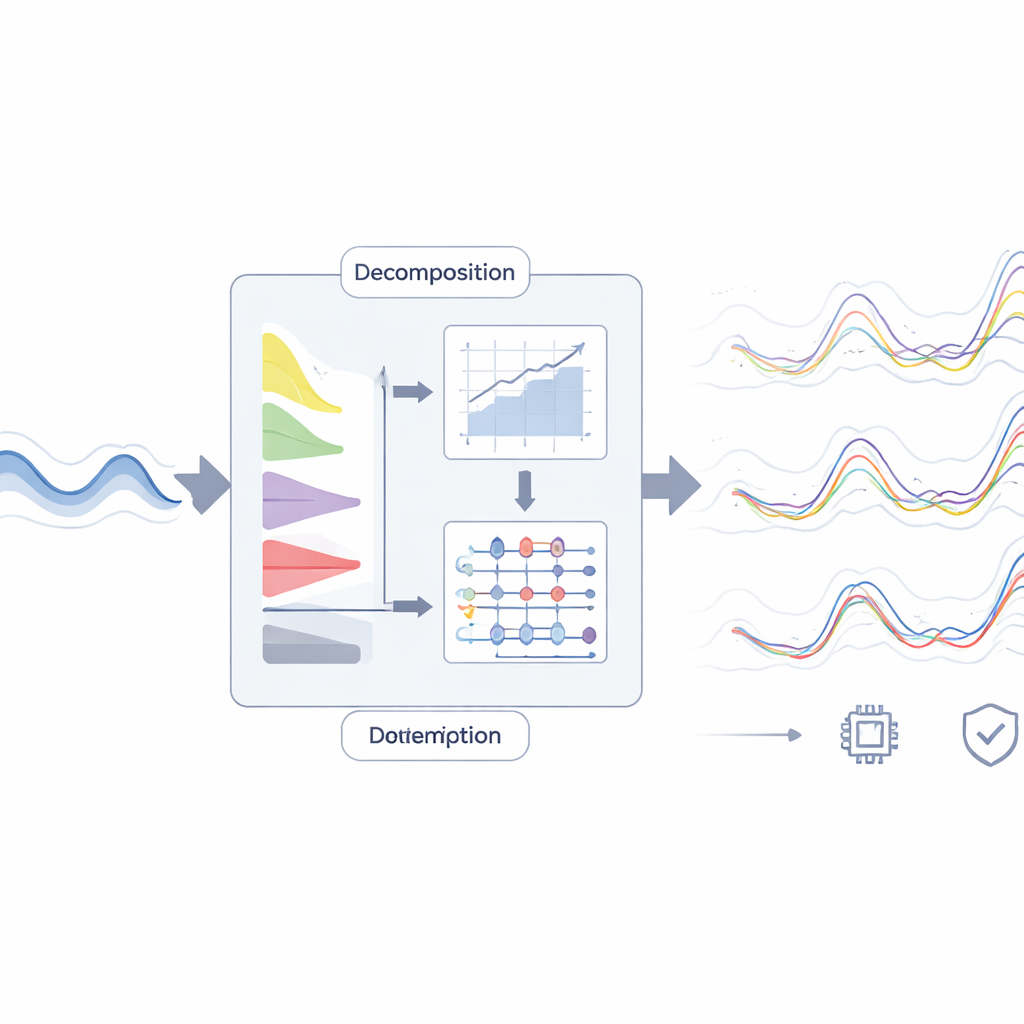
The researchers tackle this challenge by first "listening" more carefully to the river’s history. Instead of feeding the raw water‑level line directly into a prediction model, they apply advanced signal decomposition methods. These methods peel the original record apart into several smoother sub‑signals, each capturing patterns at different time scales—from rapid daily swings to slower seasonal changes—plus a leftover residual. Five such techniques are tested, including a recent method called successive variational mode decomposition, which is designed to pull out clear components even when the data are noisy. These decomposed pieces act like a richer set of clues, created from the single available variable.
A New Learning Engine for River Behavior
To learn from these clues, the team uses a modern forecasting model known as CLIENT, which combines two ideas. One part is a simple, fast linear model that tracks broad trends in the water level. The other part is a transformer module—a type of deep‑learning architecture widely used in language models—that excels at spotting subtle relationships among input features. Before learning begins, a reversible normalization step smooths away shifts in the overall level of the time series and then restores them at the end, helping the model stay stable over time. By feeding CLIENT both recent daily levels and the decomposed sub‑signals, the authors build six versions of the model and compare them against more familiar tools like neural networks, long short‑term memory networks, and decision trees.
How Well Can We Predict the Next Day’s River Level?
Tested at the Khulna and Mongla stations, the hybrid approach performs strikingly well. All decomposition‑enhanced versions of CLIENT reduce prediction errors compared to models that only use recent daily levels. The star performer is the combination using successive variational mode decomposition, labeled C6 in the study. At both stations, this model reproduces almost all of the observed day‑to‑day wiggles and captures extreme high‑water events with remarkable precision, achieving near‑perfect skill scores while keeping computing time modest. The authors then stress‑test the same model on three very different rivers in Bangladesh and the United States, across multiple training‑testing splits, and find that it still predicts reliably, even when data records are relatively short or highly variable.
From Research Code to Practical Flood Warnings
To move beyond theory, the team packages their best model into an interactive computer interface. Users can upload a simple spreadsheet of past daily water levels and receive next‑day predictions, with the heavy mathematical lifting hidden under the hood. Because the method depends only on water‑level records—often the most widely available hydrologic data—it opens the door for more communities, especially in developing coastal regions, to gain access to timely river forecasts. In plain terms, the study shows that by smartly reshaping and learning from a single stream of measurements, we can build fast and accurate tools that help planners, engineers, and residents see dangerous water levels coming a little sooner, and act before floods arrive.
Citation: Ratul, M., Akter, U., Mollick, T. et al. A novel integration of cross variable transformer and signal decomposition for real-time prediction of river water level: an implication for sustainable water resources management. Sci Rep 16, 9366 (2026). https://doi.org/10.1038/s41598-026-39591-4
Keywords: river water level forecasting, flood risk, machine learning, time series decomposition, coastal Bangladesh