Clear Sky Science · en
Dietary patterns and associated factors among type 2 diabetes mellitus patients attending Wolaita Sodo university comprehensive specialized hospitals, South Ethiopia
Why everyday food choices matter
For people living with type 2 diabetes, what ends up on the plate each day can shape how well their blood sugar is controlled, how they feel, and how fast complications develop. Yet in many low‑income settings, advice about “healthy eating” is often vague, hard to follow, or poorly matched to local foods and tight budgets. This study from Southern Ethiopia takes a close look at how adults with type 2 diabetes actually eat, identifies common patterns in their diets, and explores how work, age, and other health problems influence these choices. Its findings help translate broad dietary rules into practical guidance rooted in local culture.
Two main ways of eating
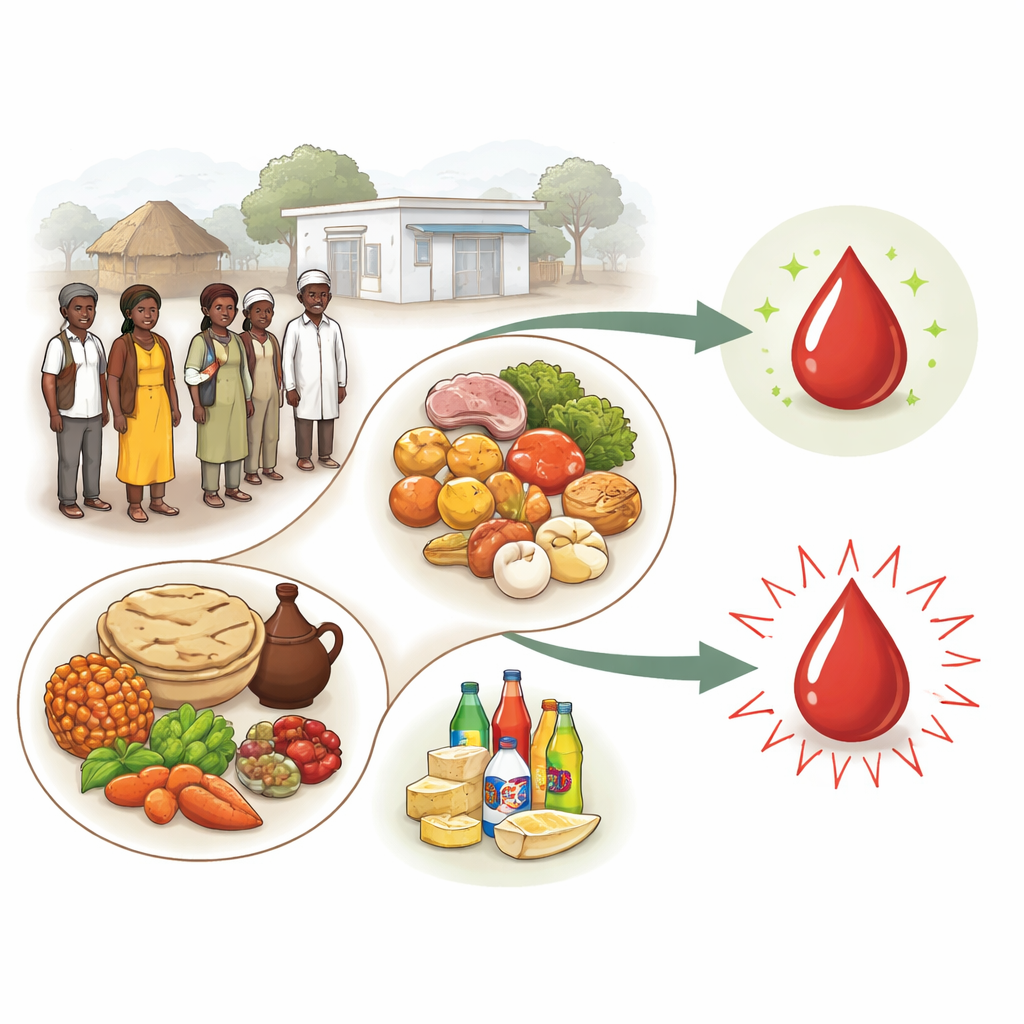
The researchers surveyed 416 adults with type 2 diabetes who receive regular care at a large referral hospital in Wolaita Sodo. Using a detailed one‑week food questionnaire, they recorded how often patients ate 27 locally common foods, from breads and root crops to meat dishes and soft drinks. Instead of judging single foods as “good” or “bad,” they used a statistical method to see which items tended to be eaten together. This revealed two dominant patterns that together captured about one‑fifth of the variation in what patients were eating day to day.
The familiar home‑style diet
One pattern, called here the “traditional” diet, centered on long‑standing staples of the region. People following this pattern ate more bread, potatoes, carrots, beetroot, broad beans, kidney beans, and dishes made from the false banana plant, along with a local fermented drink. These foods are mostly plant‑based, filling, and relatively low in added sugar. Older adults were more likely to eat this way, reflecting habits built over a lifetime and a closer tie to rural food culture. Interestingly, patients who also lived with other chronic illnesses were less likely to stick to this traditional pattern, perhaps because additional medical advice or physical limitations had already pushed them to change their usual meals.
A mixed plate with modern extras
The second pattern, labeled “mixed,” blended local dishes with more energy‑dense additions. People in this group ate more raw and boiled beef, eggs, yogurt, and refined grain products, along with sugar‑sweetened soft drinks and tea. In other words, their plates combined familiar foods with richer animal products and modern sugary beverages. Daily laborers—people doing physically demanding, often low‑paid work—were especially likely to eat this way. Their need for quick, cheap, and filling food may steer them toward meat snacks, street foods, and soft drinks that are easy to buy on the go. Unlike age or place of residence, job type clearly stood out as a driver of this mixed pattern.
Knowledge is not the only barrier
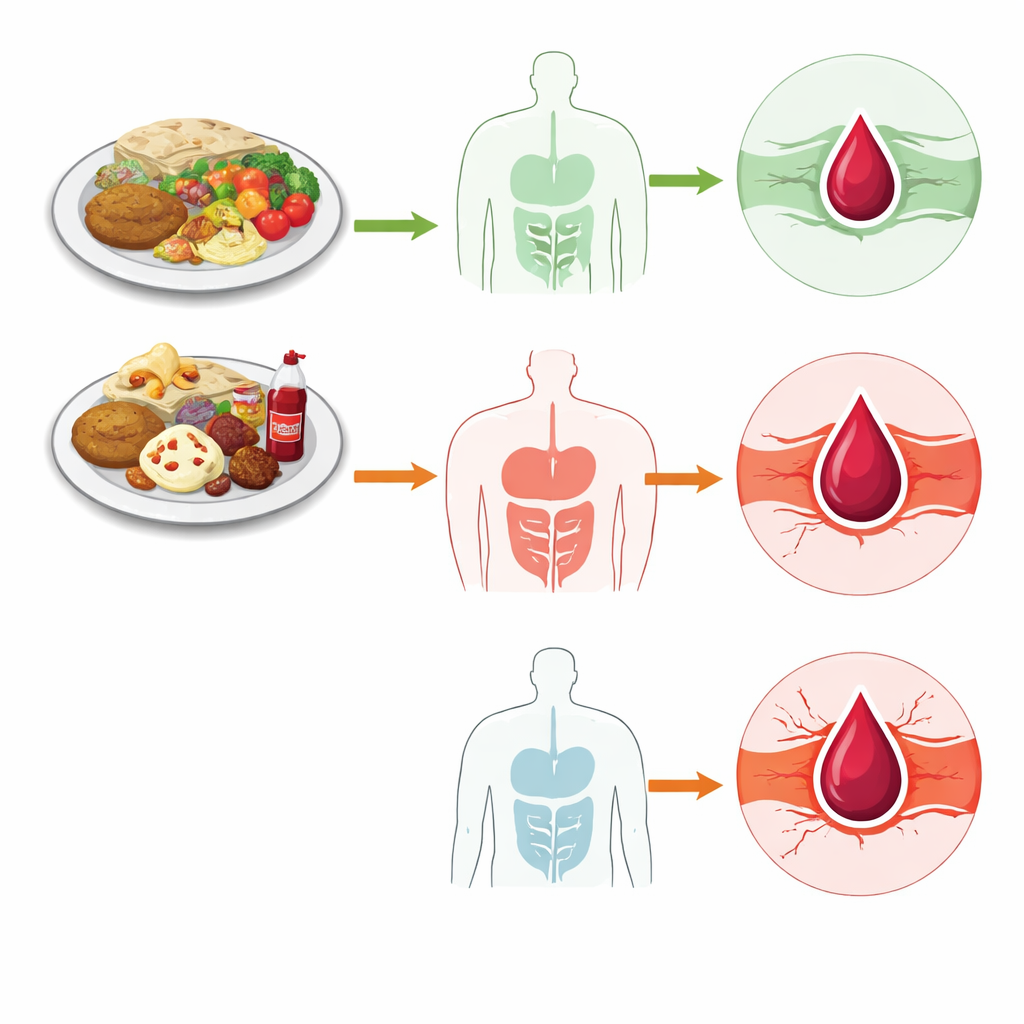
On paper, most participants knew at least some of the standard advice for diabetes, such as the value of fruits and vegetables or the need to limit sugar. Yet their answers also revealed big gaps and misunderstandings. About half believed that skipping meals could help control blood sugar, and many were unsure which foods raise blood sugar fastest. Despite these shortcomings, the study found that knowing more about diet did not automatically translate into following either pattern more closely. That suggests that money, time, habits, and access to food—and not just information—shape what people are actually able to eat.
What this means for patients and providers
The study concludes that adults with type 2 diabetes in Southern Ethiopia tend to follow either a largely traditional, plant‑based diet or a more mixed diet that adds meat and sugary drinks. Who lands in which group depends strongly on age, work, and other illnesses. Because of this, one‑size‑fits‑all advice is unlikely to work. Instead, the authors argue for counseling that starts from local staples, helps patients preserve the healthier parts of their traditional diet, and offers realistic ways to trim back sugar‑sweetened drinks and heavy meat dishes, especially for hard‑working daily laborers. Tailoring guidance to people’s real food environment could make it easier to control blood sugar and avoid complications, even where resources are limited.
Citation: Moliso, A.K., Fankasho, H.W. & Paulos Kumma, W. Dietary patterns and associated factors among type 2 diabetes mellitus patients attending Wolaita Sodo university comprehensive specialized hospitals, South Ethiopia. Sci Rep 16, 9514 (2026). https://doi.org/10.1038/s41598-026-39574-5
Keywords: type 2 diabetes diet, Ethiopia nutrition, traditional foods, dietary patterns, blood sugar control