Clear Sky Science · en
Neural mechanisms promoting righteousness in conflicts of interest
Why We Sometimes Say No to Easy Money
Imagine being offered cash for posting a glowing review of a product you have barely seen, or earning more money by quietly steering a client toward a so-so investment. Many of us would feel a twinge of unease, yet some people consistently turn down such offers even when no one is watching and it is not obvious that saying yes is wrong. This paper explores what drives that kind of inner firmness—what the authors call “righteousness”—and what happens in the brain when people refuse tempting but questionable gains.
Hidden Pressures in Everyday Choices
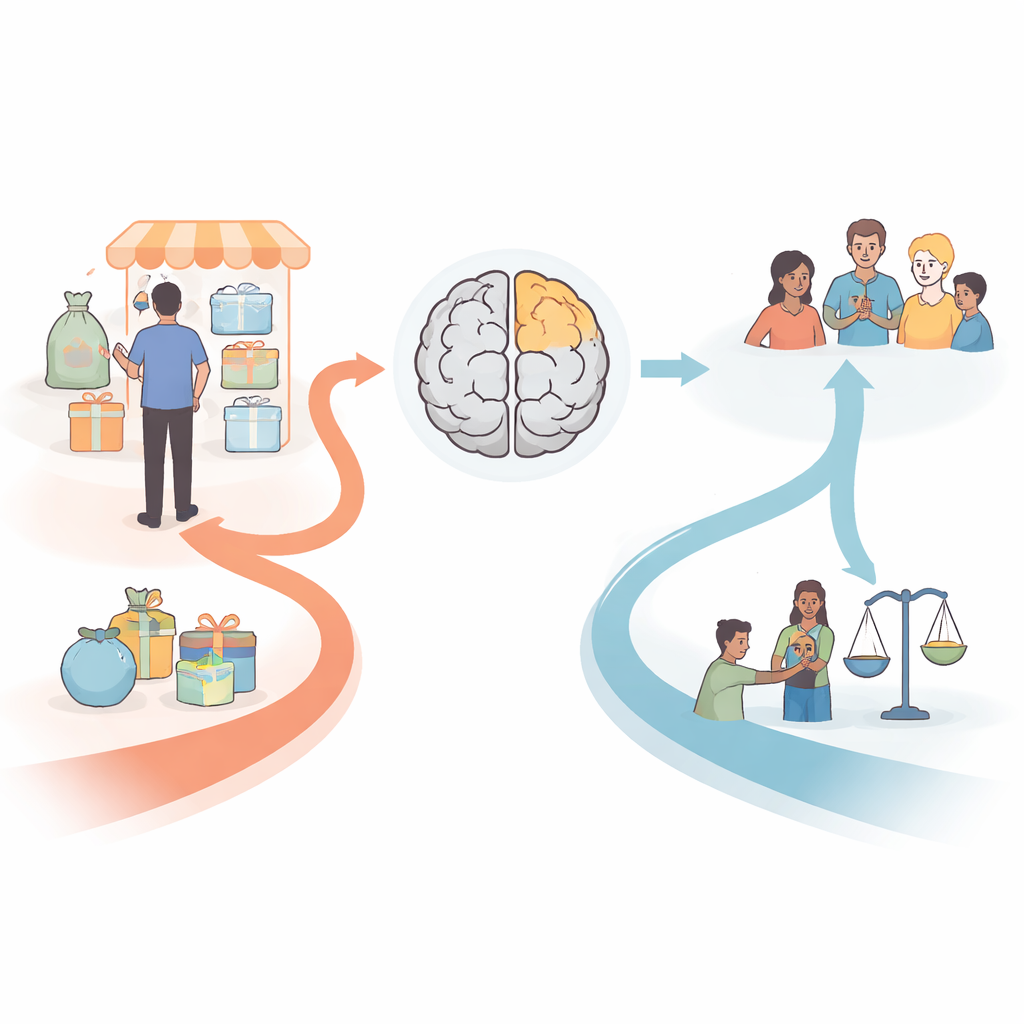
Conflicts of interest are everywhere: in online reviews, medical advice, financial planning, and even in simple gift buying. They arise whenever personal benefit can tug against what is best, fair, or most accurate for someone else. Often the right answer is fuzzy. A financial adviser might truly be unsure which of two funds is better, yet be paid more to recommend one. That fuzziness makes it easier to rationalize taking the more profitable path. Past research has mostly studied clear-cut cheating, where people know exactly which option is wrong. This work instead focuses on the murkier, real-world situations where people can plausibly tell themselves, “I’m not sure this is bad.”
Who Stays Fair When Things Are Murky?
The authors first used consumer-style scenarios to show that many people resist biased choices even under ambiguity. In one study, online participants imagined they had bought a phone case they had not yet inspected and were offered a partial refund for leaving a top rating. Even when the product’s quality was unclear—or not described at all—over half refused to give the best rating. In another task, people chose gift cards for friends while sometimes being offered a free drink for picking the friend’s less-preferred coffee shop. As expected, ambiguity about what the friend liked made self-interested choices more common, yet a large share still turned down the perk when they could not be sure it was wrong. These patterns suggest that a meaningful slice of consumers hold themselves to standards that go beyond obvious rules or fear of getting caught.
What the Brain Reveals About Inner Restraint
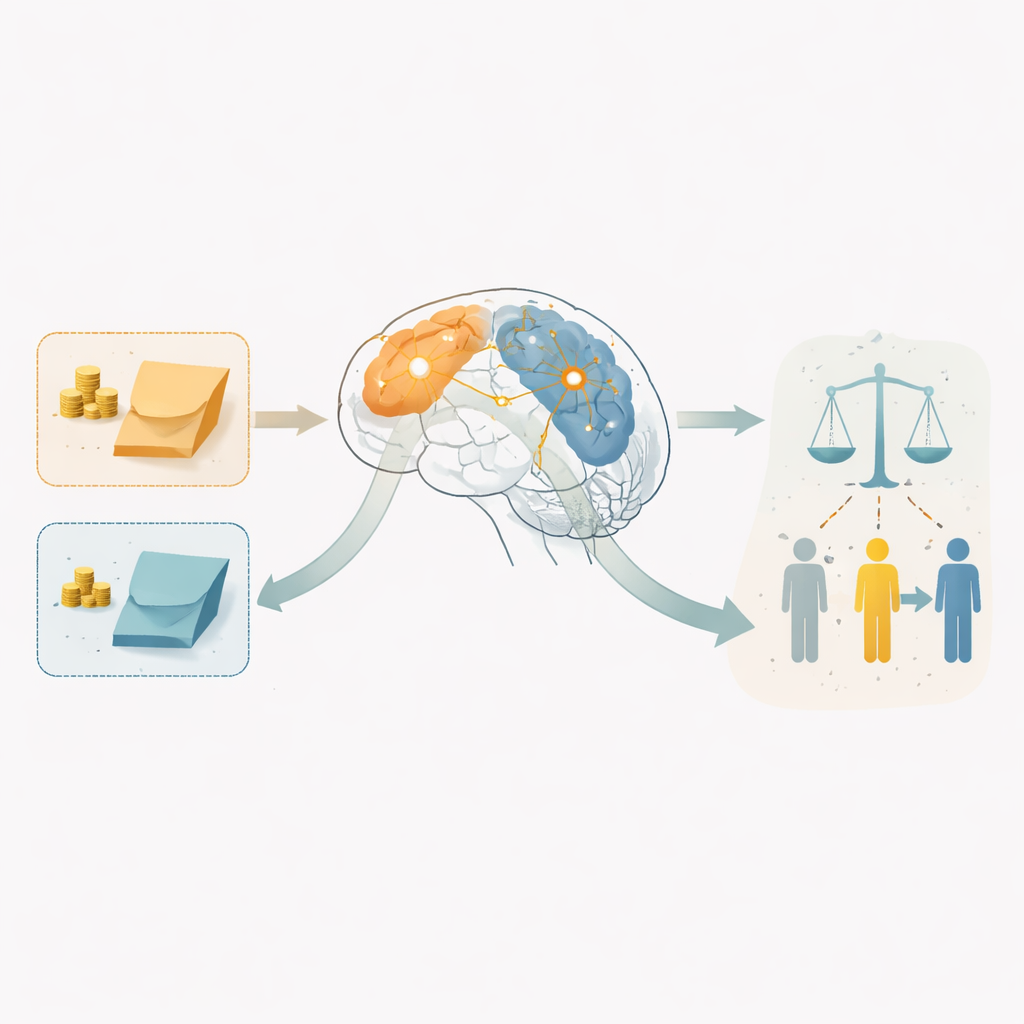
To uncover the mental machinery behind this righteousness, the researchers scanned volunteers’ brains while they performed a task involving real money. On each trial, people judged which side of a screen held more dots. Choosing one side paid a small amount, while the other side paid much more, regardless of accuracy. When it was hard to tell which side was correct, the lure of the higher-paying option was strongest. Yet participants sometimes chose the lower-paying, accurate answer, effectively giving up money to stay honest. Brain activity during these costly, accurate choices did not light up the usual reward centers that respond when something feels good. Instead, regions associated with self-control and careful attention—particularly areas in the lateral prefrontal cortex and parietal regions—were more active. People who showed more righteousness across trials also showed stronger engagement of these control-related areas, specifically when the right choice was hard to discern.
Opting Out of Temptation Altogether
Building on the brain findings, the authors tested a simple intervention known as pre-commitment—deciding in advance to avoid tempting situations. After completing the dot task once, participants could choose between repeating it with the same skewed payoffs, or switching to equal pay for both responses. The equal-pay option removed the conflict of interest but cut potential earnings by about one-third. Nearly half the participants chose the lower-paying, conflict-free scheme, even though staying honest under the unequal pay rules would still have earned them more. This suggests that many people find conflicted situations emotionally and mentally taxing enough that they will pay to avoid them, regardless of how righteous they had behaved earlier.
What This Means for Everyday Integrity
The study’s central message is that doing the right thing in gray areas is less about the warm glow of virtue and more about the hard work of self-control. When the proper course of action is unclear, some people recruit brain systems that help them resist easy justifications for self-serving choices. They do not appear to be rewarded by pleasure centers for turning down money; rather, they call on mental brakes that keep their actions aligned with their standards. This insight matters for policy and design: systems that lessen ambiguity or let people pre-commit to conflict-free arrangements—such as neutral compensation schemes or clear default options—may help ordinary people act like the “heroes” who quietly protect markets and society from the hidden costs of biased decisions.
Citation: Reeck, C., Ludwig, R.M. & Mason, M.F. Neural mechanisms promoting righteousness in conflicts of interest. Sci Rep 16, 9007 (2026). https://doi.org/10.1038/s41598-026-39572-7
Keywords: conflicts of interest, self-control, ethical decision making, consumer behavior, neuroscience