Clear Sky Science · en
Investigating the psychedelic hypothesis of kykeon, the sacred elixir of the Eleusinian Mysteries
A Secret Drink from the Ancient World
For nearly two thousand years, people traveled from all over the Mediterranean to a small town near Athens to drink a mysterious potion called kykeon. In the darkness of a vast hall at Eleusis, this ritual drink was said to bring visions of death, rebirth, and a deeper meaning to life itself. Modern scientists and historians have long wondered whether kykeon contained a mind‑altering ingredient, and if so, how ancient priestesses could prepare it safely. This study brings chemistry, archaeology, and myth together to test a bold idea: that a poisonous grain fungus was carefully transformed into a psychedelic sacrament using technology available in classical Greece.
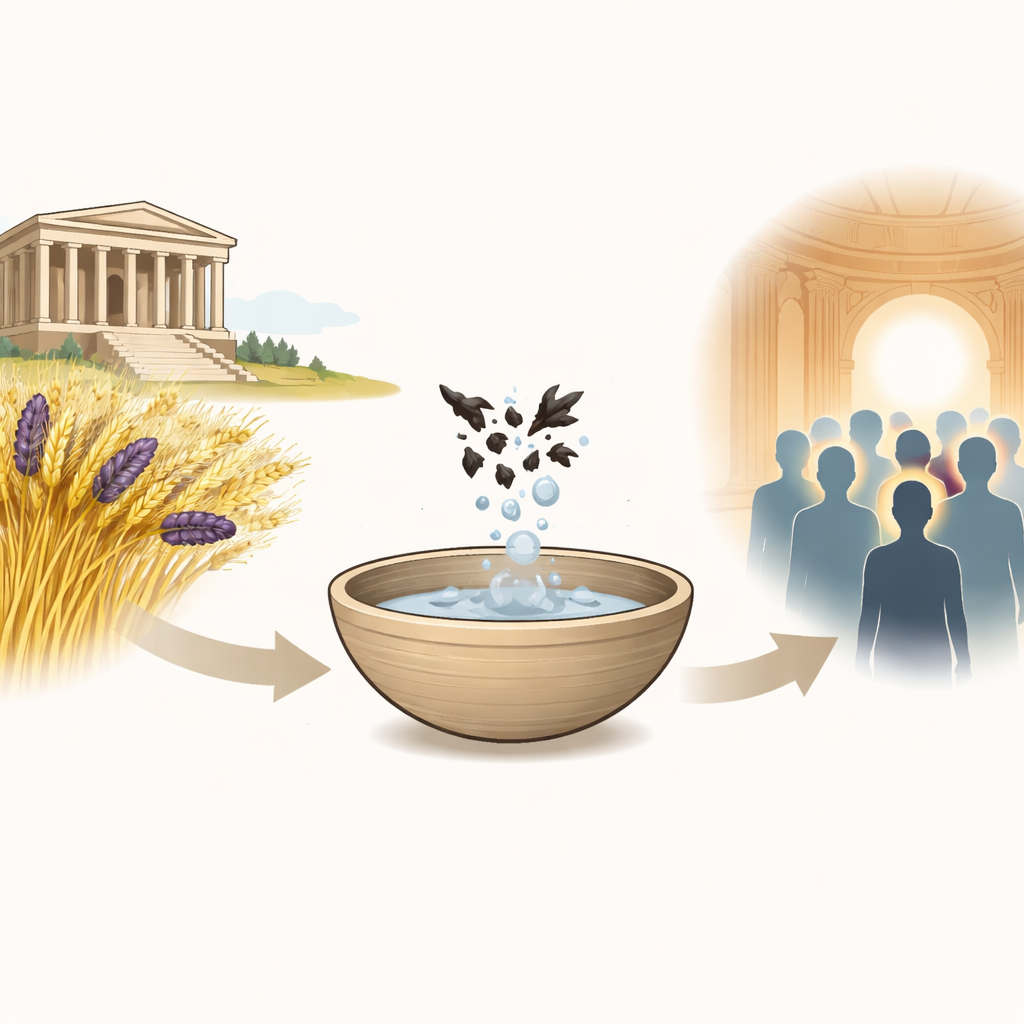
An Ancient Festival and Its Enigmatic Drink
The Eleusinian Mysteries were annual autumn rites honoring the goddesses Demeter and Persephone, rooted in the famous story of a mother searching for her abducted daughter. Initiates fasted for days, walked the sacred road to Eleusis, and ended by drinking kykeon inside a large initiation hall. Ancient texts describe kykeon as a mixture of water, barley, and mint. Yet these familiar ingredients alone cannot explain reports of profound spiritual experiences, including a sense of the soul’s transformation and a new understanding of death and the afterlife. Scholars have proposed many hidden additives—from opium to psychedelic mushrooms—but most candidates are either culturally unlikely, hard to cultivate for crowds of thousands, or leave no convincing trace in the historical record.
The Fungus That Can Heal or Harm
In the 1970s, researchers suggested that the most plausible hidden ingredient was ergot, a dark, horn‑shaped fungus that can infect barley. Ergot produces a family of compounds related to the modern drug LSD and to naturally occurring brain messengers like serotonin and dopamine. Archaeological finds of ergot in a sanctuary linked to the Eleusinian goddesses support this connection. But there is a serious obstacle: crude ergot is notorious for causing ergotism, a devastating form of poisoning historically known as Saint Anthony’s Fire, marked by burning pain, convulsions, hallucinations, and sometimes limb loss from blocked blood flow. The central question is whether ancient priestesses could have learned to strip away ergot’s worst toxins while preserving its mind‑altering effects.
Turning Poison into Vision with Ash and Water
The authors tested a simple method that fits what ancient Greeks actually knew: making lye from wood ashes and water. They ground ergot sclerotia (the hard, dormant form of the fungus) and heated them in solutions of lye at different strengths, as well as in plain water for comparison. Using modern tools—nuclear magnetic resonance (NMR) and high‑resolution mass spectrometry—they tracked which ergot compounds were present before and after treatment. They found that at a strongly alkaline starting pH of about 12.5, with a modest amount of ergot (5% weight/volume) heated for two hours, the complex, highly toxic “ergopeptides” disappeared. In their place, simpler molecules appeared, chiefly lysergic acid amide (LSA) and its close cousin iso‑LSA, both known from other plants used in traditional psychedelic ceremonies. This shift was not a partial tweak: under these conditions the team could no longer detect the major toxic ergopeptides, while LSA and iso‑LSA became dominant.
Safe Enough to Drink and Strong Enough to Matter
The researchers also measured how much of these psychedelic‑like compounds could be produced this way. Under the best detoxifying conditions, one gram of ergot yielded roughly 0.5 milligrams each of LSA and iso‑LSA—amounts that fall in the range of reported active doses in humans. Given typical ergot content and the scale of the rites, the priestesses would have needed only a few kilograms of sclerotia and several batches of lye to serve thousands of initiates. Importantly, the lye itself need not have made the drink dangerously caustic: exposure to air, contact with the ergot, and later mixing with the slightly acidic barley‑mint brew would all bring the pH down into a drinkable range. The authors argue that any mild residues of less harmful ergot compounds would likely have posed little risk, especially compared to the lethal effects of the fully intact toxins they had broken apart.
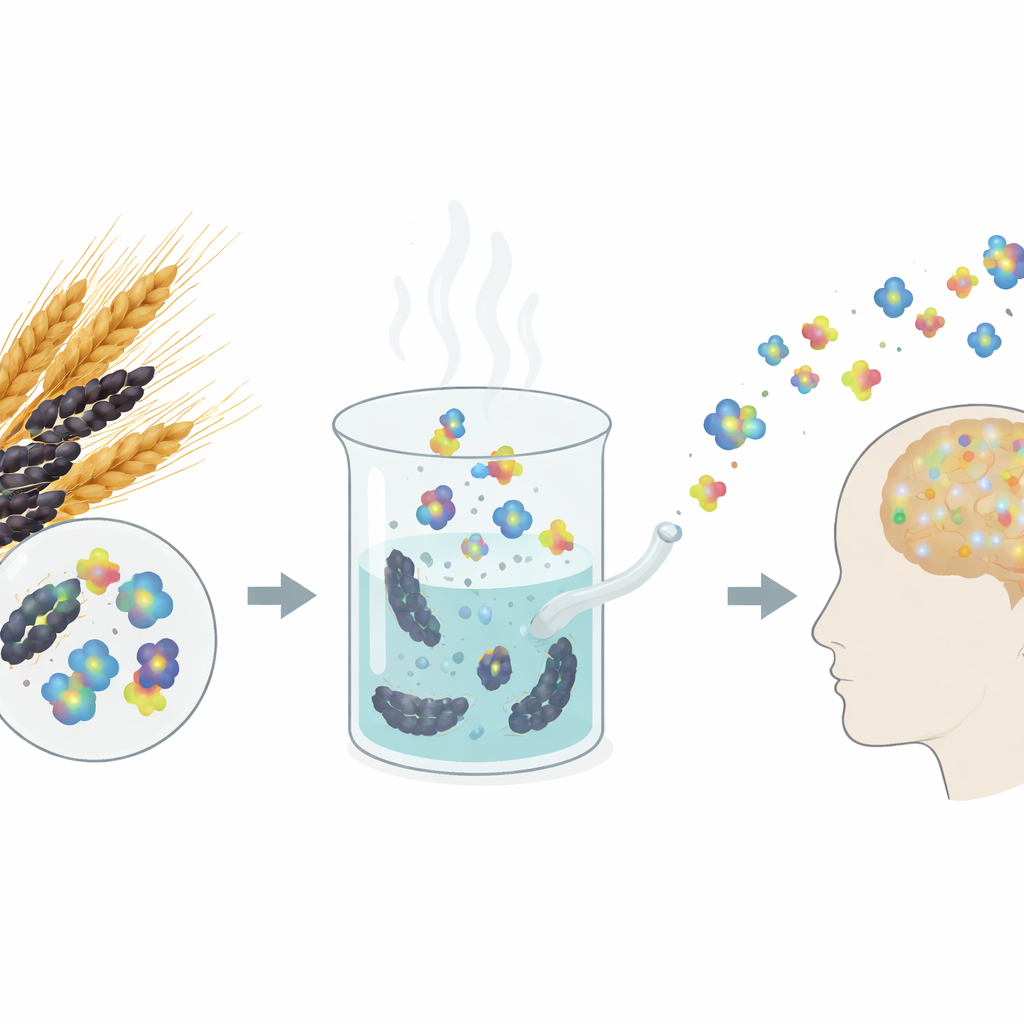
Reimagining an Old Mystery Through New Science
Taken together, the findings show that a simple ash‑and‑water technique, entirely plausible for ancient Greece, can chemically convert dangerous ergot constituents into psychoactive substances with known mind‑altering properties. This does not “prove” what every cup of kykeon contained, but it makes the long‑debated “psychedelic Eleusis” hypothesis far more credible. The study suggests that the transformative visions reported by ancient initiates may have arisen from a carefully engineered entheogenic drink, crafted by priestesses who learned—through tradition and experience—to harness a deadly fungus as a doorway to the divine. Future analyses of residues in ancient vessels from Eleusis may yet provide the missing physical traces to confirm this remarkable convergence of myth, ritual, and chemistry.
Citation: Antonopoulos, R.K., Dadiotis, E., Ioannidis, K. et al. Investigating the psychedelic hypothesis of kykeon, the sacred elixir of the Eleusinian Mysteries. Sci Rep 16, 8757 (2026). https://doi.org/10.1038/s41598-026-39568-3
Keywords: Eleusinian Mysteries, kykeon, ergot, psychedelics, lysergic acid amide