Clear Sky Science · en
Chronic PM2.5 exposure and increased risk of hospitalization for kidney disease in São Paulo, Brazil
Dirty Air and Hidden Kidney Troubles
We usually think of air pollution as something that hurts our lungs and hearts. This study reveals a less obvious target: our kidneys. By following hospital records and air quality data in São Paulo, Brazil’s largest city, over a decade, researchers show that breathing tiny pollution particles day after day can quietly raise the chances of serious kidney problems that land people in the hospital.
Life in a Crowded, Polluted City
São Paulo is a sprawling megacity with more than 12 million residents and roughly seven million vehicles on its streets. Exhaust from cars, trucks, and buses fills the air with fine particles known as PM2.5—tiny bits of soot and dust smaller than the width of a human hair. These particles often exceed both local safety limits and the stricter guidelines set by the World Health Organization. Because everyone in the city shares the same air, the researchers estimated exposure by averaging daily PM2.5 levels from several monitoring stations, then linked those figures to hospital records for kidney-related illnesses collected between 2011 and 2021. 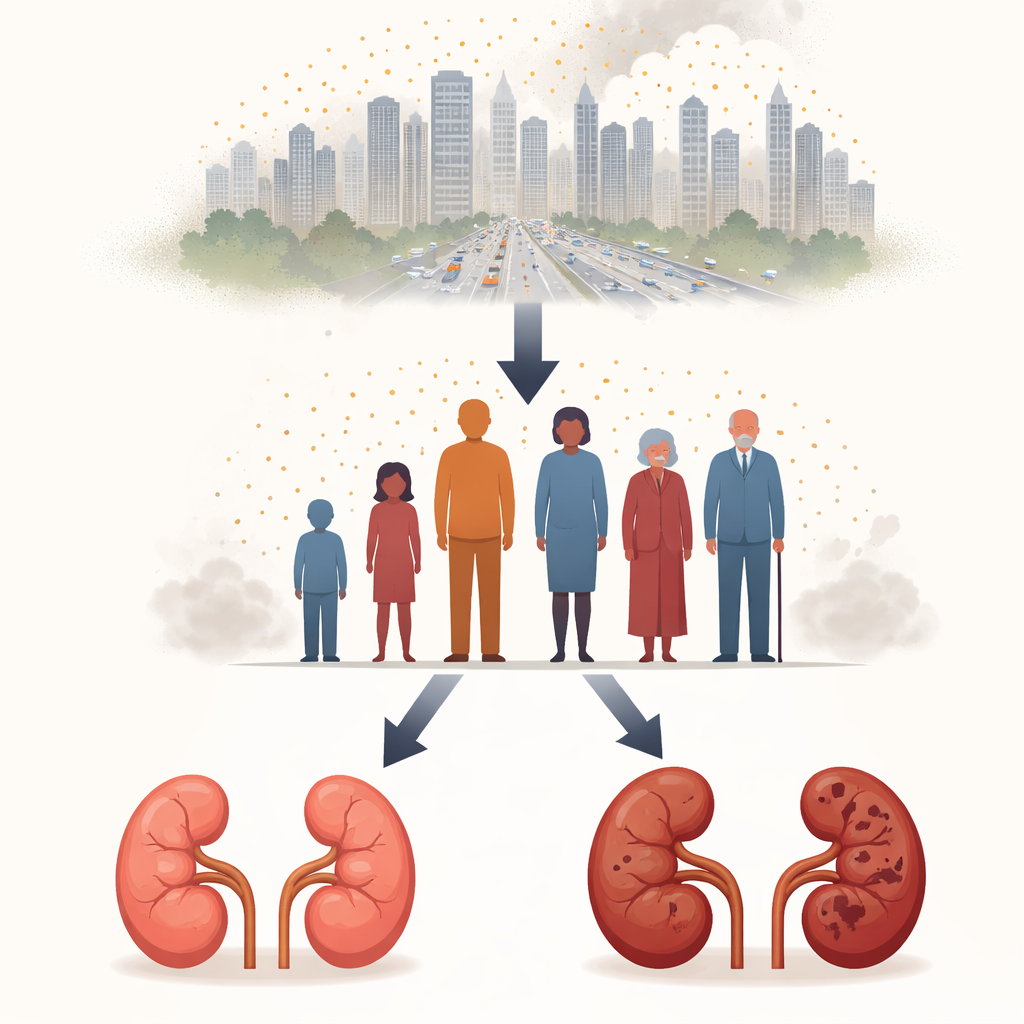
Tracking Kidney Illness Over Ten Years
The team analyzed more than 37,000 hospital admissions for three main types of kidney problems: sudden kidney failure (acute kidney injury), long-term loss of kidney function (chronic kidney disease), and a group of conditions that damage the kidney’s tiny filters (glomerular diseases, including a form called membranous nephropathy). Patients were grouped by age and sex, from children to those older than 75. Using statistical models that account for weather, holidays, and weekday patterns, they asked how long-term exposure—up to about five and a half years—to different PM2.5 levels changed the likelihood of being hospitalized with these conditions.
Who Faces the Greatest Risk?
The results were worrying. Even at pollution levels near the current WHO daily guideline, the risk of ending up in the hospital with kidney disease went up. With long-term exposure to higher PM2.5 levels, the risk of hospitalization for chronic kidney disease increased for men in every age group and for women in most adult age groups. In some male groups, the chance of hospitalization was up to about two and a half times higher at the top pollution levels seen in the study. Sudden kidney failure was especially linked to PM2.5 in younger and middle-aged men, while women did not show the same clear pattern for this type of injury. For the delicate filter diseases, younger adults—particularly young men—stood out, with long-term exposure to high particle levels raising their risk far more than in any other group.
From Dirty Air to Damaged Filters
Why would air pollution harm the kidneys, which sit far from the lungs? Tiny particles breathed into the lungs can enter the bloodstream and travel throughout the body. Other research suggests they can stir up chronic inflammation and oxidative stress—chemical reactions that can injure blood vessels and tissues. The kidney’s job is to filter blood constantly, so these organs are repeatedly exposed to any circulating toxins and inflammatory signals. Over time, this may help trigger or speed up long-term kidney disease, sudden kidney failure in vulnerable people, and immune-related damage to the kidney’s filtering units. 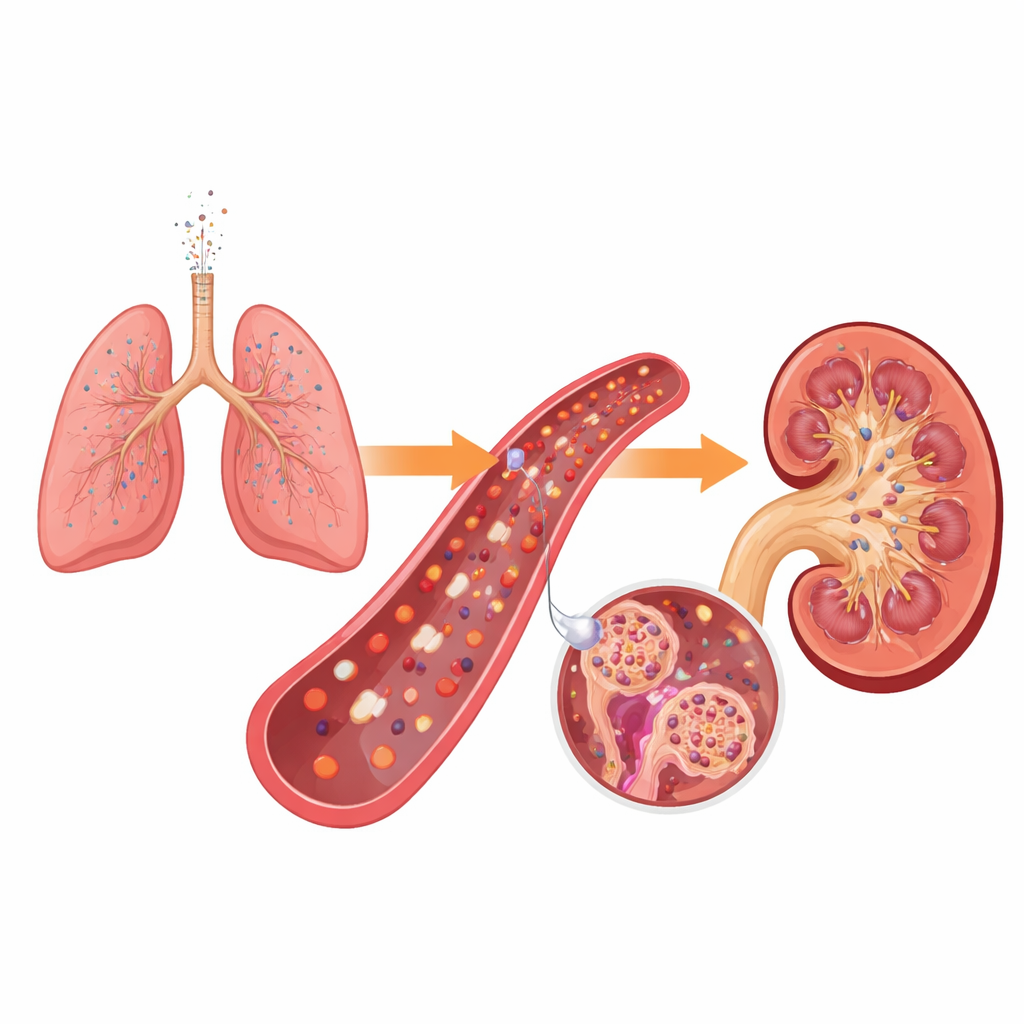
What This Means for Everyday Life
This study shows that the health cost of living with dirty air goes beyond coughing and chest pain. In São Paulo, long-term exposure to fine particles from traffic and other sources is tied to higher chances of serious kidney problems, especially for men and for younger to middle-aged adults. Because kidney disease is often silent until it is advanced—and treatment like dialysis is expensive and life-altering—the findings add weight to global calls for cleaner air. Cutting particle pollution through better public transport, cleaner fuels, and smarter city planning could help protect not just lungs and hearts, but also the silent workhorses of our bodies: the kidneys.
Citation: Da Silva, I., Calderón, M.E.G., Peralta, A.D. et al. Chronic PM2.5 exposure and increased risk of hospitalization for kidney disease in São Paulo, Brazil. Sci Rep 16, 9256 (2026). https://doi.org/10.1038/s41598-026-39558-5
Keywords: air pollution, fine particulate matter, kidney disease, urban health, São Paulo