Clear Sky Science · en
Comprehensive safety evaluation for back-filling control system based on modified set pair matter-element extension model
Why safer back-filling in deep mines matters
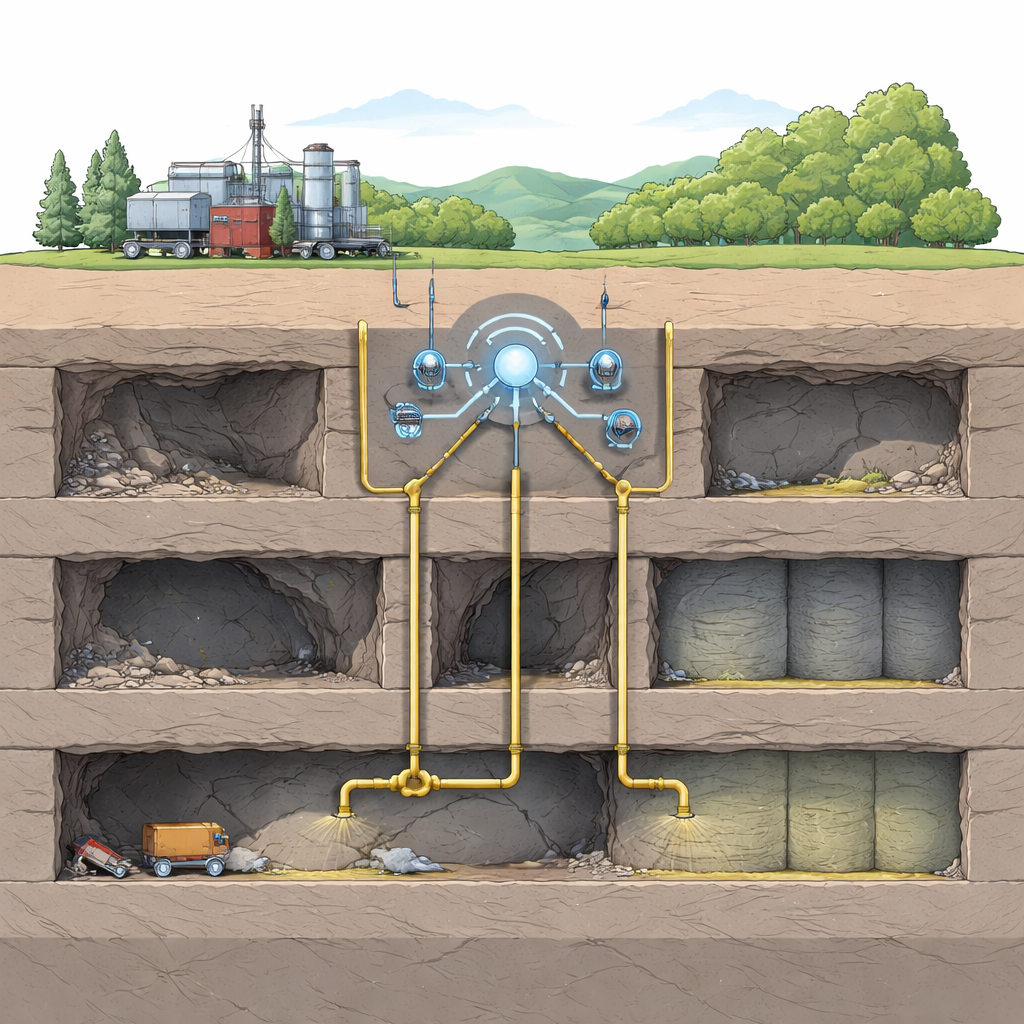
As coal and metal deposits near the surface are exhausted, mining is pushing deeper underground, where rock pressures are higher and the risk of collapse or environmental damage grows. One of the main tools for making deep mining safer is back-filling: pumping waste rock and cement into empty tunnels to support the ground. But today’s back-filling systems are increasingly complex, packed with sensors, pumps, pipelines, and software. This study tackles a simple but crucial question: how can we tell whether a mine’s back-filling control system is truly safe, smart, and reliable?
From simple filling to intelligent control
Modern back-filling systems do much more than just move slurry through pipes. They continuously monitor how the filling material is mixed, how it flows through long underground pipelines, and how strong it becomes once it hardens in the mined-out voids. Using networks, cloud computing, and big data tools, the systems can adjust pump speeds, mixture ratios, and flushing operations in real time, while sending early warnings if something starts to go wrong. Done well, this improves safety, cuts material waste, and saves labor. Yet these systems are still relatively new, and there has been no clear, science-based way to judge how advanced or trustworthy any given installation really is.
Breaking a complex system into clear parts
The authors propose a structured way to evaluate back-filling control systems as a whole. They divide the system into four major parts: how the slurry is prepared on the surface, how it is transported and watched along the pipeline, how the hardened fill’s strength and stability are monitored, and how well the entire system is managed visually and digitally. Within these four areas they define 16 specific indicators, such as how intelligent the sand supply is, how reliably slurry is mixed, how well pipeline pressure is monitored, whether faults trigger early warnings, and how effectively the strength of the hardened fill is tracked over time. They then grade systems on five levels, from basic (Level I) to highly advanced (Level V), with higher levels reflecting more automation, robustness, and integration.
Combining expert judgment with hard data
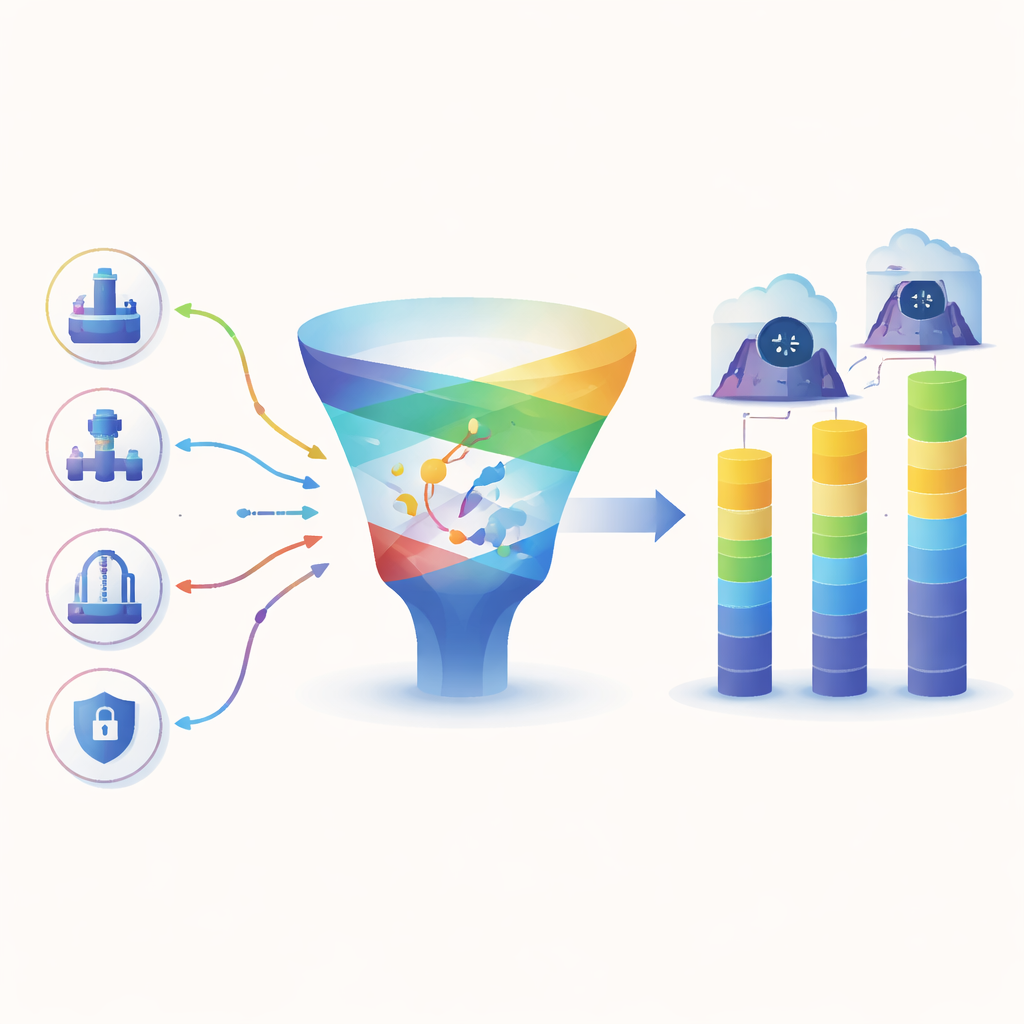
To turn this framework into a working evaluation tool, the team blends expert opinion with mathematical methods designed for uncertainty. Specialists in mining and engineering score each indicator, but instead of giving a single number, they provide a range that reflects their uncertainty. A method called blind number theory converts these ranges and each expert’s credibility into a single, more objective value for every indicator. The importance, or “weight,” of each indicator is then calculated in two ways: a subjective method that captures expert views of what matters most, and an objective method that looks at how much information each indicator actually carries in real data. A Lagrange-based formula fuses these into combined weights that are neither purely opinion-based nor purely statistical.
Measuring similarity, difference, and risk
Once each indicator has a value and a weight, the authors apply a mathematical scheme known as the set pair matter-element extension model. In essence, this method compares the measured state of a system with the standards for each level, treating them as a “pair” that can be partly identical, partly different, and partly opposed. For every indicator and for every possible level, the model computes a membership degree that shows how strongly the system matches that level. These are then blended across all indicators using the combined weights to produce an overall membership score for each level. The level with the highest membership is taken as the system’s grade, and an additional calculated value shows whether the system is trending toward a better or worse level within the scale.
Real mines put to the test
To check whether their evaluation model is practical, the researchers apply it to three operating mines, each with a modern back-filling control system. A panel of five experts scores the 16 indicators at each site, and the data are fed through the blind number, weighting, and set pair–extension steps. All three mines are rated at Level IV, indicating a high degree of intelligence and safety, but still shy of the best possible level. The detailed indicator scores highlight where each mine could improve—for example, more stable control of mixing-drum liquid levels in one case, better design of the ash distribution system in another, and more robust pipeline monitoring and emergency response in a third. To build confidence, the authors compare their results with two other evaluation approaches, a cloud model and an attribute recognition model; all three methods agree with each other and with on-site experience.
What the findings mean for safer mining
In everyday terms, this work offers mine operators a kind of safety “health check” for their back-filling control systems. Instead of relying on gut feeling or isolated performance measures, the new model pulls together many aspects of design, sensing, automation, and data management into a single, graded picture, while still showing which subsystems hold a mine back from top performance. The fact that the method matches other models and real-world observations suggests it can serve as a reliable decision aid for upgrading systems, preventing pipeline blockages, and strengthening underground support. As back-filling technology grows more complex and essential to deep mining, such transparent and balanced evaluation tools will be important for guiding safer, more efficient, and more environmentally responsible operations.
Citation: Yin, Y., Yang, S., Yang, Y. et al. Comprehensive safety evaluation for back-filling control system based on modified set pair matter-element extension model. Sci Rep 16, 9056 (2026). https://doi.org/10.1038/s41598-026-39557-6
Keywords: intelligent backfilling, mine safety, slurry pipeline monitoring, risk evaluation models, underground mining automation