Clear Sky Science · en
AI-supported real-time news evaluation reveals effects of time constraint on misinformation discernment
Why the speed of scrolling matters
Every day, we skim headlines on our phones while commuting, cooking, or half-watching TV. This study asks a simple but urgent question: when we are rushing, does it become harder to tell real news from made-up stories? Using live news feeds and artificial intelligence, the researchers followed people in their everyday lives to see how time pressure, personal habits, and surroundings shape what we believe online.
News in your pocket, studied in real life
Instead of bringing volunteers into a lab, the team tracked 110 university students on their own smartphones for two weeks. Three times a day, whenever major outlets like the BBC or Germany’s Tagesschau published a new story, a notification pinged participants’ phones. Tapping it opened a short headline and teaser. Sometimes they saw the original wording, sometimes a harmless rephrasing, and sometimes a version in which an AI system had quietly built in false or misleading details. After reading, participants rated how accurate the headline seemed, said whether they would share or read more, and answered questions about where they were and how distracted they felt. 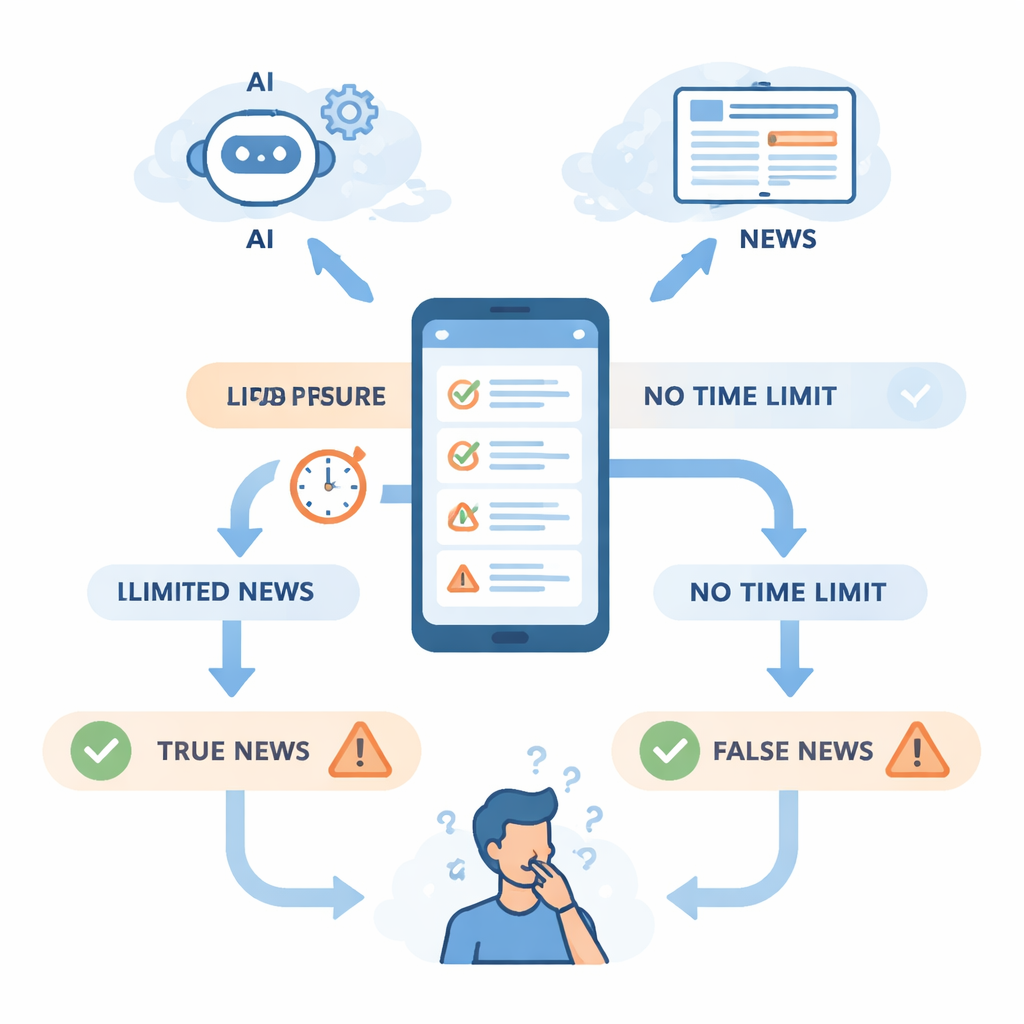
Racing the clock versus taking your time
The key twist was time. For some headlines, participants could look at the text as long as they liked while answering questions. For others, the headline vanished after seven seconds, mimicking a quick scroll through a news feed, though people still had unlimited time to think before giving their judgment. Overall, volunteers were not completely gullible: they rated false headlines as less accurate than true ones. But under the seven‑second reading limit, their knack for spotting fakes slipped. False stories were now judged noticeably more believable, while opinions about true stories hardly changed. In other words, rushing made lies sound more like truths, without making truths sound less true.
Familiar stories and personal mindsets
The study also probed why some people and some stories are especially persuasive. Headlines that felt familiar were rated as more accurate, whether they were true or false, echoing the “illusory truth” effect: repeated messages start to feel right simply because they seem known. People who scored higher on digital literacy—comfort with online tools and concepts—and those more satisfied with the political system were better at downgrading false news. By contrast, participants who scored higher on dogmatism, a tendency to hold rigid, closed‑minded views, were more likely to see false headlines as accurate. Everyday context mattered less than expected: noise, location, and whether someone was alone showed only small or inconsistent links to belief.
Clicking and sharing tell a different story
Judging accuracy was only part of the picture. Most participants were cautious overall about sharing or clicking through, and they were especially reluctant to pass along false news. Yet a curious pattern emerged: when false stories were shown under the time limit, people were more inclined to click the link afterward to inspect the original article. Knowing that a rushed, misleading item was fake seemed to spark curiosity. This highlights a dilemma for platforms that rely on engagement: even questionable content can generate clicks and time spent, the very signals that algorithms often treat as success.
A new way to watch misinformation in the wild
Methodologically, the study breaks new ground. A custom server monitored live RSS feeds from newsrooms, asked an AI system to create paraphrased and misleading versions on the fly, and then pushed these to participants’ phones right after publication. This “experience sampling” approach, repeated many times per person, captured how people actually encounter headlines—briefly, repeatedly, and in all sorts of everyday situations—rather than in a single lab session. It also allowed the researchers to track how repeated exposure and personal traits shape belief over time. 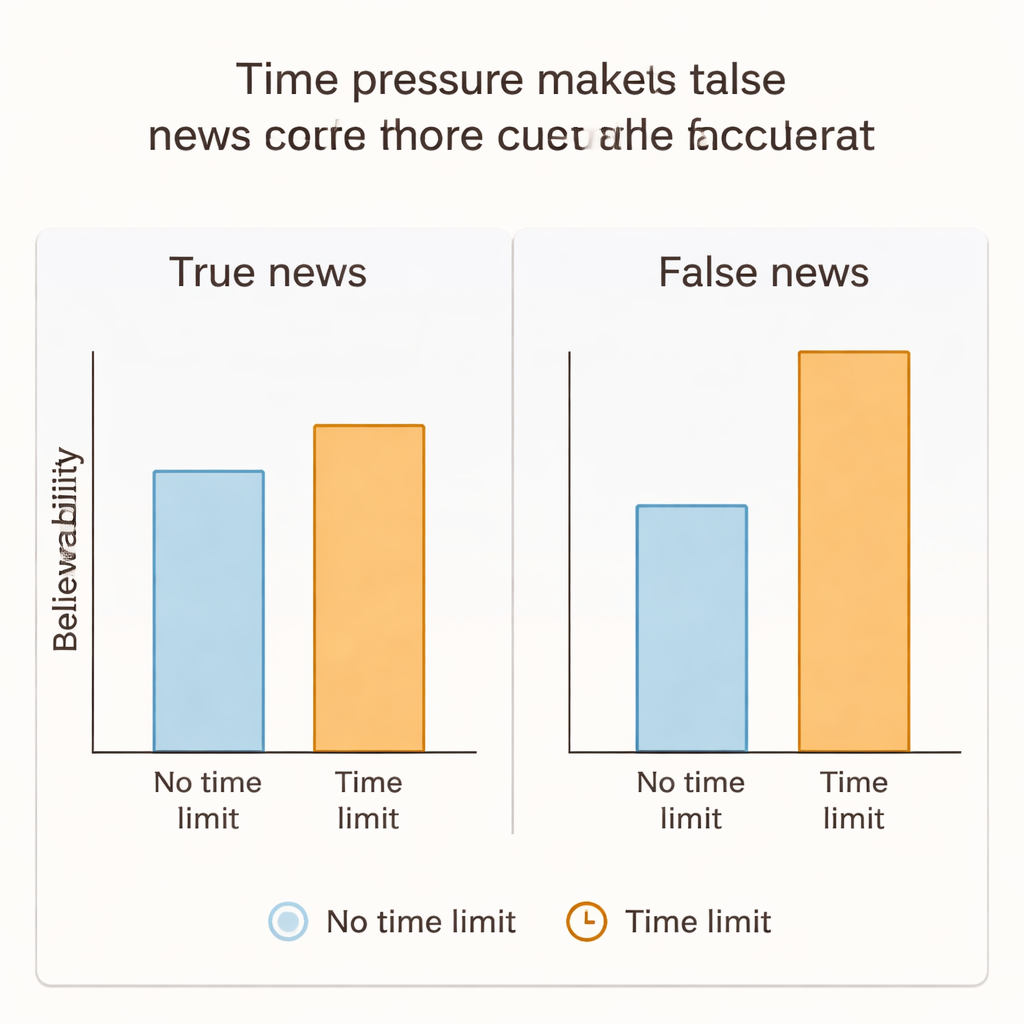
What it means for everyday news readers
The findings boil down to a clear takeaway for non‑specialists: when you are short on time, you are more likely to be fooled by false headlines, even if you consider yourself a careful thinker. Familiarity and rigid beliefs further tilt the odds in misinformation’s favor, while strong digital skills and trust in institutions help. For readers, that suggests slowing down—even briefly—before accepting or sharing striking claims. For platforms and policymakers, it underlines that designing online spaces for endless quick bites of information may unintentionally make misinformation more convincing. Building tools and habits that encourage a moment’s reflection could be a powerful shield against being misled.
Citation: Yury, S., Buchanan, T. & Reips, UD. AI-supported real-time news evaluation reveals effects of time constraint on misinformation discernment. Sci Rep 16, 6362 (2026). https://doi.org/10.1038/s41598-026-39555-8
Keywords: misinformation, fake news, social media, digital literacy, time pressure