Clear Sky Science · en
Fabrication and characterization of poly methyl methacrylate (PMMA) matrix modified with strontium nano-rods
Stronger Plastic for Everyday Smiles
Acrylic plastics are workhorses in modern dentistry, forming the pink base of many dentures and other devices that sit in our mouths for years. They are light, easy to shape, and look natural—but they can crack, warp with heat, and do little to stop germs from settling on their surface. This study explores whether sprinkling in tiny rod-shaped particles containing the element strontium can give this familiar plastic a tougher, more stable, and slightly germ-resistant makeover, without losing the qualities that make it so useful in the first place.
Why Denture Plastics Need an Upgrade
The plastic examined here, called PMMA, has been a favorite in dental and orthopedic work because it is transparent, biocompatible, and simple for technicians to process. Yet in real life it has weaknesses: it can fracture suddenly when dropped, deform under heat, and provide a hospitable surface for bacteria and fungi that cause bad breath, irritation, or infection. Dentists and materials scientists have been trying to fix these problems by mixing in microscopic fillers such as metal oxides. Strontium-based particles are especially interesting because strontium is involved in bone health and some of its compounds can interact with microbes. The question is whether adding very small amounts of strontium-rich “nanorods” can create a smarter version of PMMA for dentures and related medical devices.
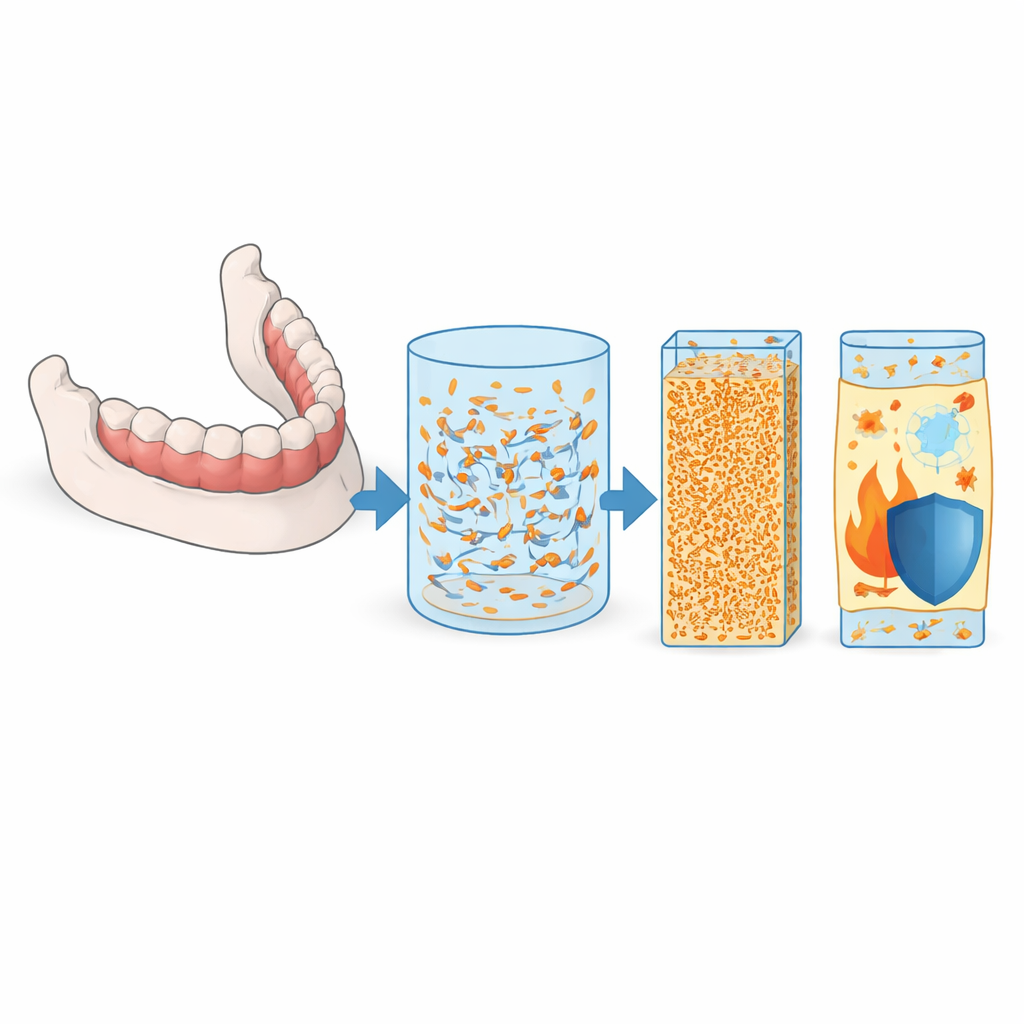
Building a New Plastic with Tiny Rods
The researchers first prepared strontium oxide nanorods using a wet-chemical recipe, converting a salt of strontium into a mixture dominated by rod-shaped crystals only a few dozen billionths of a meter wide. Careful heating and drying produced a powder that contained strontium oxide along with some related hydroxide and carbonate forms. They then made PMMA in water using an emulsion process, dissolving different amounts of the nanorod powder—between 1 and 5 percent by weight—into the liquid ingredient before it turned into solid plastic. The result was a series of thin films: plain PMMA as a reference, and four “nanocomposites” with rising filler levels. A suite of tools, from infrared light and X‑rays to electron microscopes and heat tests, was used to confirm that the rods were well dispersed and chemically linked to the surrounding plastic.
How the New Material Behaves
Seen under the microscope, the originally smooth PMMA surface became progressively rougher as more nanorods were added, indicating that the inorganic particles were embedded throughout rather than clumping in one place. The density of the films rose slightly, showing that the structure became more compact. When heated in a controlled way, the filled plastics lost mass more slowly and began to decompose at higher temperatures than the unfilled plastic. This extra thermal stability came not only from the rods acting as tiny heat barriers but also from gradual changes within the strontium compounds themselves, which soak up heat as they release water and carbon dioxide. In short, the modified plastic can endure higher temperatures before breaking down.
A Trade-Off Between Stiffness and Toughness
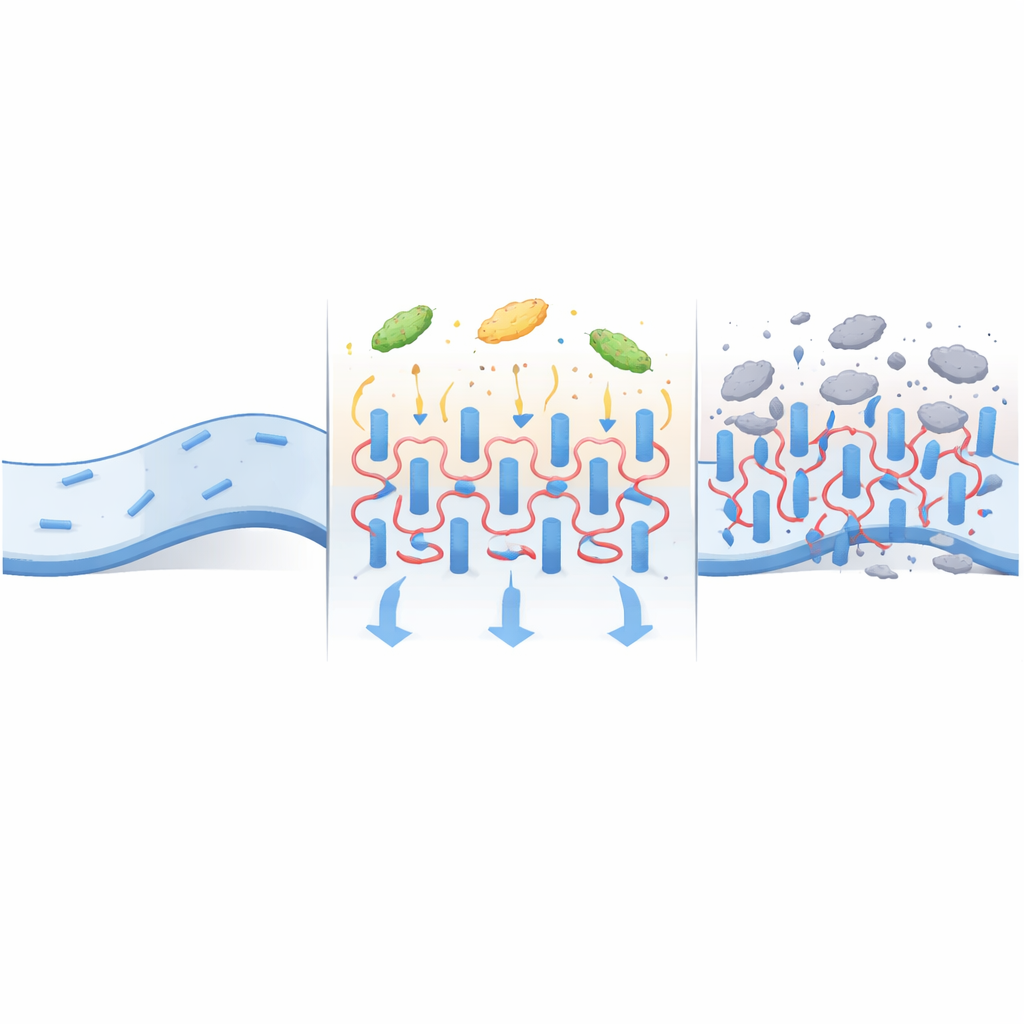
Mechanical tests revealed a familiar compromise. As nanorod content increased, the material became stiffer and harder—properties that help a denture resist daily chewing forces and surface wear. At around 3 percent filler, the plastic’s hardness and resistance to stretching improved markedly compared with plain PMMA. However, its ability to stretch before breaking, and its overall toughness, tended to decline, especially at the highest filler levels. The added rods act like rigid pins that restrict the motion of the plastic chains, making the material less forgiving under sudden impact. Tests against two common bacteria and a fungus showed modest antibacterial effects, particularly at intermediate filler loadings, where the strontium-based particles are thought to generate reactive chemical species that stress invading microbes.
What This Means for Future Dental Devices
For a layperson, the bottom line is that the researchers have created a version of everyday denture plastic that is harder, more heat resistant, slightly heavier, rougher at the surface, and somewhat better at discouraging certain microbes—but also more brittle if overloaded with filler. An intermediate level of nanorods, around 3 percent, appears to provide the best balance: strong and stable enough for typical denture demands, with only a moderate loss in the ability to absorb shocks. While this is not yet a perfect “unbreakable and antibacterial” denture base, it is a promising step toward smarter mouth-safe plastics that last longer and may help keep harmful germs at bay.
Citation: Megahed, O.N., Abdelhamid, M.I., Elwassefy, N.A. et al. Fabrication and characterization of poly methyl methacrylate (PMMA) matrix modified with strontium nano-rods. Sci Rep 16, 9342 (2026). https://doi.org/10.1038/s41598-026-39521-4
Keywords: denture materials, nanocomposites, strontium oxide, PMMA, antibacterial surfaces