Clear Sky Science · en
Sarcopenia and its association with physical activity and sedentary time in older adults on the Bushehr Elderly Health program
Why muscle loss in aging matters
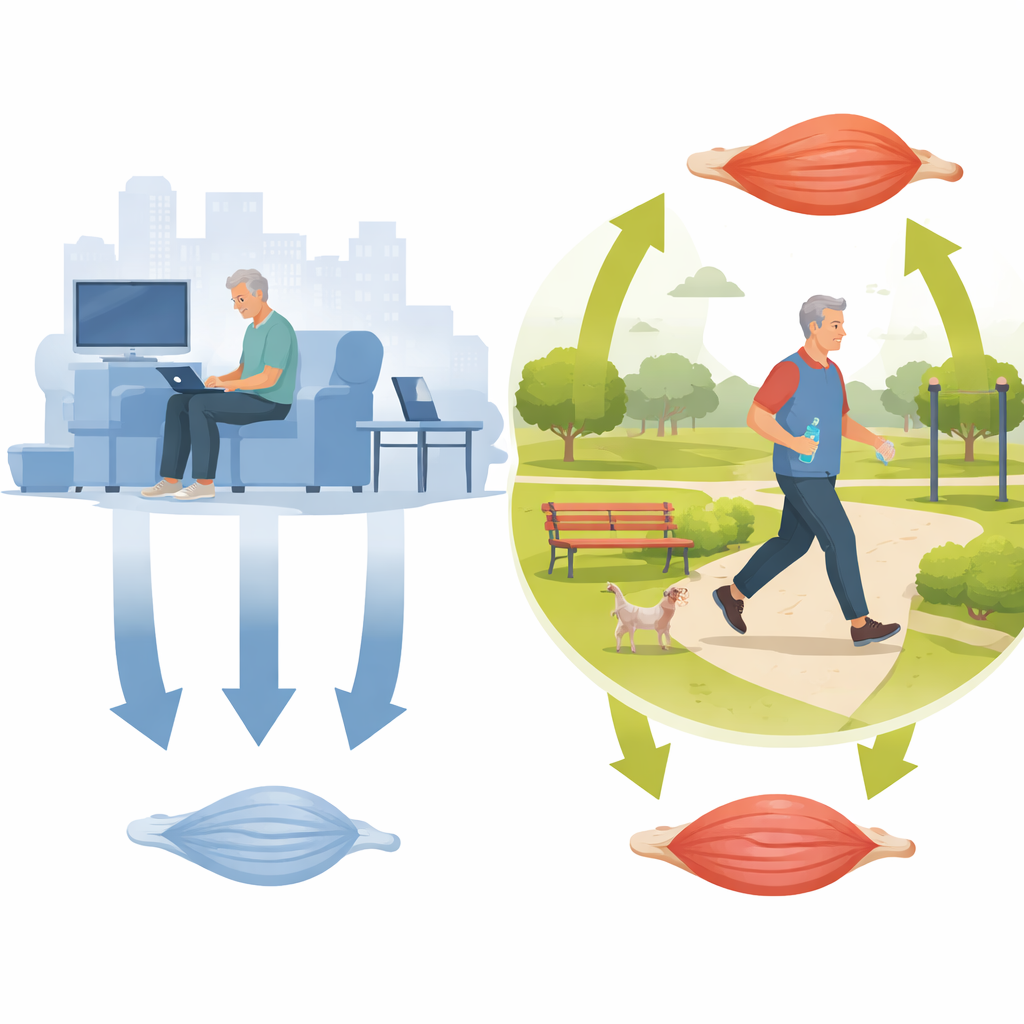
As people grow older, many quietly lose muscle mass and strength, a condition called sarcopenia. This muscle loss makes everyday tasks like climbing stairs, carrying groceries, or getting out of a chair harder and riskier. The study summarized here looks at how much time older adults spend sitting versus moving, and how those habits relate to muscle health. Its findings offer practical clues about how simple changes in daily activity could help seniors stay stronger and more independent for longer.
What the researchers wanted to know
The investigators focused on community-dwelling older adults living in Bushehr, a port city in southern Iran. Earlier work suggested that sarcopenia is common in Iran, yet few studies had examined, in the same group of people, both physical activity and sitting time in relation to muscle loss. The team wanted to find out how common sarcopenia is in this population and whether older adults who sit more, or move more, differ in their chances of having this condition, even after taking into account age, weight, and other health factors.
Who took part and how muscle health was measured
The study drew on phase II of the Bushehr Elderly Health Program, which follows about 3000 residents aged 60 and over. For this analysis, 2374 people (average age about 69 years, roughly half women) had complete data. Special scans using low-dose X-rays measured muscle mass in the arms and legs, and handgrip and standing-up tests assessed muscle strength and performance. Using international criteria adapted to the Iranian population, participants were classified as having or not having sarcopenia based on low muscle mass combined with weak strength or poor physical performance.
Sitting time, daily movement, and other health details
Trained nurses interviewed participants about their daily lives, including smoking, illnesses such as diabetes and high blood pressure, and economic status. Body size and blood tests for fats, calcium, and hemoglobin were also recorded. Physical activity during work, household chores, and leisure was estimated with a validated questionnaire and grouped from “not active/sedentary” to “very active.” Time spent sitting while awake—such as watching television, traveling by car, or using a computer—was assessed with a global activity questionnaire and classified as low, moderate, or high. Sleep time was not counted as sitting.
What the study found about sitting and moving
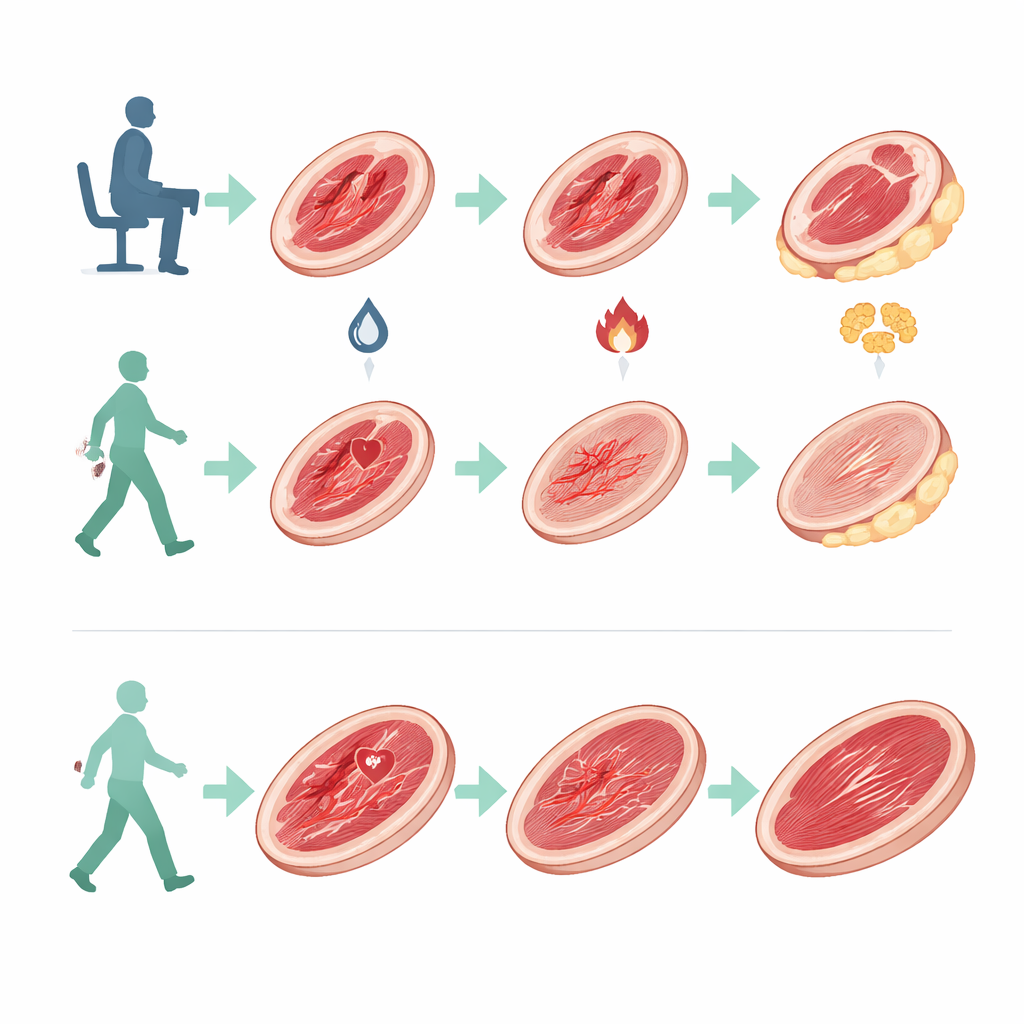
More than one in three participants (35.8%) were found to have sarcopenia, with slightly higher rates in men than women. In simple comparisons, those with sarcopenia were older, more often male, more likely to smoke, and more likely to have lower economic status. They also had lower body weight, smaller waist and hip measurements, and lower blood triglyceride levels. Importantly, both physical activity and sitting time were clearly linked to sarcopenia. After adjusting for age, sex, body size, chronic diseases, blood fats, and other factors, older adults who spent moderate or high amounts of time sitting each day were between about two and three times more likely to have sarcopenia than those with low sitting time. In contrast, people who reported any level of regular physical activity had about 25% lower odds of sarcopenia compared with those who were essentially inactive.
Why long sitting and low activity may shrink muscle
The authors discuss several ways that lifestyle may erode muscle over the years. Prolonged sitting replaces time that could be spent walking or doing light chores that keep muscles engaged. Extended inactivity can reduce the body’s ability to build new muscle proteins, weaken strength, and encourage low-grade inflammation and changes in fat stores that further harm muscle tissue. On the other hand, regular movement and exercise stimulate muscle cells, support protein building, and help maintain balance, speed, and overall fitness. Other studies have shown that meeting international recommendations for weekly activity improves muscle mass and function in older adults.
What this means for everyday life
This study shows that sarcopenia is common among older adults in Bushehr and that both too much sitting and too little movement are independently linked to weaker, smaller muscles. While the research cannot prove cause and effect, it adds to a growing body of evidence that breaking up long sitting periods and adding regular, even modest, physical activity can protect muscle health. For seniors and their families, the message is straightforward: stand up more often, walk a bit farther, and include simple strength and balance exercises most days of the week. These steps may help delay or prevent muscle loss, preserving independence and quality of life in later years.
Citation: Farhadi, A., Mohammadian, M., Afrashteh, S. et al. Sarcopenia and its association with physical activity and sedentary time in older adults on the Bushehr Elderly Health program. Sci Rep 16, 11096 (2026). https://doi.org/10.1038/s41598-026-39520-5
Keywords: sarcopenia, older adults, sedentary behavior, physical activity, healthy aging