Clear Sky Science · en
Optimizing just-in-time adaptive interventions for interpersonal distress: mechanisms, prediction, and the challenge of engagement
Help When You Need It, Right When You Need It
Many people living with anxiety or depression find that their feelings can swing sharply over the course of a day, especially in response to tensions with friends, family, or colleagues. Weekly therapy sessions often miss these fragile moments. This study explores whether tiny, smartphone-delivered exercises – sent just when someone starts to struggle – can support people in real time, how these “micro-interventions” might work under the surface, and why people so often ignore them even when they are clearly in distress.
Small Exercises in Everyday Life
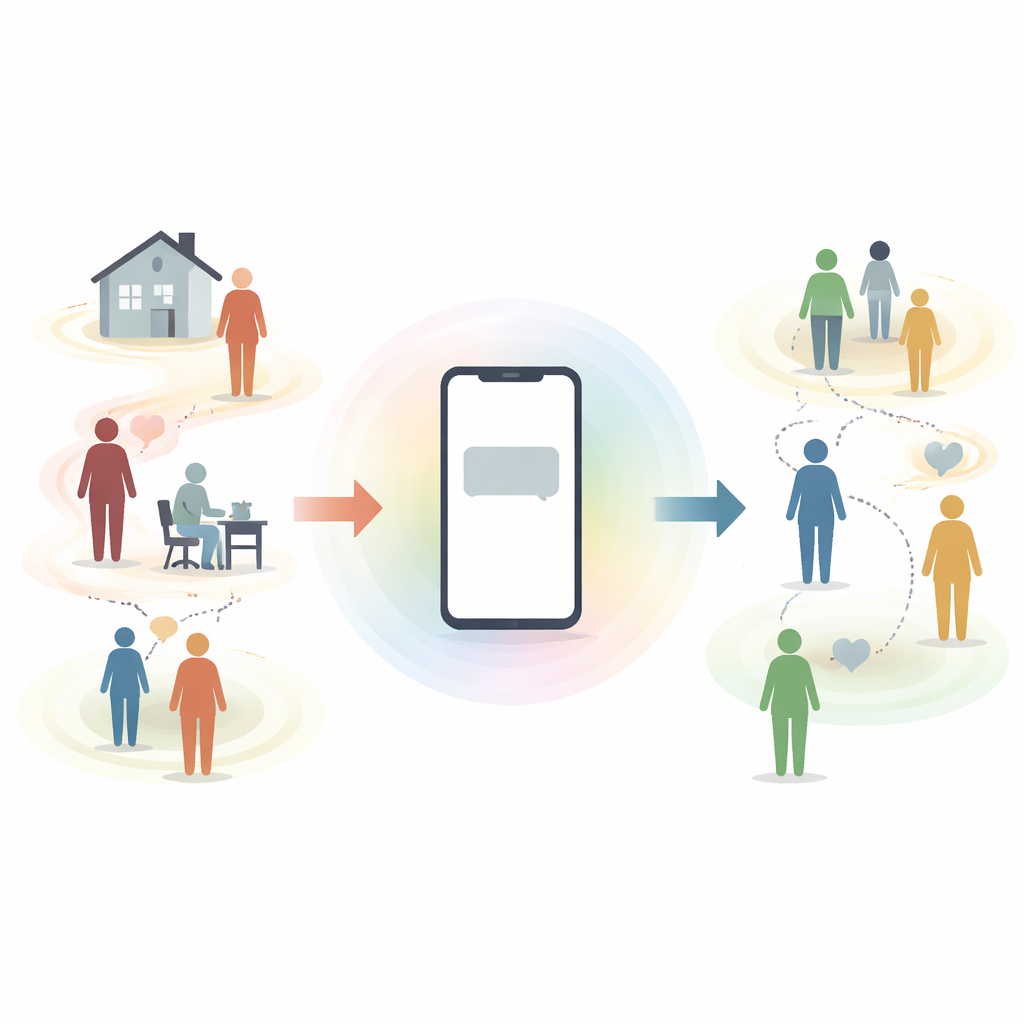
The researchers re-examined data from a trial in which 77 adults with depression or anxiety used an app for several weeks. Four times a day, the app asked brief questions about mood, stress, and how supported or criticized they felt by people around them. When a person’s answers showed a spike in low mood or social tension, the app offered a short guided exercise. One version drew on mindfulness – a three-minute breathing and awareness practice. The other version used “mentalization,” a set of prompts that help people reflect on their own and others’ thoughts and intentions in a tricky interaction.
Emotions, Stress, and Relationships Are Tightly Linked
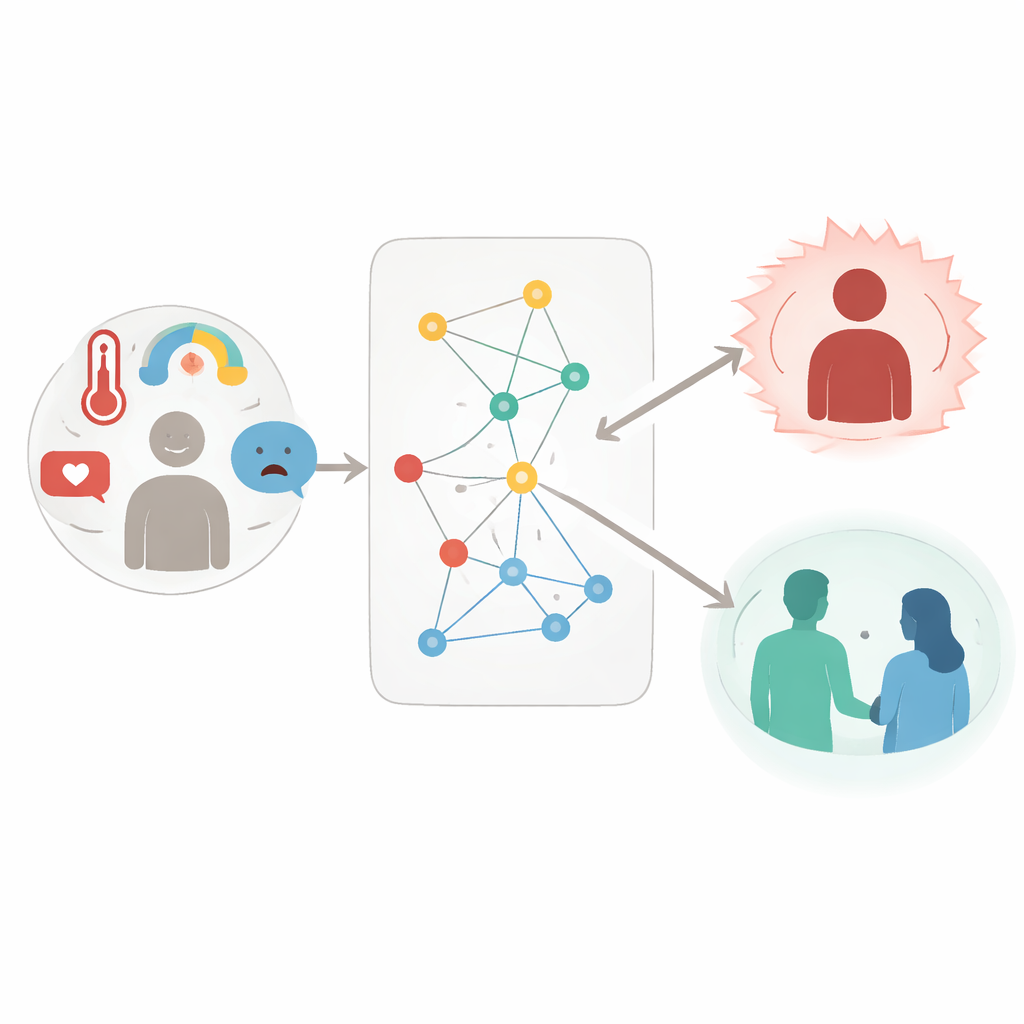
By tracking how different feelings moved together over time, the team found that people’s daily experience naturally fell into three clusters: perceived social threat (such as criticism and hostility), social connection (warmth, support, engagement, and assertiveness), and inner emotional state (mood and stress). Mood sat at the center of this web, linking what people felt inside with how safe or threatened they felt around others. In both the mindfulness and mentalization groups, warmth and support from others were especially influential, shaping the rest of the network. This pattern suggests that even brief phone-based help is working within a stable system of emotional and interpersonal forces, rather than simply nudging a single symptom up or down.
Not Instant Fixes, but Cumulative Support
Surprisingly, the short exercises did not produce clear, immediate changes in mood, stress, or relationship feelings at the very next check-in, roughly two hours later. Yet the original trial had already shown that people’s overall symptoms improved meaningfully over the full study period. This mismatch points to a slow-build effect: a single micro-intervention may be too light to feel, but repeated practice may gradually reshape how emotions and relationships hang together over days and weeks, in much the same way that regular physical exercise strengthens the body even if one workout is barely noticeable.
Why People Ignore Help When They Need It Most
One of the starkest findings was that people ignored about four out of five intervention prompts. Non-response was most likely when stress, perceived criticism, and a sense that others were over-involved all ran high – precisely the moments when help was most needed. High stress likely drains mental bandwidth, making it harder to pause and engage with a guided exercise. Feeling criticized may sap confidence and motivation to try coping tools. Interestingly, people were more willing to use the exercises when several symptoms flared at once, or when they had been in contact with more people recently, suggesting that a broad sense of struggle or active social involvement can nudge them toward seeking support.
Peeking Into the Near Future of Distress
The team also built a model to predict whether a person would feel especially distressed at their next check-in. Current stress levels and mood were the strongest clues, but the surrounding social climate added important nuance. Feeling criticized reliably signaled higher distress ahead, while warmth from others was protective. Support, however, told a more complicated story: higher support sometimes preceded greater distress, possibly because people seek help when they already sense trouble brewing or dwell on problems without resolving them. Overall, the model could distinguish higher-risk from lower-risk moments with fair accuracy, hinting that future apps could tailor both the timing and type of help more precisely.
Designing Smarter, Kinder Digital Helpers
For non-specialists, the main message is that smartphone-based mental health tools must do more than simply detect need; they must also anticipate whether a person is actually able and willing to engage. States like high stress and feeling under attack both increase distress and make it harder to use help. The authors argue that next-generation systems should aim for a “window of manageable distress,” adjusting how and when they step in – perhaps offering very simple, low-effort support at crisis peaks, and more reflective exercises when people have the headspace. With smarter triggers and a better match between clinical need and user readiness, these micro-interventions could become a practical part of everyday care for the many people whose emotional lives are shaped by the push and pull of their relationships.
Citation: Jaremba, A., O’Reilly, S., Mason, L. et al. Optimizing just-in-time adaptive interventions for interpersonal distress: mechanisms, prediction, and the challenge of engagement. Sci Rep 16, 8406 (2026). https://doi.org/10.1038/s41598-026-39518-z
Keywords: digital mental health, just-in-time interventions, mindfulness, social stress, smartphone therapy