Clear Sky Science · en
Impact of digital trade on tourism carbon emission reduction in China under industrial agglomeration and low carbon pilot policies
Why your next vacation’s carbon footprint matters
The trips we take for fun or business leave a surprisingly large trail of greenhouse gases, from flights and highway traffic to hotel air‑conditioning. As countries like China pledge to peak their carbon emissions and then reach “carbon neutrality,” tourism can no longer be treated as a harmless luxury. This study asks a timely question: can the growing world of online trade and digital services help make tourism cleaner, rather than dirtier, and under what local conditions does that actually happen?
Digital trade meets real‑world travel
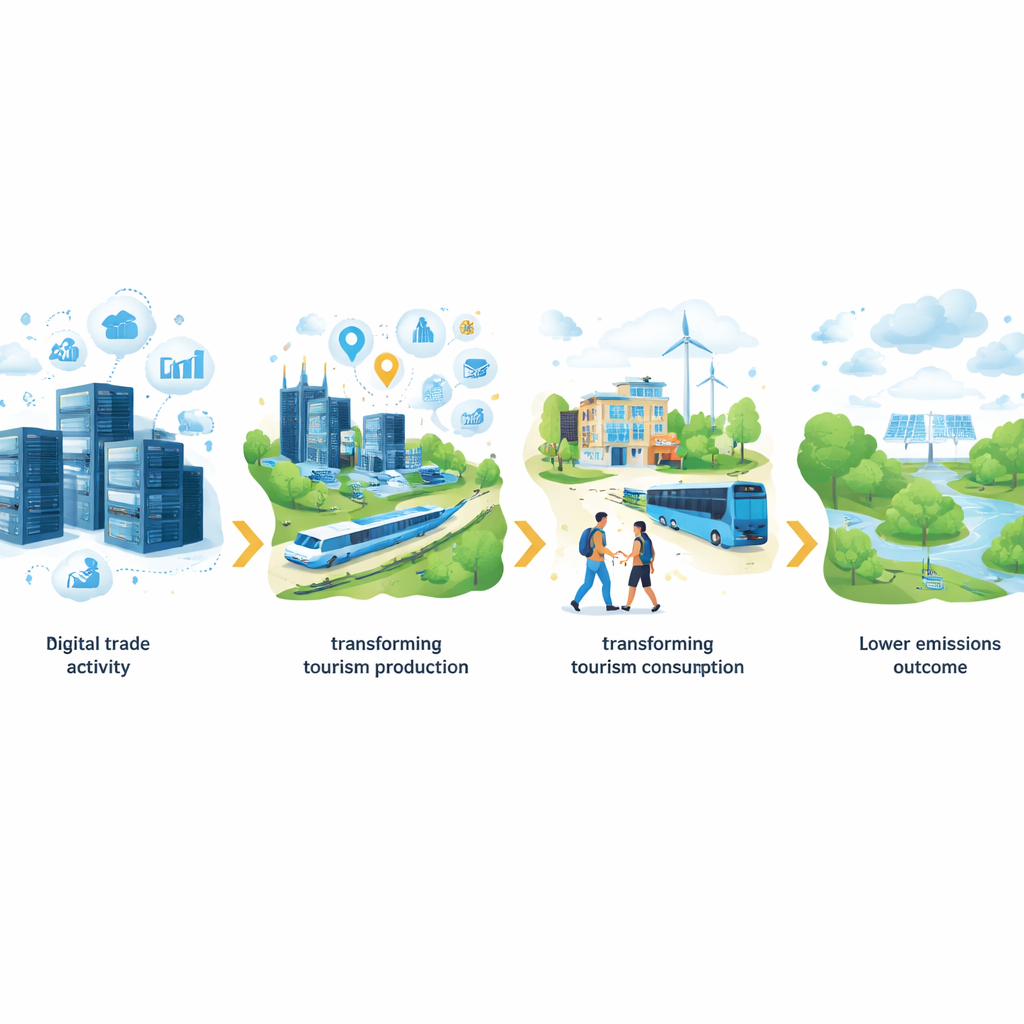
Digital trade is the buying, selling, and delivery of services and data through the internet—everything from online booking platforms and electronic payments to cloud‑based logistics. In China, this digital marketplace has expanded rapidly across provinces. The authors build a detailed index of digital trade strength using 25 indicators that capture innovation, internet infrastructure, technology investment, and e‑commerce activity. They then compare this index with a measure of how efficiently each province’s tourism industry produces economic benefits while keeping its carbon emissions in check. Instead of simply counting emissions, they evaluate how much carbon is used per unit of tourism output, turning that into an “inefficiency” score: the lower the score, the greener the tourism system.
How online systems reshape tourism businesses
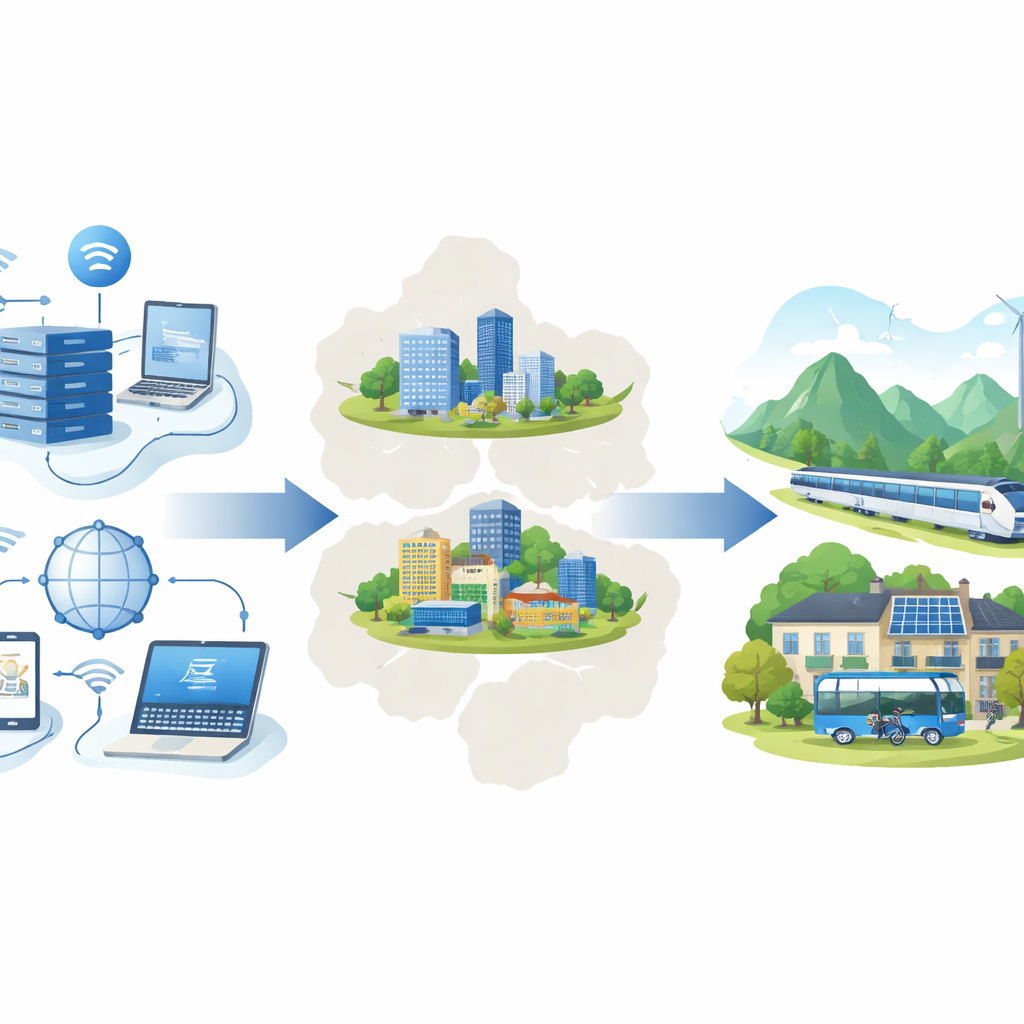
On the production side, the study finds that stronger digital trade is linked to lower carbon inefficiency in tourism—meaning emissions per unit of value tend to fall. Digital tools help travel firms streamline operations, manage energy use more precisely, and adopt cleaner technologies. For example, smart booking and routing can reduce wasted trips, while better data and automation can push hotels and attractions to invest in efficient equipment. The analysis shows that higher regional output and faster technological progress both carry part of this carbon‑saving effect. However, the shift toward a more service‑heavy, digital industrial structure can temporarily move emissions in the wrong direction, as new facilities are built and older, more polluting activities are phased out. In the short run, that restructuring can look like a setback even as it lays the groundwork for future gains.
What travelers choose matters too
Digital trade also influences tourism from the consumer side, by changing how and what people buy. Online platforms make it easier to compare options and discover low‑carbon choices, such as train routes instead of flights or eco‑certified lodgings instead of energy‑hungry resorts. The study finds that when rural residents upgrade their consumption—spending more on services and experiences rather than basic goods—tourism emissions per unit of output tend to fall. In contrast, similar “upgrading” in cities often pushes emissions up, likely because higher‑income urban travelers favor longer, more energy‑intensive trips, such as frequent air travel or luxury stays. In other words, digital tools can nudge behavior in greener directions, but their impact depends greatly on who is using them and how.
Clusters, pilot zones, and the power of place
The local economic landscape strongly shapes whether digital trade cleans up tourism or not. Provinces where high‑tech industries and producer services cluster together see digital trade’s carbon‑saving effect amplified. These clusters encourage knowledge sharing and faster diffusion of green technologies, helping tourism businesses adopt smarter logistics and efficient buildings. At the same time, concentrated industry also uses more energy, so the balance between innovation and sheer scale is delicate. Another crucial ingredient is policy. China’s low‑carbon pilot programs—special zones where carbon markets, stricter rules, and clean‑energy projects are tested—strengthen the positive link between digital trade and tourism efficiency. In these areas, better data, monitoring systems, and incentives allow online platforms and tourism firms to translate digital capabilities into real emission cuts.
What this means for future low‑carbon trips
Overall, the study concludes that expanding digital trade can be a powerful tool for reducing the carbon footprint of tourism, but only if it is paired with smart industrial planning and targeted climate policies. Digital platforms and data networks help tourism businesses operate more cleanly and give travelers more chances to choose low‑impact options, yet urban consumption patterns and poorly guided industrial restructuring can blunt or even reverse these benefits in the short term. For ordinary travelers, this work underscores that the apps and websites used to plan trips are not neutral—they can either lock in carbon‑heavy habits or help steer demand toward greener transport and lodging. For governments and industry, the message is clear: investing in digital infrastructure, encouraging clean technology clusters, and extending low‑carbon pilot policies are key steps if tomorrow’s holidays are to be part of the climate solution rather than the problem.
Citation: Yu, Z., Shi, X., Liu, W. et al. Impact of digital trade on tourism carbon emission reduction in China under industrial agglomeration and low carbon pilot policies. Sci Rep 16, 9129 (2026). https://doi.org/10.1038/s41598-026-39510-7
Keywords: digital trade, low-carbon tourism, carbon emissions, China, industrial agglomeration