Clear Sky Science · en
Organic mulching enhances Morpho-Physiological performance and yield of Sesame (Sesamum indicum L.) under water deficit conditions
Why saving water in sesame fields matters
Sesame seeds may be tiny, but they are nutritional powerhouses rich in healthy oil. Many farmers grow sesame in hot, dry regions where water is scarce and droughts are becoming more frequent. This study asked a practical question with big consequences for food and farmer livelihoods: can simple organic materials spread on the soil surface—such as straw, compost made by worms, or charcoal-like biochar—help sesame plants stay healthy, use water more efficiently, and still produce high yields and good-quality oil when water is limited?
Testing smart ground covers in a dry climate
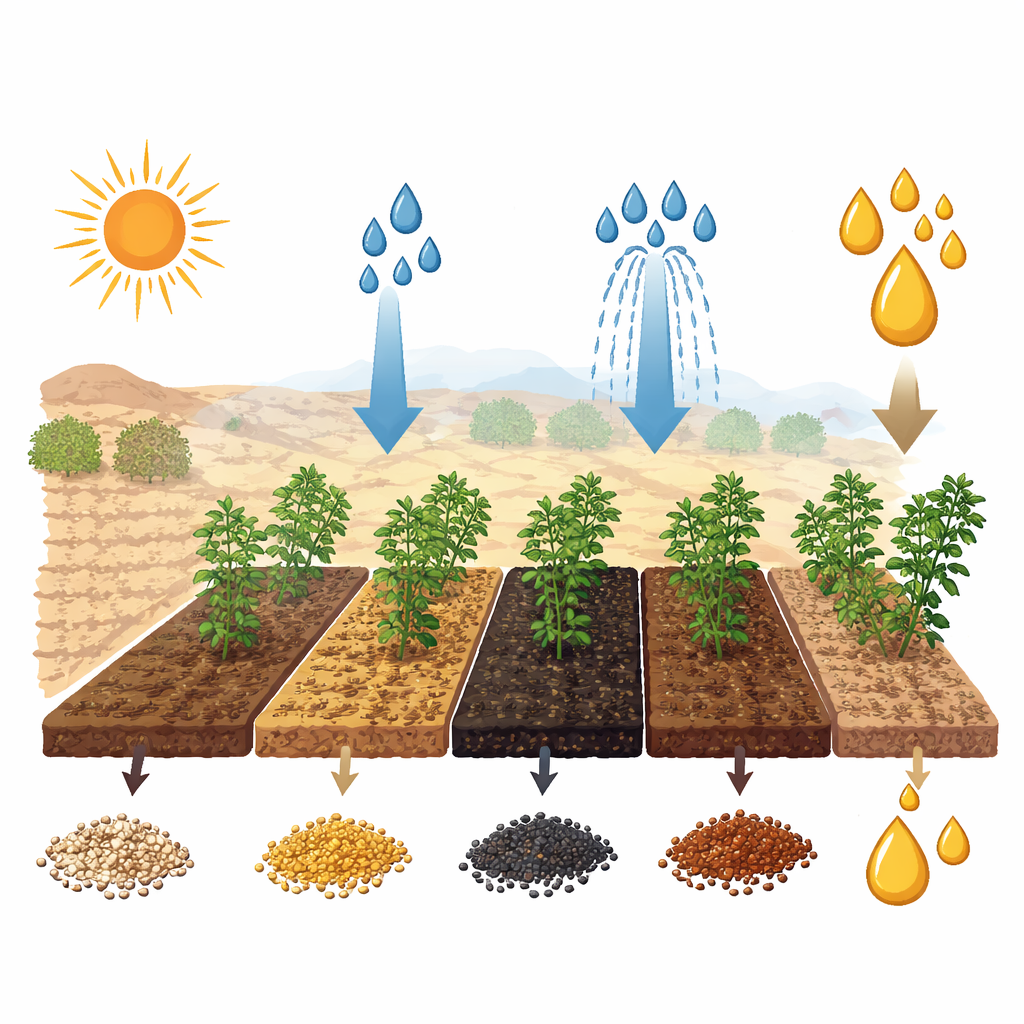
To explore this, researchers ran a field trial in northwestern Iran, a semi-arid area where every drop of water counts. They grew sesame under three watering levels: full watering, moderate cutback, and severe cutback. On top of the soil they compared four options: leaving the ground bare, covering it with wheat straw, enriching it with vermicompost (a nutrient-rich material processed by worms), or adding biochar, a porous carbon-rich material made from plant waste. By measuring plant growth, seed and oil yields, leaf greenness, water status, and natural protective chemicals inside the plants, they could see not only how well the crop performed, but also why.
Healthier plants, more seeds, even under stress
Without any mulch, sesame plants suffered as watering was reduced: they became shorter, produced fewer seed capsules and seeds, and their overall biomass and seed yield dropped by roughly one-third to one-half under the harshest water deficit. Adding organic mulches softened these blows dramatically. All three mulches improved plant height, number of capsules, seed weight, and final seed yield compared with bare soil, and these benefits became even more important as water grew scarce. Biochar stood out: under full watering it increased seed yield by about 170 percent compared with bare soil, and under severe water shortage that advantage climbed to nearly 190 percent. Similar gains were seen for oil yield, which more than doubled with biochar in the driest treatment.
Helping plants hold water and stay green
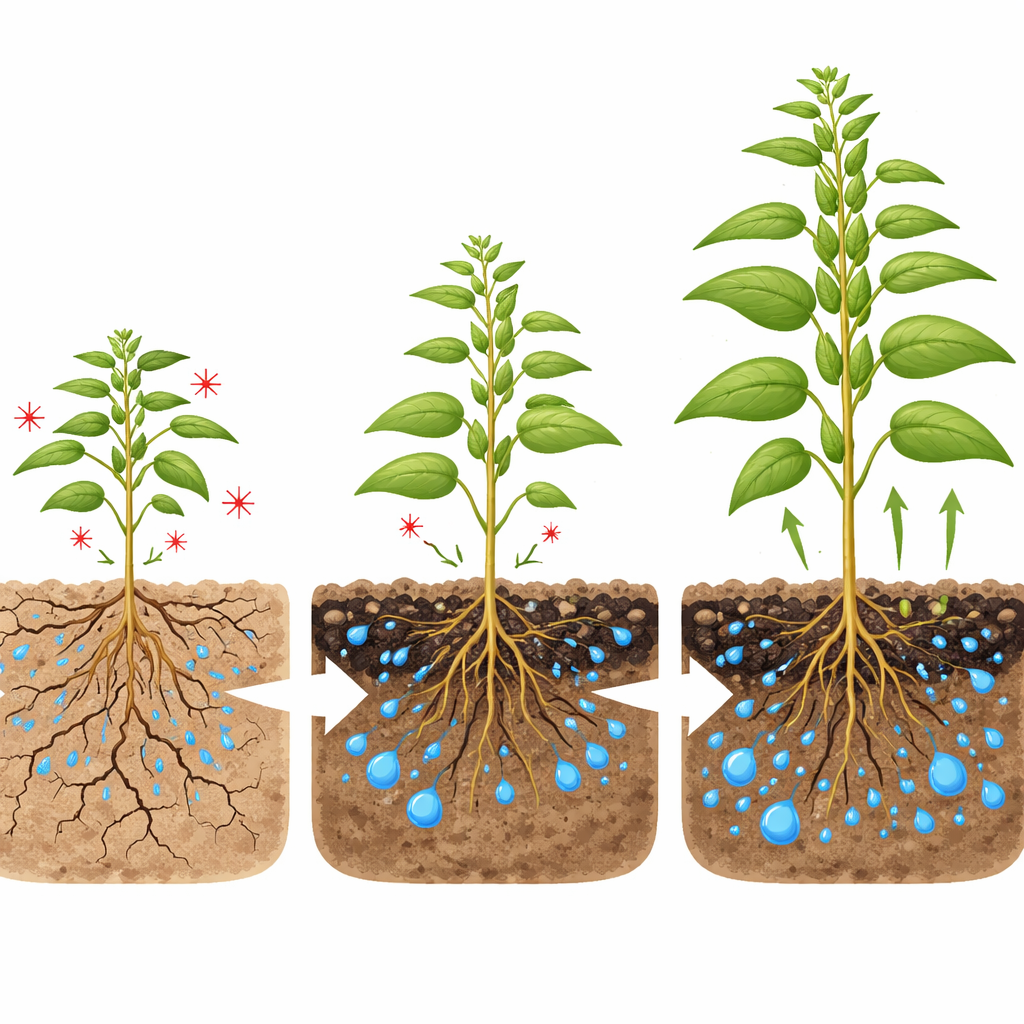
Mulched plants, especially those growing over biochar or straw, kept their leaves better hydrated and greener. Leaves from mulched plots had higher relative water content, meaning they lost less moisture to the dry air. They also contained more chlorophyll, the green pigment essential for photosynthesis, suggesting that the plants could continue capturing sunlight and making sugars despite the stress. Straw and biochar were particularly effective at buffering the plants against drops in chlorophyll seen under drought. These improvements likely reflect several simple physical effects: the mulches shaded the soil surface, reduced direct evaporation, and in the case of biochar and vermicompost, improved the soil’s ability to hold water and nutrients around the roots.
Inner defenses: sugars, stress molecules, and natural shields
Beyond visible growth, the study probed what was happening inside the plants. Under water deficit, sesame naturally builds up certain small molecules, such as soluble sugars and proline, that act like internal "anti-dryness" agents helping cells retain water. Mulching boosted these protective compounds further, with biochar-treated plants often showing the highest levels, particularly under severe stress. The plants’ antioxidant defense systems—both enzymes and natural plant chemicals—also responded. Enzymes that neutralize harmful oxygen by-products rose with moderate stress but tended to crash when stress was extreme; mulching, again especially with biochar, helped maintain higher enzyme activity and greater total antioxidant capacity even under the harshest conditions. In practical terms, this means less cellular damage and more resilient plants.
Better oil from a tougher crop
The benefits extended to the quality of the sesame oil itself. Water shortage without mulch tended to reduce oil yield and shift the mix of fatty acids in less favorable ways. With organic mulches, total oil yield increased sharply because of higher seed yields, and the nutritional profile of the oil improved. Biochar in particular raised the share of oleic acid—a heart-healthy monounsaturated fat—to just over half of the total fatty acids under severe water stress, while also supporting high levels of linoleic acid, another desirable unsaturated fat. Straw tended to favor slightly higher saturated fats, whereas vermicompost gave moderate, balanced improvements.
What this means for farmers and food
For farmers in dry regions, the study’s message is clear and accessible: covering the soil with organic materials can turn a vulnerable sesame field into a more robust, water-smart system. All mulches tested helped the plants stay hydrated, keep their leaves green, and protect themselves from drought damage, leading to more seeds and more oil. Among them, biochar was the clear winner, delivering the biggest boosts in yield, oil quantity, and oil health value, thanks to its sponge-like ability to store water and nutrients and support plant defenses. While cost and availability will shape which mulch is most practical in a given region, this work shows that simple organic ground covers are powerful tools for producing nutritious sesame seed and oil sustainably in a warming, thirstier world.
Citation: Malekiazar, L., Rezaei-Chiyaneh, E., Dolatabadian, A. et al. Organic mulching enhances Morpho-Physiological performance and yield of Sesame (Sesamum indicum L.) under water deficit conditions. Sci Rep 16, 8070 (2026). https://doi.org/10.1038/s41598-026-39503-6
Keywords: sesame drought, biochar mulch, water-saving agriculture, oilseed crop resilience, organic mulching