Clear Sky Science · en
Performance comparison of MPPT controllers in a grid-connected PV system: LCOE and payback period approaches
Why Smarter Solar Matters for Your Wallet
Solar panels have become a familiar sight on rooftops and in large fields, but getting the most electricity and value out of each panel is still a challenge. This study looks at how different "brain-like" controllers for solar plants perform, not only in terms of power output but also in terms of cost per unit of energy and how quickly an investor gets their money back. The work focuses on a grid-connected solar system in India and shows how a newly designed controller can squeeze more energy out of sunlight and shorten the payback period for the entire installation.
Growing Power Needs and the Push for Solar
India is one of the world’s largest and fastest-growing energy consumers, and meeting that demand cleanly is a national priority. Solar power is a prime candidate, but sunlight is never truly steady: clouds pass, temperatures shift, and parts of a panel can be shaded. Because of this, a solar array has a moving "sweet spot" where it generates maximum power. Devices called maximum power point trackers (MPPTs) continuously adjust the operating point of the panels so they run near this sweet spot. Traditional tracking methods are simple and cheap but can miss significant energy when conditions change rapidly, which in turn affects both the stability of power delivered to the grid and the economic return from a solar plant.
How the New Solar Control Brain Works
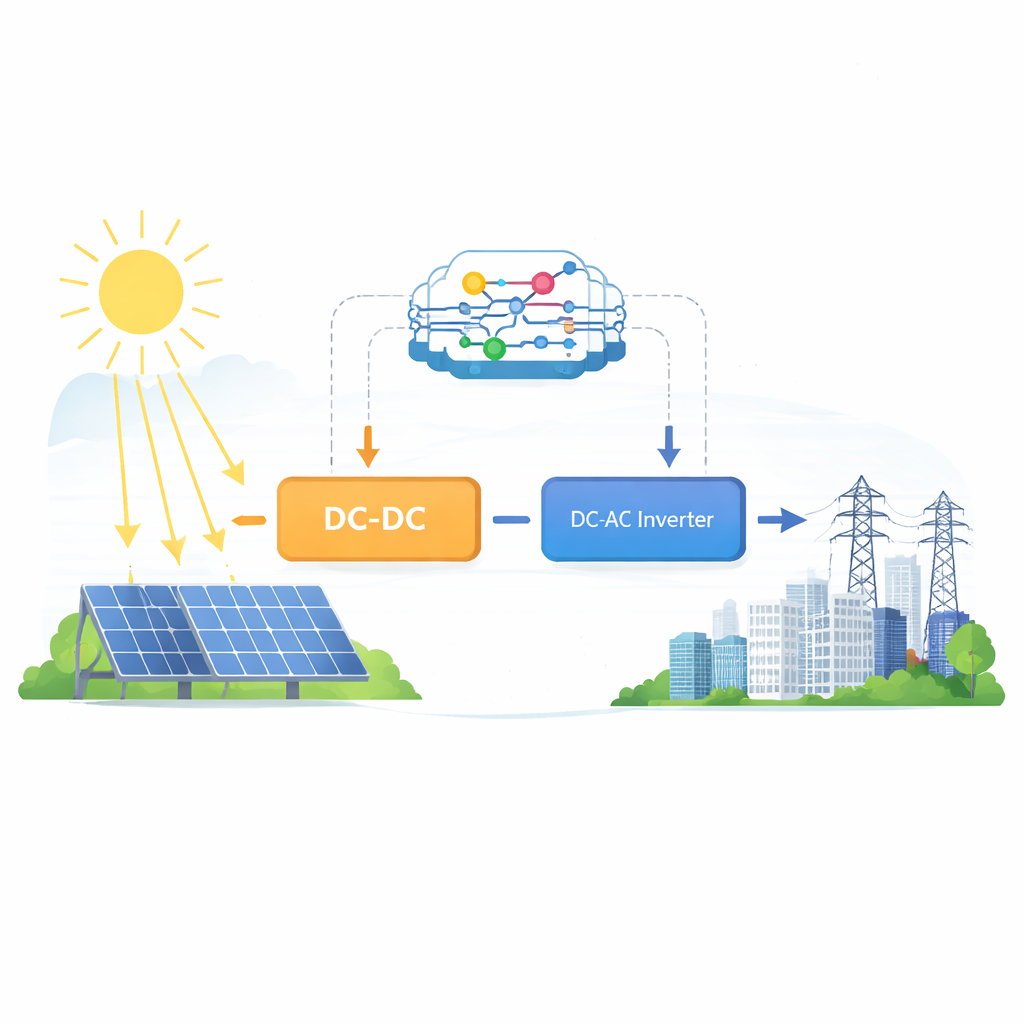
The authors study a typical medium-sized grid-connected solar station of about 20 kilowatts. It uses a two-stage power path: first a DC–DC boost converter that stabilizes the panel voltage, then a DC–AC inverter that feeds power into the grid. On top of this hardware, they compare several ways of steering the system toward maximum power, including well-known methods like "perturb and observe" and more sophisticated approaches that use fuzzy logic or adaptive neuro-fuzzy systems. Their main contribution is a new hybrid controller called AGORNN, which combines a recurrent neural network with an optimization algorithm inspired by the swarming behavior of grasshoppers. In simple terms, one part of the controller learns how panel power responds to changing sunlight and temperature, while the other part continuously fine-tunes control settings to keep the system fast, stable, and close to its best operating point.
Testing Under Real-World Indian Sunlight
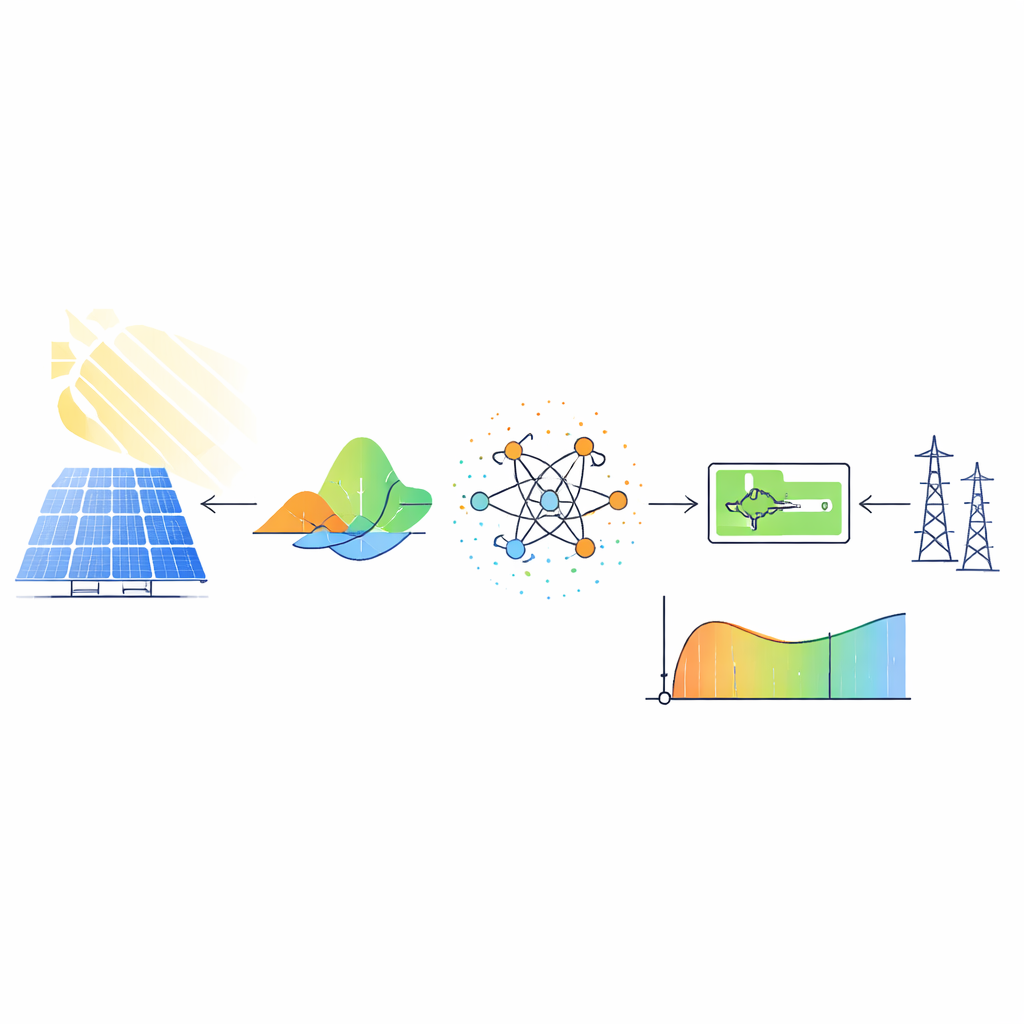
Unlike many studies that rely on standard laboratory conditions, this work feeds the controllers with a year’s worth of real measurements from a campus in Telangana, where sunlight often exceeds the usual test value of 1000 watts per square meter. The researchers simulate how each controller handles both standard test conditions and these harsher, highly variable conditions. They track not just peak power, but also how quickly the system responds to sudden changes, how much the voltage and current fluctuate, and how clean the current delivered to the grid is. The AGORNN controller shows the highest tracking efficiency: about 99.9% under standard conditions and 96% in the practical test case. It also sharply reduces voltage and current ripples and keeps overshoot—overshooting the ideal power level during changes—very small, which indicates a more stable and grid-friendly system.
From Extra Kilowatt-Hours to Lower Energy Cost
Higher tracking efficiency is only truly valuable if it leads to better economics over the lifetime of the plant. To capture this, the authors calculate the levelized cost of energy (LCOE)—the total cost of building and operating the system divided by all the electricity it produces over its life—and the payback period, the time it takes for energy savings to cover the initial investment. They consider installation cost, government subsidies, maintenance, and the gradual decline in panel output with age. For the 20 kW system, the AGORNN controller increases annual energy generation to about 26,349 kilowatt-hours and drives the LCOE down to roughly ₹2.05 per unit of electricity. This improved performance shortens the payback period to about 3.77 years, slightly but meaningfully better than the 3.9-year range obtained with more conventional controllers.
What This Means for Future Solar Projects
For a layperson, the key message is that smarter control can make a solar plant not only more efficient but also more financially attractive. By learning from real weather patterns and constantly self-tuning, the AGORNN-based controller helps panels operate closer to their best point, even under intense and changeable sunlight. Over years of operation, those extra kilowatt-hours add up to lower energy costs and faster recovery of the upfront investment. The study suggests that pairing advanced algorithms with standard solar hardware is a promising route to cleaner electricity that also makes better economic sense for homes, campuses, and small businesses.
Citation: Babu, P.C., Kshatri, S.S., Reddy, C.R.S.R. et al. Performance comparison of MPPT controllers in a grid-connected PV system: LCOE and payback period approaches. Sci Rep 16, 9030 (2026). https://doi.org/10.1038/s41598-026-39500-9
Keywords: solar photovoltaics, maximum power point tracking, renewable energy economics, grid-connected PV systems, levelized cost of energy