Clear Sky Science · en
Assessing mortality risk in pulmonary tuberculosis and severe malnutrition: development of the IIR marker via artificial intelligence
Why this research matters
Tuberculosis and severe undernourishment often strike the same people: those living in poverty, with limited access to medical care and food. When these two conditions occur together, the risk of dying in the hospital rises sharply. Doctors in busy clinics, especially in low‑resource settings, need a simple way to spot which patients are in the greatest danger right at admission, using tests they already have. This study introduces a new blood‑based marker designed to do exactly that.
The double burden of lung infection and hunger
Pulmonary tuberculosis is a contagious lung infection that remains common in many parts of the world, including eastern Europe. Severe malnutrition, reflected by a very low body mass index, weakens the body’s defences and makes it much harder to control such infections. The combination creates a vicious circle: infection worsens appetite and energy needs, while poor nutrition further erodes the immune system. In Romania’s Oltenia region, researchers followed hospitalised adults with both lung tuberculosis and marked underweight to better understand who is most likely to die during their initial stay in hospital.
Taking a closer look at the blood
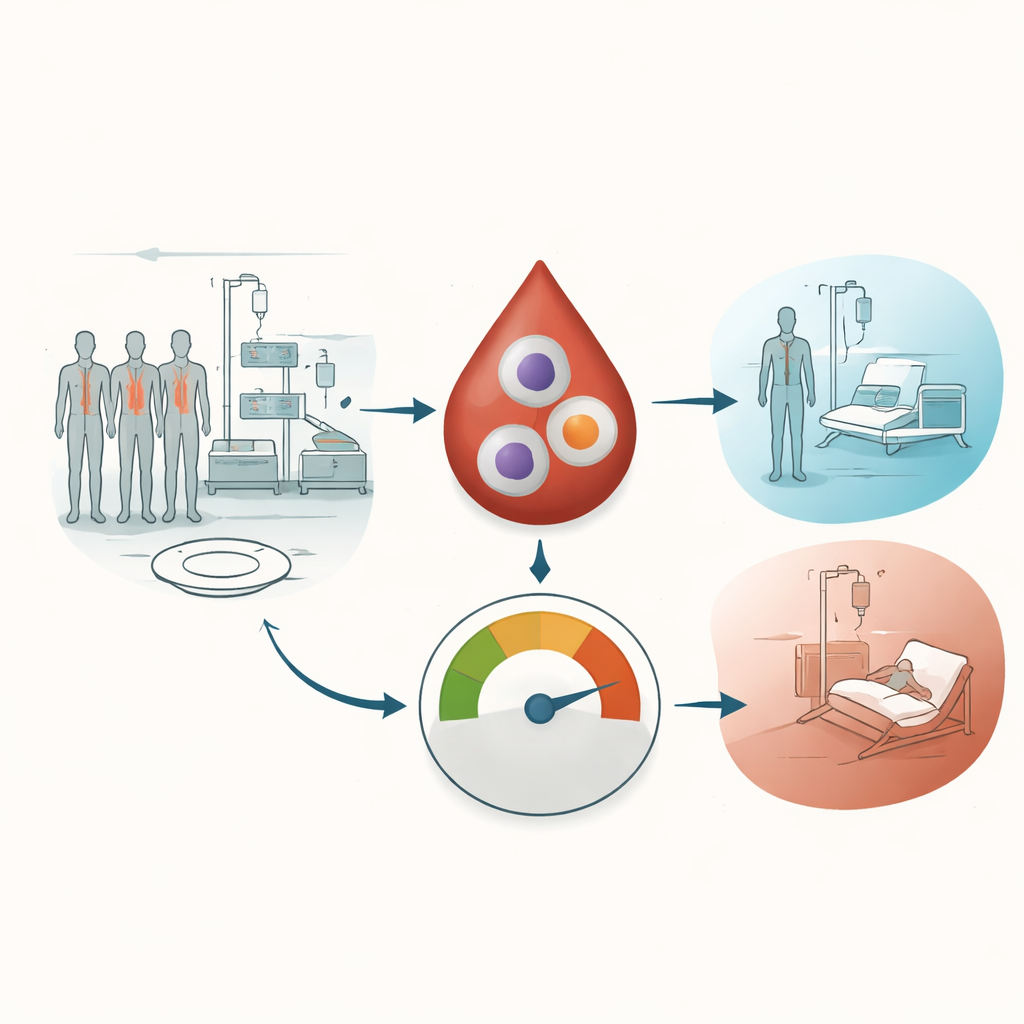
All 216 patients in the study had very low body weight and confirmed pulmonary tuberculosis. About one in eight died before discharge. When the team compared people who survived with those who did not, they found striking differences in common blood tests taken before any treatment began. Those who died tended to be older, more anaemic, and had a particular pattern in their white blood cells: high levels of neutrophils, which are front‑line infection fighters, and very low levels of lymphocytes and eosinophils, which help coordinate and calm the immune response. This imbalance suggested that a single measure capturing the “push‑and‑pull” between aggressive inflammation and protective immunity might be more informative than any single cell count on its own.
A new warning sign from routine tests
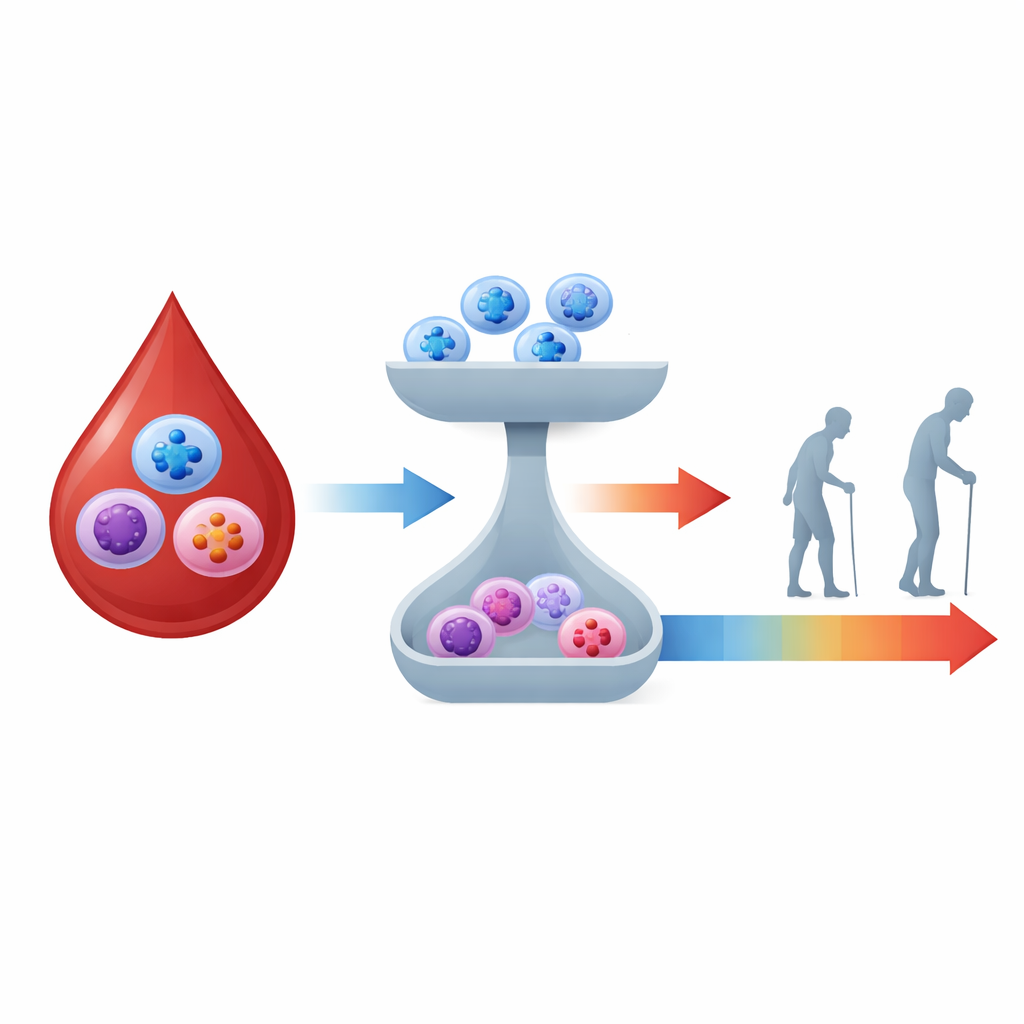
Using artificial intelligence tools alongside traditional statistics, the researchers built the Immuno‑Inflammatory Ratio, or IIR, from three routinely measured types of white blood cells. The formula increases when neutrophils are high and when lymphocytes and eosinophils are low, reflecting a stormy, poorly controlled immune state. They then tested how well this ratio distinguished between patients who would live and those who would die during the admission. The IIR clearly outperformed several existing blood‑based scores that doctors sometimes use to gauge inflammation, showing both very high sensitivity (catching almost all deaths) and strong specificity (few false alarms) at a particular cut‑off value.
Turning numbers into bedside decisions
Beyond pure prediction, the team explored how such a marker could change care. In their analyses, a high IIR remained the strongest independent signal of in‑hospital death, even after accounting for age, heart disease and other factors. The authors propose that patients arriving with very high IIR values should receive an “escalation bundle”: earlier review by senior clinicians, more intensive monitoring, careful but prompt nutritional support to avoid refeeding problems, rapid correction of dehydration and anaemia, and faster microbiology testing to ensure the right tuberculosis drugs are started without delay. Because IIR relies only on a standard complete blood count, it can be calculated in most hospitals without new equipment.
What this means for patients and health systems
The study concludes that the Immuno‑Inflammatory Ratio is a promising, easy‑to‑compute signal that helps flag tuberculosis patients with severe malnutrition who face a particularly high risk of dying in hospital. It does not replace good medical care or nutrition programmes; instead, it helps decide who most urgently needs those resources when they are stretched thin. The work was carried out in a single hospital and looked only at deaths during the first admission, so larger and longer studies are still needed. If those confirm these findings, this simple ratio could become part of everyday triage, helping doctors worldwide give timely, life‑saving attention to the most fragile patients.
Citation: Rădulescu, D., Streba, CT., Traşcă, ET. et al. Assessing mortality risk in pulmonary tuberculosis and severe malnutrition: development of the IIR marker via artificial intelligence. Sci Rep 16, 9863 (2026). https://doi.org/10.1038/s41598-026-39487-3
Keywords: tuberculosis, malnutrition, mortality risk, blood biomarkers, machine learning