Clear Sky Science · en
Effect of divergent residual feed intake on the fecal microbiota in fattening Hanwoo steers
Why the gut of beef cattle matters for your dinner plate
Feeding beef cattle is one of the biggest costs in producing the steaks and roasts that reach our tables. If farmers can raise animals that grow well while eating less, meat can be produced more efficiently and with a smaller environmental footprint. This study looked inside an unexpected place—the manure of Hanwoo steers, Korea’s signature beef breed—to see whether the tiny organisms living there are linked to how efficiently the animals turn feed into body weight.
Two kinds of eaters, same growth
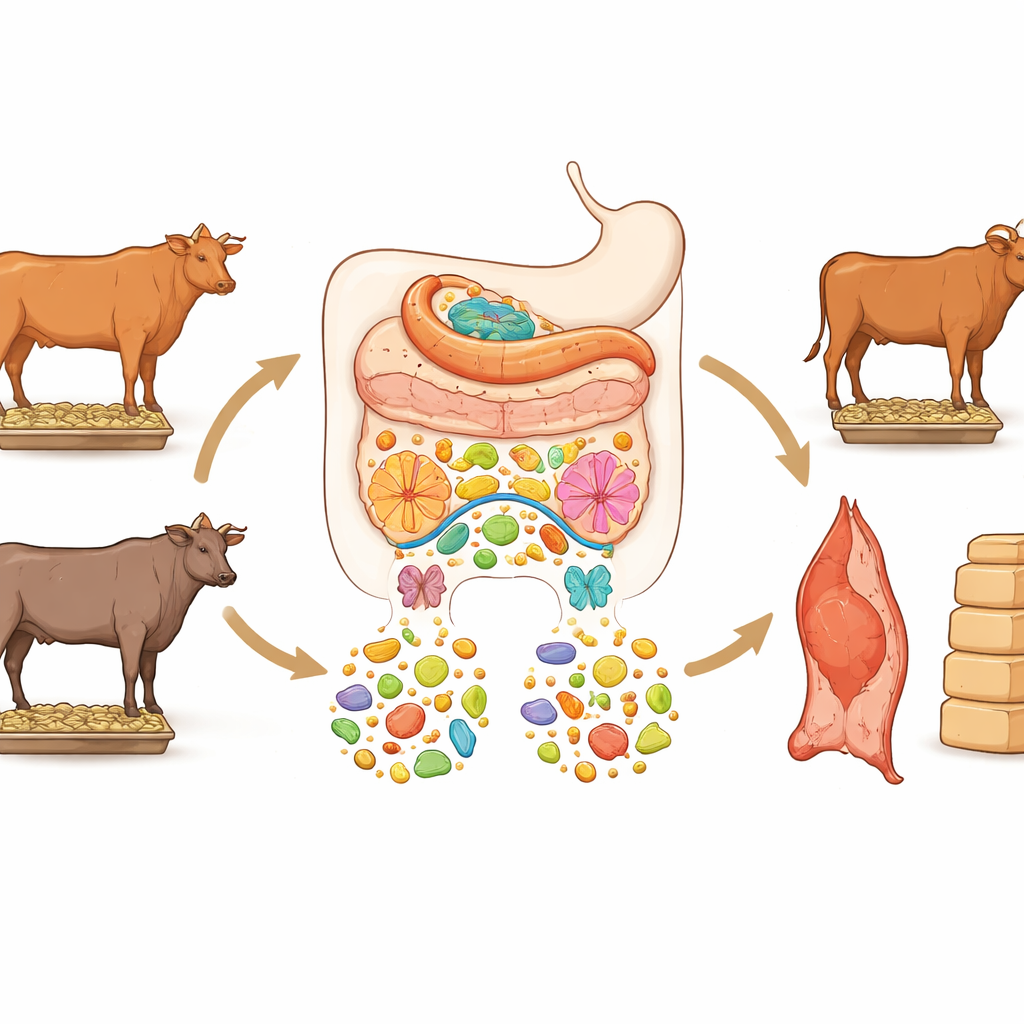
The researchers followed 63 Hanwoo steers during the fattening phase, when cattle are putting on the most weight before slaughter. All animals were kept under the same conditions and fed the same mixed ration. The team focused on a measure called residual feed intake, which compares how much an animal actually eats with how much it is expected to need for its size and growth. Steers that needed less feed than expected were labeled “efficient,” and those that ate more than expected were “inefficient.” From the full group, 11 animals representing the most efficient and the most inefficient ends of this scale were selected for detailed study.
Same pounds gained, different feed use
Despite their different appetites, the two groups ended the trial with similar body weights and daily weight gains. The key difference was how much they had to eat to get there. Inefficient steers consumed significantly more dry feed each day than efficient steers to achieve the same growth. This confirms that the feed-use measure really separated animals by efficiency, not by how fast they grew. With feed making up a large share of production costs, such differences can add up quickly across a herd, and could also affect how much climate‑warming methane is produced per pound of beef.
Microbial communities that look alike at first glance
To test whether the microbes in the hindgut are linked to these efficiency differences, the scientists collected fecal samples from the selected steers at the end of the 78‑day trial and sequenced bacterial DNA. Overall, the mix of bacteria looked broadly similar between the two groups. The same major families dominated, and measures of how many types were present and how evenly they were distributed did not differ much. When the researchers compared the communities as a whole, they also did not find a clean split between efficient and inefficient animals. This suggests that small shifts in particular groups of microbes, rather than sweeping changes in the entire community, might matter most for how well cattle use their feed.
Key gut residents that separate efficient and inefficient steers
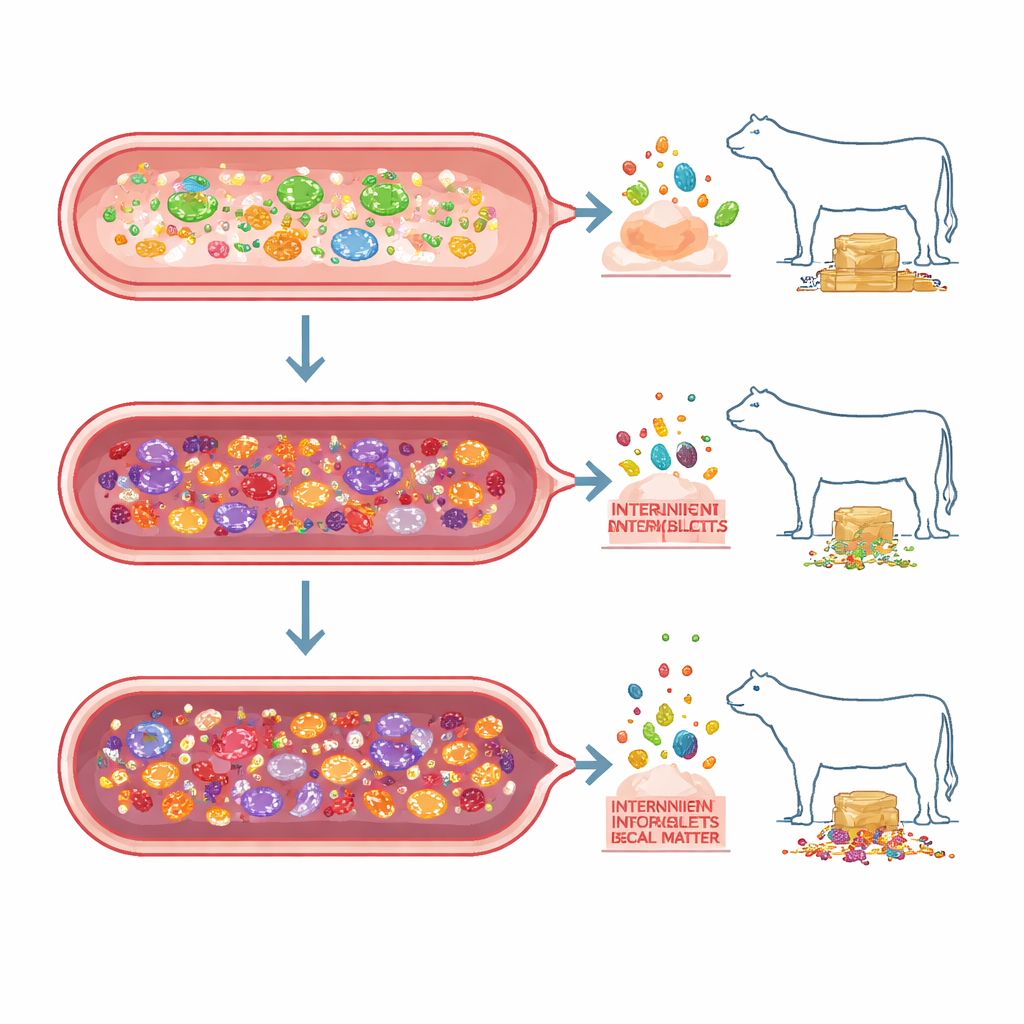
When the team zoomed in on specific kinds of bacteria, clear differences emerged. Efficient steers carried more of a group called Akkermansia, found in a lesser-known bacterial branch. These microbes live in the mucus lining the gut and are known in other animals to break down this slippery coating into short molecules that gut cells can use for energy. By helping to refresh the mucus layer and providing extra fuel, they may support a healthier gut wall and better absorption of nutrients. In contrast, inefficient steers had more of two other bacterial groups, Acetitomaculum and Kandleria, which specialize in fermenting leftover sugars and other bits of feed that escape earlier digestion, producing acids and other by‑products in the large intestine.
Signs of wasted fuel in the hindgut
The scientists also used the DNA data to predict what kinds of metabolic jobs the microbes were capable of performing. The fecal microbes of inefficient steers seemed better equipped for breaking down carbohydrates and building amino acids, and showed higher potential for pathways linked to gas production, including methane. This pattern fits with the idea that more undigested feed is reaching the hindgut of inefficient animals. There, microbes feast on this surplus, but not all of the resulting energy is absorbed; some is lost in manure or as gas. In efficient steers, by contrast, more of the feed energy appears to be captured earlier in digestion or recycled in ways that benefit the host.
What this means for beef production
In plain terms, the study suggests that how well Hanwoo steers turn feed into beef is tied to which microbes flourish in their lower gut and what those microbes do. Efficient steers seem to host more bacteria linked to a healthy, well‑nourished gut lining, while inefficient steers harbor more microbes that thrive on leftovers and send valuable energy out the back end. Although this work is exploratory and based on a modest number of animals, it points toward the future possibility of using manure samples as a simple, non‑invasive way to spot microbial signatures of good feed efficiency. In time, such insights could help breeders, nutritionists, and farmers fine‑tune diets and management to raise cattle that grow just as well on less feed, benefiting both the bottom line and the environment.
Citation: Park, C., Kim, MS., Yu, Z. et al. Effect of divergent residual feed intake on the fecal microbiota in fattening Hanwoo steers. Sci Rep 16, 8075 (2026). https://doi.org/10.1038/s41598-026-39485-5
Keywords: Hanwoo cattle, feed efficiency, gut microbiota, beef production, methane emissions