Clear Sky Science · en
The relationship of curing methods and curing temperatures with NaOH molarity and their effects on the behavior of geopolymer concrete
Stronger, Greener Concrete for Everyday Structures
Concrete is everywhere—from houses and bridges to sidewalks. But making traditional concrete releases large amounts of carbon dioxide. This study explores an alternative called geopolymer concrete, which can be made from industrial by‑products such as fly ash and blast furnace slag. The researchers wanted to know how best to “cure” this greener concrete—either in a hot oven or at normal room temperature—so that it becomes strong enough for real buildings while keeping energy use and environmental impact low. 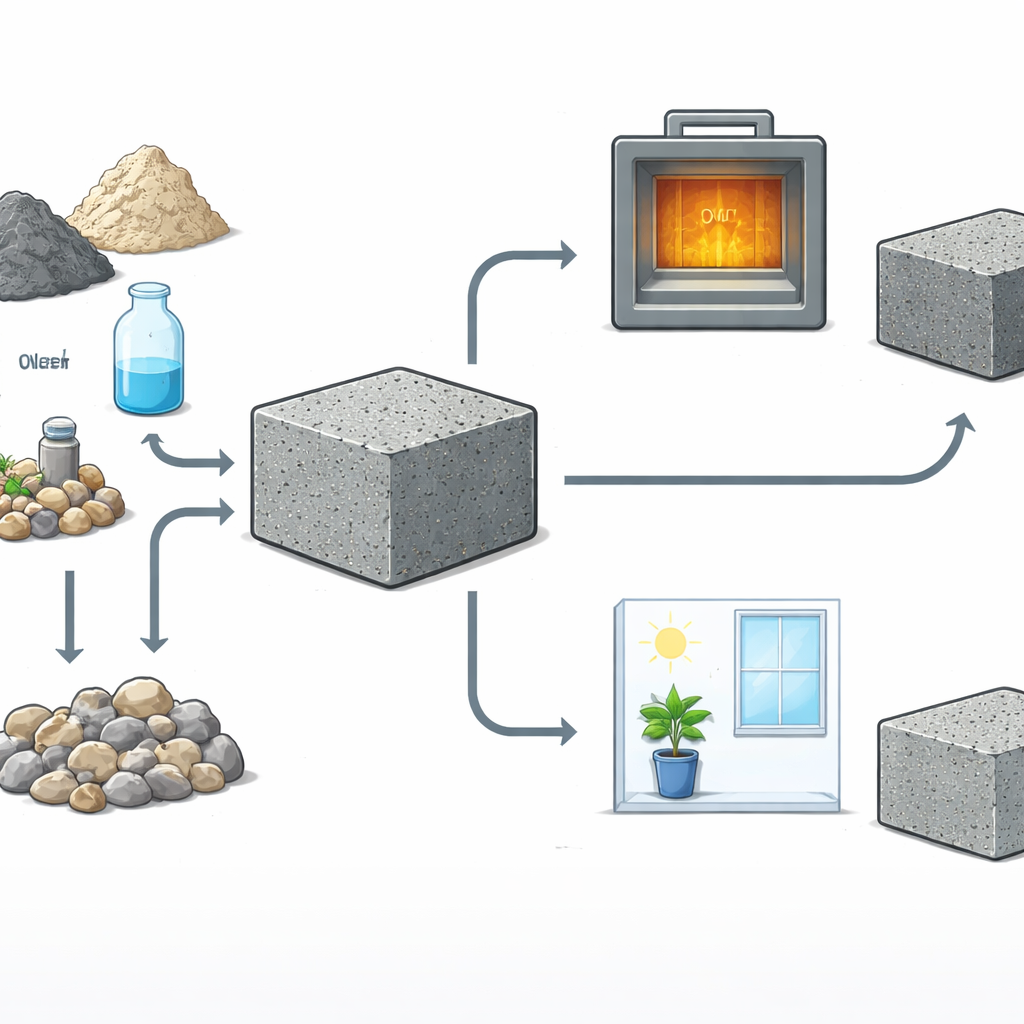
Two Ways to Harden a New Type of Concrete
The team produced many batches of geopolymer concrete using fly ash as the main ingredient, natural sand and gravel as aggregates, and a highly alkaline liquid based on sodium hydroxide and sodium silicate. Some mixes also included ground granulated blast furnace slag, another industrial by‑product rich in calcium. The fresh concrete was then hardened using two different approaches. In one, specimens went into an oven at temperatures between 45 °C and 120 °C. In the other, mixes containing slag were simply left to cure in the laboratory at about 23 °C, similar to a typical indoor environment. This allowed a direct comparison between energy‑intensive heat treatment and low‑energy room‑temperature curing.
Finding the Sweet Spot for Heat and Chemicals
For the oven‑cured specimens, the researchers measured how much load the concrete could carry in compression, bending, and indirect tension after curing. They found a clear pattern: raising the oven temperature from 45 °C to 90 °C greatly increased strength, but going up to 120 °C caused the concrete to weaken again. Microscopic images revealed why—high heat speeds up the chemical reactions that bind the material, but too much heat drives off water and creates tiny cracks. The concentration of the alkaline solution also mattered: using a stronger sodium hydroxide solution (12 molar instead of 8 or 10) produced the highest strengths, with compressive values around 60–65 MPa at 90 °C, comparable to high‑performance structural concrete.
Making Room‑Temperature Curing Work
Room‑temperature curing is far more practical on construction sites, so the team tested how much slag should be added to help the material harden without extra heat. Under ambient conditions, strength depended strongly on both slag content and alkaline concentration. Moderate amounts of slag—typically around 10–15% of the binder—made the concrete significantly stronger by creating additional binding gels rich in calcium, which filled pores and produced a denser internal structure. Too little slag led to slower hardening, while too much diluted the reactive fly ash and reduced workability, causing strengths to fall again. Increasing the sodium hydroxide concentration from 8 to 12 molar consistently boosted strength across all slag levels, even without oven curing.
What Happens Inside the Concrete
To see what was happening at the microscopic scale, the researchers used high‑resolution imaging and chemical analysis. In the ambient‑cured mixes with slag, the internal structure appeared relatively compact, with a mix of different gel phases that tied particles together and left few pores. In contrast, oven‑cured samples without slag showed very dense networks of aluminosilicate gel but also more microcracks when temperatures were too high. Elemental measurements confirmed these differences: slag‑bearing mixtures contained more calcium and formed calcium‑rich gels suited to room‑temperature hardening, whereas oven‑cured, slag‑free mixes relied mainly on sodium‑based aluminosilicate gels that responded strongly to heat. 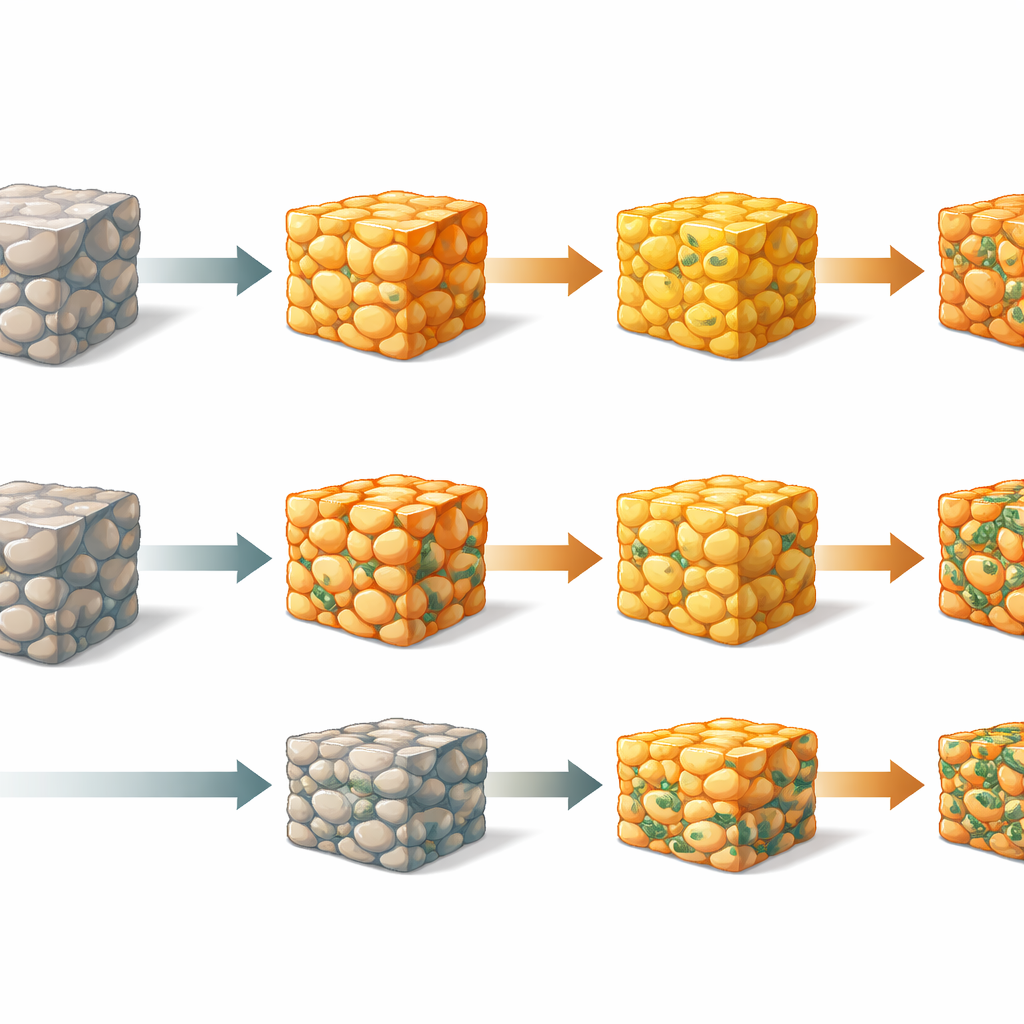
Balancing Strength, Energy Use, and Sustainability
Putting all the data together, including statistical analysis, the study shows that both curing method and alkaline concentration strongly influence geopolymer concrete performance. The single strongest mix was made with a 12 molar sodium hydroxide solution and cured at 90 °C. Yet an optimized room‑temperature mix with the same alkaline level and about 10% slag reached more than three‑quarters of that strength—sufficient for many structural uses—without any external heating. For a layperson, the message is simple: by carefully tuning temperature, chemical strength, and slag content, engineers can design geopolymer concretes that are strong enough for real‑world construction while cutting both fuel use and climate impact compared with traditional cement‑based concrete.
Citation: Özkılıç, Y.O., Mohamud, M.A., Yılmaz, F. et al. The relationship of curing methods and curing temperatures with NaOH molarity and their effects on the behavior of geopolymer concrete. Sci Rep 16, 8346 (2026). https://doi.org/10.1038/s41598-026-39478-4
Keywords: geopolymer concrete, low-carbon construction, curing temperature, blast furnace slag, sustainable materials