Clear Sky Science · en
Health-related quality of life in South Asian adults with type 2 diabetes - a systematic review and meta-analysis
Why everyday life with diabetes matters
Type 2 diabetes is often talked about in terms of blood sugar numbers and medical complications, but for millions of people it quietly reshapes how they move, work, sleep, and feel. This study asks a simple but crucial question: for adults with type 2 diabetes in South Asia, what is day-to-day life actually like? By pooling data from tens of thousands of people, the researchers look beyond clinic tests to measure pain, mobility, mood, and the ability to carry out ordinary activities, offering a clearer picture of how deeply diabetes affects wellbeing in this fast-growing part of the world.
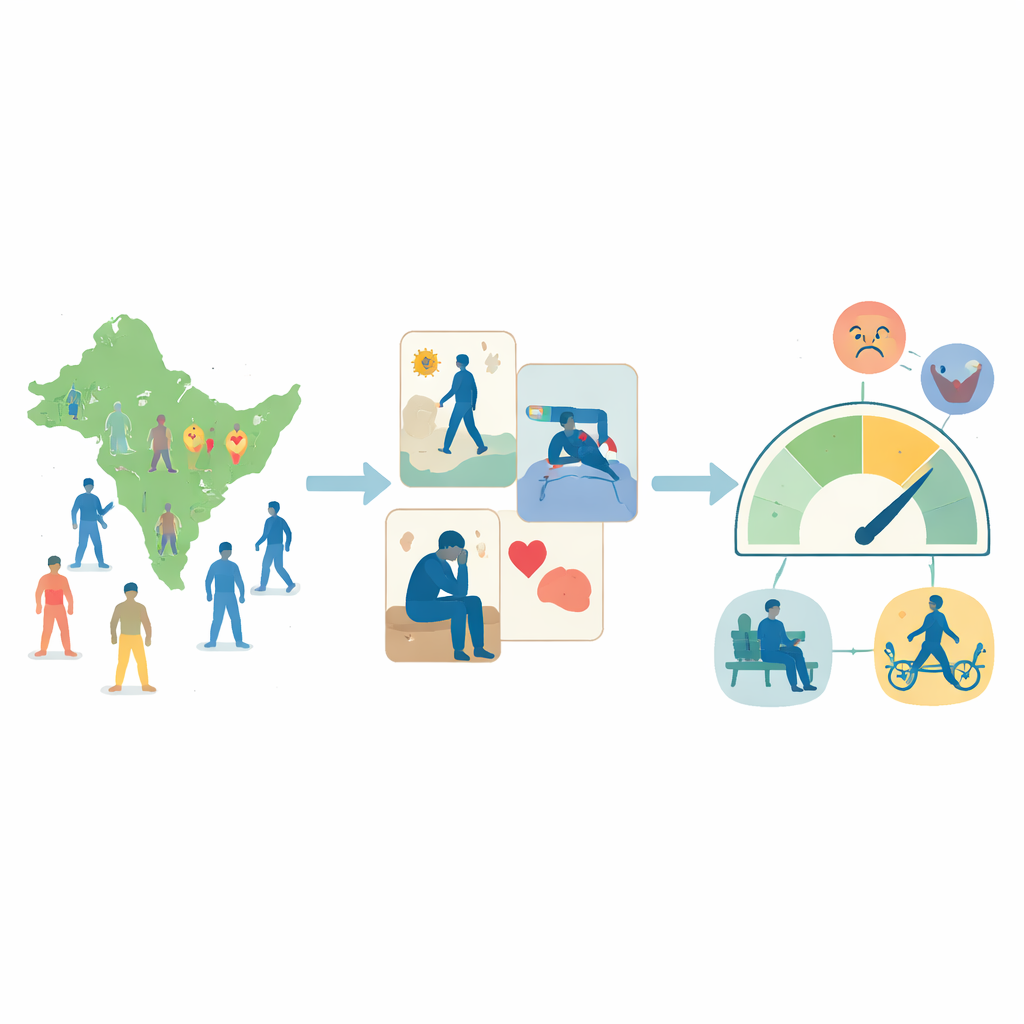
Looking across South Asia
The authors carried out a systematic review and meta-analysis, which means they searched major medical databases for every study that measured quality of life in South Asian adults with type 2 diabetes and then combined the results. They focused on a widely used tool called EQ-5D, which scores health on a scale from 0 (equivalent to death) to 1 (perfect health) and also includes a simple rating where people mark how good or bad they feel overall. In total, 22 studies from India, Pakistan, Bangladesh, Nepal and multi-country South Asian samples were included, covering more than 25,000 adults, most in their fifties and early sixties. This large combined dataset allowed the team to estimate not just an average picture, but also how experiences differ by country, sex, age, and disease features.
How good or bad does life feel?
Across all studies, the average EQ-5D score for South Asian adults with type 2 diabetes was about 0.75, and the average self-rated health score (on the visual scale) was around 65 out of 100. These figures point to a moderate loss of quality of life compared with people without chronic illness: life is far from unbearable for most, but clearly below what is considered full health. There were striking differences between countries. On average, people in India and Nepal reported higher quality of life, while those in Pakistan and Bangladesh reported lower levels. These contrasts likely reflect a mix of health system strengths, access to care, and broader social and economic conditions, rather than biology alone.
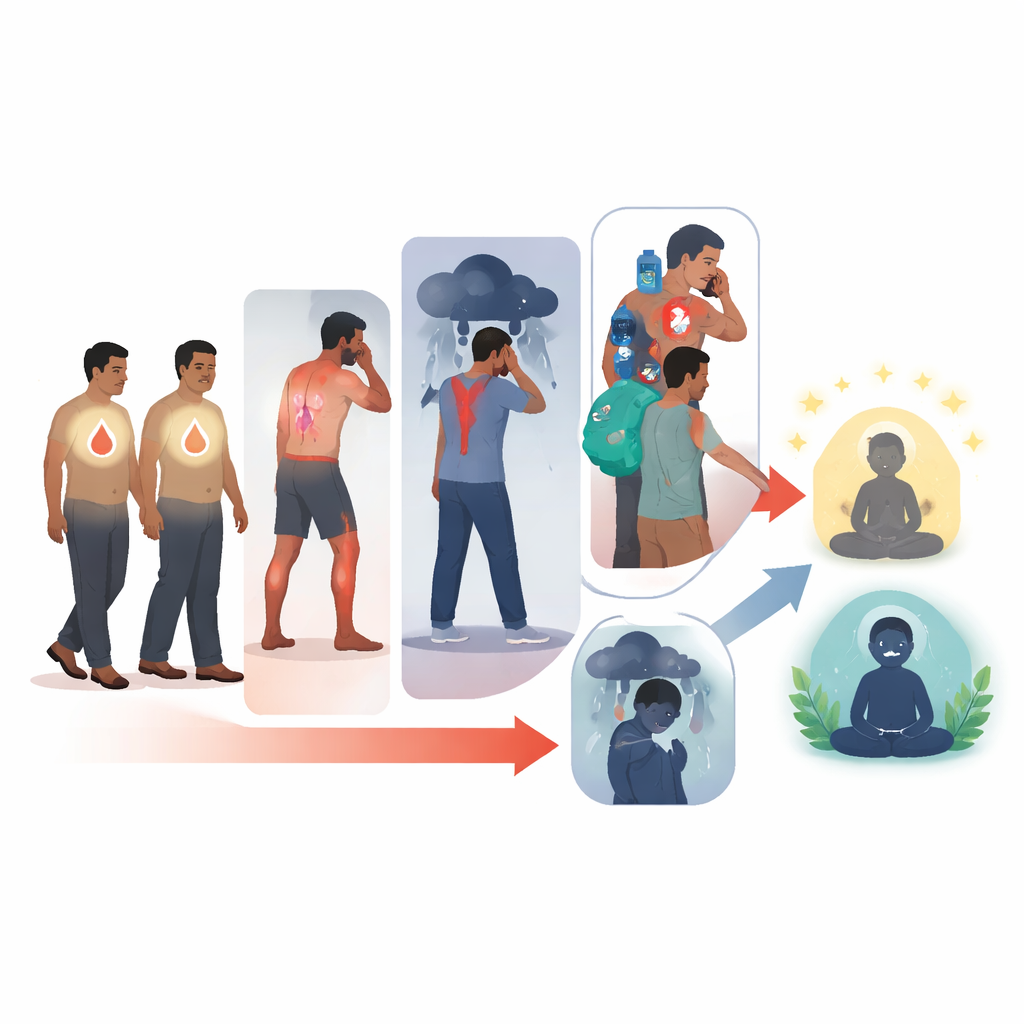
Where it hurts the most
The study also looked at specific areas of life. In the EQ-5D questionnaire, people report whether they have problems with moving around, taking care of themselves, doing usual activities, pain or discomfort, and anxiety or depression. Pain and emotional strain stood out as the biggest burdens: nearly six in ten people said they had pain or discomfort, and just over half reported anxiety or depression. Difficulties with usual daily activities and getting around were also common. These patterns show that diabetes in South Asia is not only about blood sugar or heart and kidney risks; it is also about persistent aches, fatigue, and worry that can seep into work, family life, and social roles.
Who is hit hardest
When the researchers broke the data into groups, some clear trends emerged. Women with diabetes consistently reported poorer quality of life than men, both in their overall scores and on the simple health rating scale. People living with diabetes complications such as eye, nerve, or kidney problems had much lower scores than those without such complications, as did those with other additional illnesses. Younger adults and older adults had broadly similar scores, and how long someone had been diagnosed with diabetes made surprisingly little difference in the pooled data, although the number of studies with detailed clinical information was limited. Overall, the results point to complications, other illnesses, and gender-related disadvantages as the main drivers of poorer life quality, rather than age or years since diagnosis alone.
What this means for people and policy
In plain terms, this study shows that living with type 2 diabetes in South Asia typically means living with a noticeable, and sometimes heavy, drop in comfort and wellbeing, especially because of pain and emotional distress. Yet the average scores are similar to global figures, suggesting that people in this region might not be biologically worse off, but are experiencing wider gaps tied to health services and social support. By putting numbers on these experiences, the work offers a foundation for planners and policymakers who must decide how to invest limited health budgets. It underlines that good diabetes care should not stop at controlling sugar levels, but must also tackle pain, mental health, and the prevention of complications if people are to live not just longer, but better lives.
Citation: Murugadoss, H., K, H., K, S. et al. Health-related quality of life in South Asian adults with type 2 diabetes - a systematic review and meta-analysis. Sci Rep 16, 9888 (2026). https://doi.org/10.1038/s41598-026-39476-6
Keywords: type 2 diabetes, South Asia, quality of life, chronic illness burden, patient wellbeing