Clear Sky Science · en
Key bitterness compounds of cigar tobacco leaves and their molecular docking with human bitter receptors
Why Some Cigars Taste So Bitter
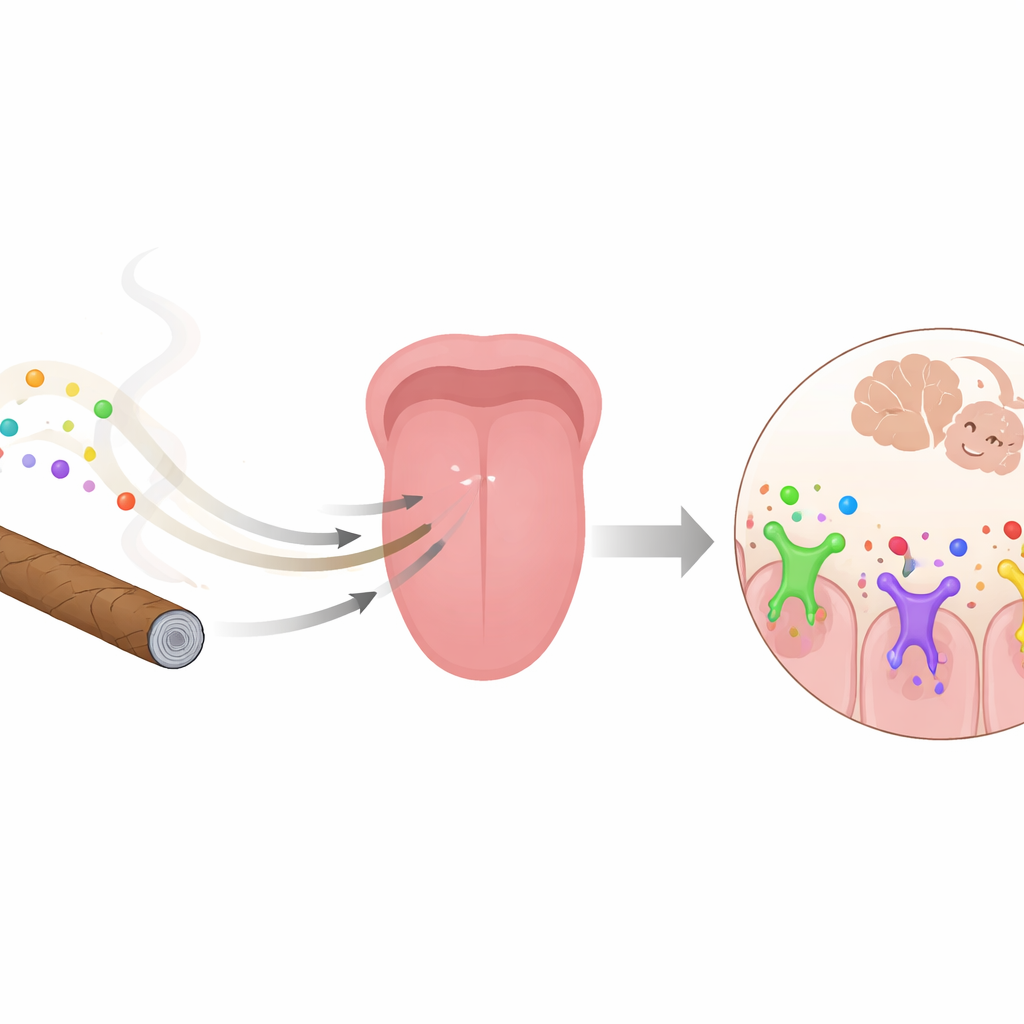
Cigar lovers often talk about rich aroma and smooth smoke, but sometimes a cigar hits the palate with a harsh, lingering bitterness that overwhelms everything else. This study set out to answer a simple but important question for both consumers and producers: which specific chemicals in cigar tobacco smoke are responsible for that strong bitter taste, and how do they trigger our tongue’s bitterness sensors?
From Leaf to Lingering Aftertaste
The researchers began with three Indonesian cigar tobacco leaves known for pronounced bitterness and one Chinese leaf used as a mild, low-bitter reference. A trained panel of 12 experts smoked experimental cigars made from each leaf under carefully controlled conditions, scoring sensations such as bitterness, sweetness, smoothness, irritation, and aftertaste. One sample, labeled F447-1, stood out for extremely high bitterness with a long, herbal-like aftertaste, while the reference leaf, Chuxue 14, was the least bitter and notably sweeter. This confirmed that the chosen samples spanned a wide range of taste experiences, setting the stage to link what tasters felt with what chemicals were actually in the smoke.
Hunting for the Bitter Culprits in Smoke
To find the chemical roots of this bitterness, the team collected mainstream smoke from 40 cigarettes made with each type of leaf and analyzed the trapped particles using gas chromatography–mass spectrometry, a technique that separates and identifies dozens of compounds. They first filtered out substances unlikely to affect taste, such as long-chain fats or sweet-smelling aroma molecules. This left 33 candidates, including tobacco alkaloids and various ring-shaped molecules. Statistical tools were then used to see which compounds rose and fell in tandem with bitterness scores across all four tobaccos. Methods called OPLS-DA, partial least squares regression, and correlation heatmaps pointed again and again to a small group of suspects whose levels tracked closely with how bitter the smoke tasted.
Four Molecules That Make Smoke Taste Harsh
Among the many compounds in the smoke, six emerged as especially promising candidates, and four of these turned out to be central. These were nicotine (already known for its sharp, bitter-spicy character), 2,3’-bipyridine, myosmine, and nicotinamide. Not only were these molecules more abundant in the bitter tobaccos, they also showed strong positive links with bitterness in the statistical models. To test them directly, the scientists injected each compound into otherwise mild reference cigars and asked the expert panel to re-score the smoke. When nicotine, 2,3’-bipyridine, myosmine, or nicotinamide were added, bitterness jumped to high levels, while two other candidates, 3-ethyl-pyridine and cotinine, had only weak effects. Further tasting of water solutions confirmed that 2,3’-bipyridine and myosmine could produce intense bitterness even at relatively low concentrations.
How These Molecules Talk to Our Taste Sensors
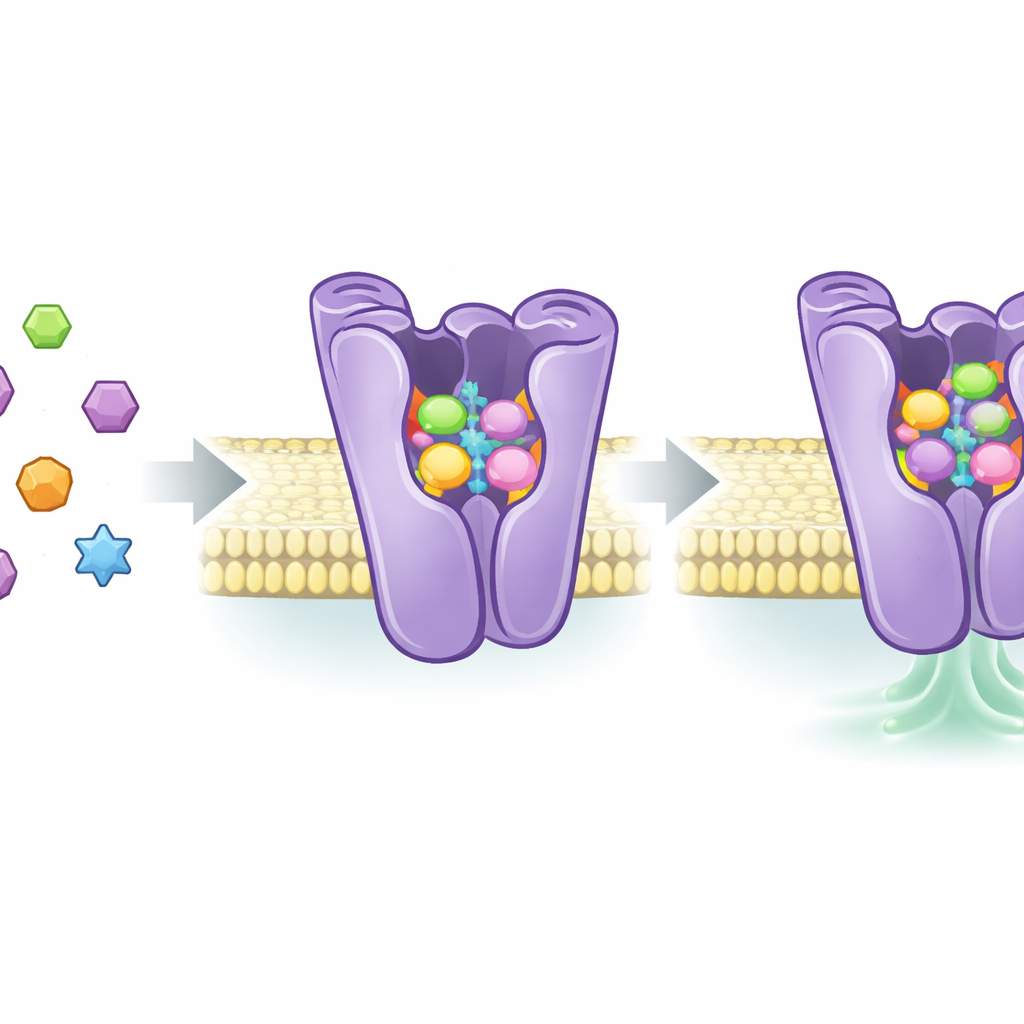
With the main culprits identified, the team wanted to see how they interact with the body’s bitterness detectors: a family of 25 taste receptors on the tongue known as TAS2Rs. Using computer-based molecular docking, they virtually “fit” each bitter molecule into 3D models of nine human bitter receptors and calculated how strongly they would bind. All four compounds showed especially strong binding to one receptor, TAS2R14, which is known to respond to a wide variety of bitter chemicals. The simulations suggested that these molecules nestle into a pocket on the receptor and latch on through several types of weak but cooperative forces, including hydrogen bonding and interactions between their ring structures and particular amino acids in the receptor. Follow-up molecular dynamics simulations, which mimic the jostling of molecules over time, showed that the complexes between these bitter compounds and TAS2R14 remain stable, reinforcing the idea that this receptor is a key gateway for cigar bitterness.
What This Means for Cigars and for Taste
Taken together, the work pinpoints four specific smoke components—nicotine, 2,3’-bipyridine, myosmine, and nicotinamide—as primary drivers of the strong, lingering bitterness in certain cigar tobaccos, and shows that they likely act by firmly engaging the TAS2R14 bitterness receptor on the tongue. For cigar makers, this offers concrete molecular targets for breeding, processing, or blending leaves to reduce harshness or, where desired, craft a more controlled, complex bitter edge. For readers interested in taste science more broadly, the study illustrates how modern sensory testing, chemical analysis, and computer modeling can be combined to trace a subjective sensation—“too bitter” smoke—back to a small set of molecules and their precise interactions with human taste receptors.
Citation: Yu, G., Wu, Y., Liu, Z. et al. Key bitterness compounds of cigar tobacco leaves and their molecular docking with human bitter receptors. Sci Rep 16, 8121 (2026). https://doi.org/10.1038/s41598-026-39473-9
Keywords: cigar bitterness, tobacco flavor, bitter taste receptors, nicotine and alkaloids, sensory analysis