Clear Sky Science · en
Missed opportunities and associated factors for institutional delivery services among women in Hararghe eastern Ethiopia a mixed methods study
Why Where Mothers Give Birth Matters
Childbirth should be a moment of joy, yet it still carries serious risk for many women, especially in poorer parts of the world. This study from eastern Ethiopia asks a simple but crucial question: when pregnant women have already visited a clinic during pregnancy, why do so many still end up giving birth at home without skilled medical help? The answers reveal a tangle of money worries, long walks, family expectations, and mixed experiences with the health system that shape one of the most important decisions in a mother’s life.
A Gap Between Clinic Visits and Safe Birth
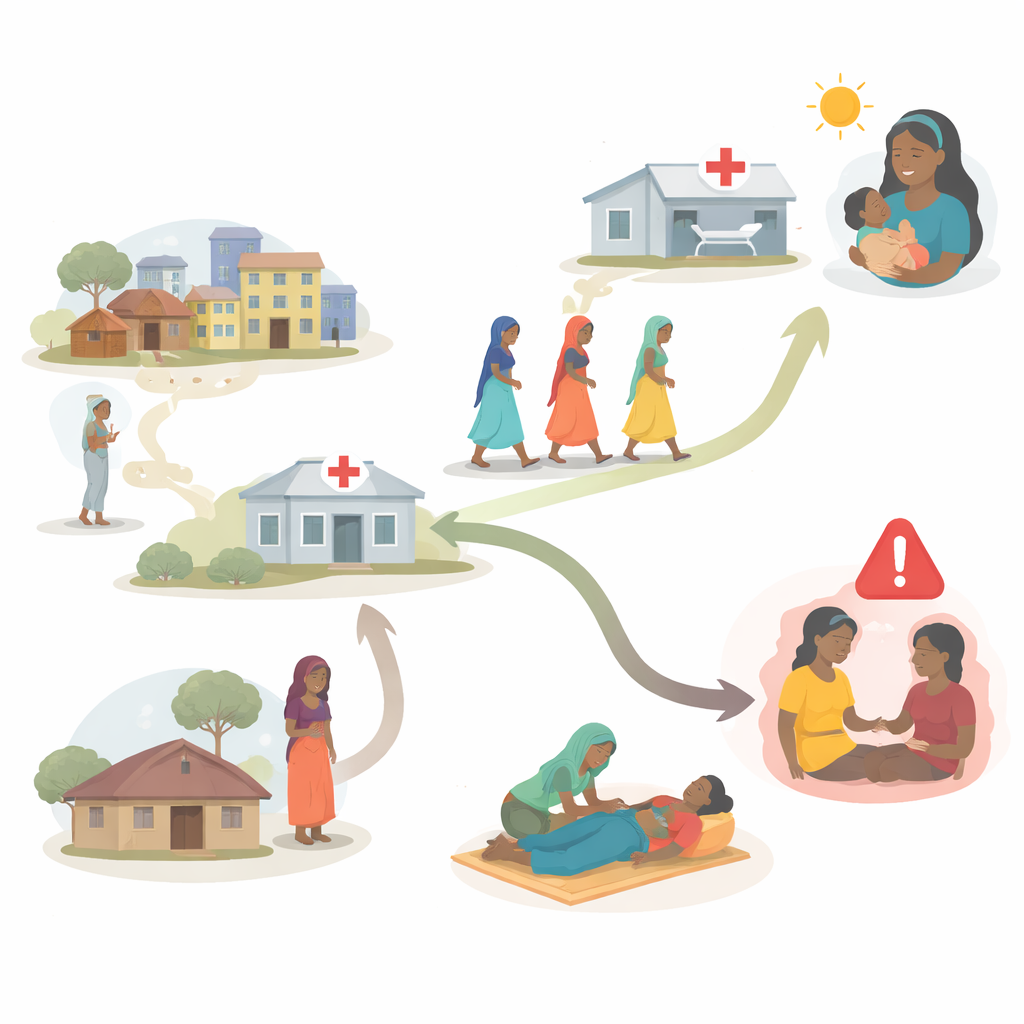
The researchers focused on three districts in Hararghe, an area where only about one in three births takes place in a health facility. They studied more than 400 women who had given birth in the past five years, and took a closer look at 357 who had attended at least one antenatal care (ANC) visit while pregnant. You might expect that seeing a nurse or midwife during pregnancy would naturally lead to giving birth in a clinic. Instead, over one in four of these women still delivered at home or in other non‑facility settings. The team calls this a “missed opportunity” for institutional delivery—evidence that contact with the health system during pregnancy does not automatically translate into safer births.
Lives Shaped by Place, Money, and Experience
Most of the women in the study lived in rural communities, had little or no formal education, and supported their families through small farms or informal work. Many married and became pregnant at a young age and had already given birth several times. Qualitative discussions revealed just how much daily realities influence birth choices. Transport is costly and unreliable; nearly half of women walked to facilities, often for 30 to 60 minutes, and ambulances were frequently delayed or unavailable. Families worried about paying not only for transport but also for food and lodging during a hospital stay. In that context, home birth with a familiar local birth attendant seemed cheaper, easier, and more predictable, even if it carried hidden health risks.
Customs, Comfort, and Trust
Beyond money and distance, social and cultural forces weighed heavily. Many women expressed greater comfort with traditional birth attendants than with strangers in a hospital. Religious modesty and gender norms made examinations by male providers deeply uncomfortable. Some women felt their privacy was not respected at facilities, reporting crowded rooms and a lack of curtains. Others described feeling scolded or dismissed when they sought care. Even though over 80% had attended ANC at least once, negative or awkward encounters made some reluctant to return when labor began. Older relatives and husbands often favored home birth, reinforcing long‑standing traditions and further weakening the pull of the health facility.
What the Numbers Reveal
Using statistical analysis, the study pinpointed which factors were linked with missing out on institutional delivery. Women who attended more ANC visits were substantially more likely to deliver in a facility, suggesting that repeated, good‑quality contact can build trust and planning. The timing and outcome of past pregnancies also mattered; women who had previously experienced surgical births appeared more motivated to seek facility care, while straightforward past deliveries sometimes encouraged a sense that home birth was “safe enough.” Age played a role as well, with younger women who became pregnant in their late twenties more inclined toward facility births than those who started childbearing later. Surprisingly, simply having an ambulance available or reporting respectful treatment did not, on their own, show a strong statistical link with where women ultimately delivered, underscoring how complex these decisions are.
Closing the Safety Gap
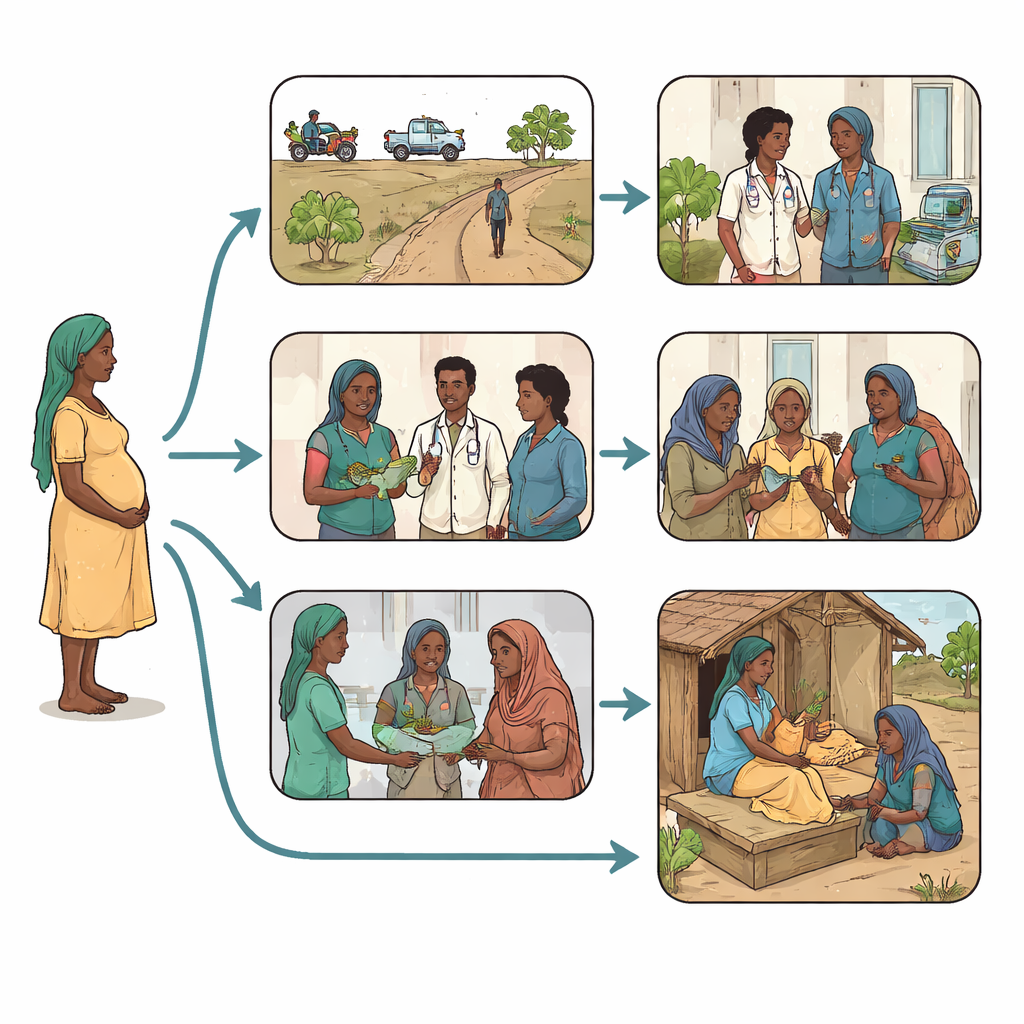
For a general reader, the key message is clear: getting women into the clinic during pregnancy is only the first step. This Ethiopian study shows that more than one quarter of women who see a health worker while pregnant still give birth without skilled assistance. To change that, health systems must do more than build facilities—they must earn trust, protect privacy, respect cultural sensitivities, and make it realistically possible for women to reach care when labor begins. Improving transport options, involving husbands and community leaders in birth planning, and using ANC visits to talk through practical delivery plans could help turn missed opportunities into safe, supported births for mothers and babies alike.
Citation: Mussa, I., Makhubela-Nkondo, O. Missed opportunities and associated factors for institutional delivery services among women in Hararghe eastern Ethiopia a mixed methods study. Sci Rep 16, 10358 (2026). https://doi.org/10.1038/s41598-026-39471-x
Keywords: maternal health, institutional delivery, Ethiopia, antenatal care, childbirth access