Clear Sky Science · en
Enhancing chicken manure with bread waste and black soldier fly associated bacteria to increase larval biomass
Turning Farm Waste into Useful Food
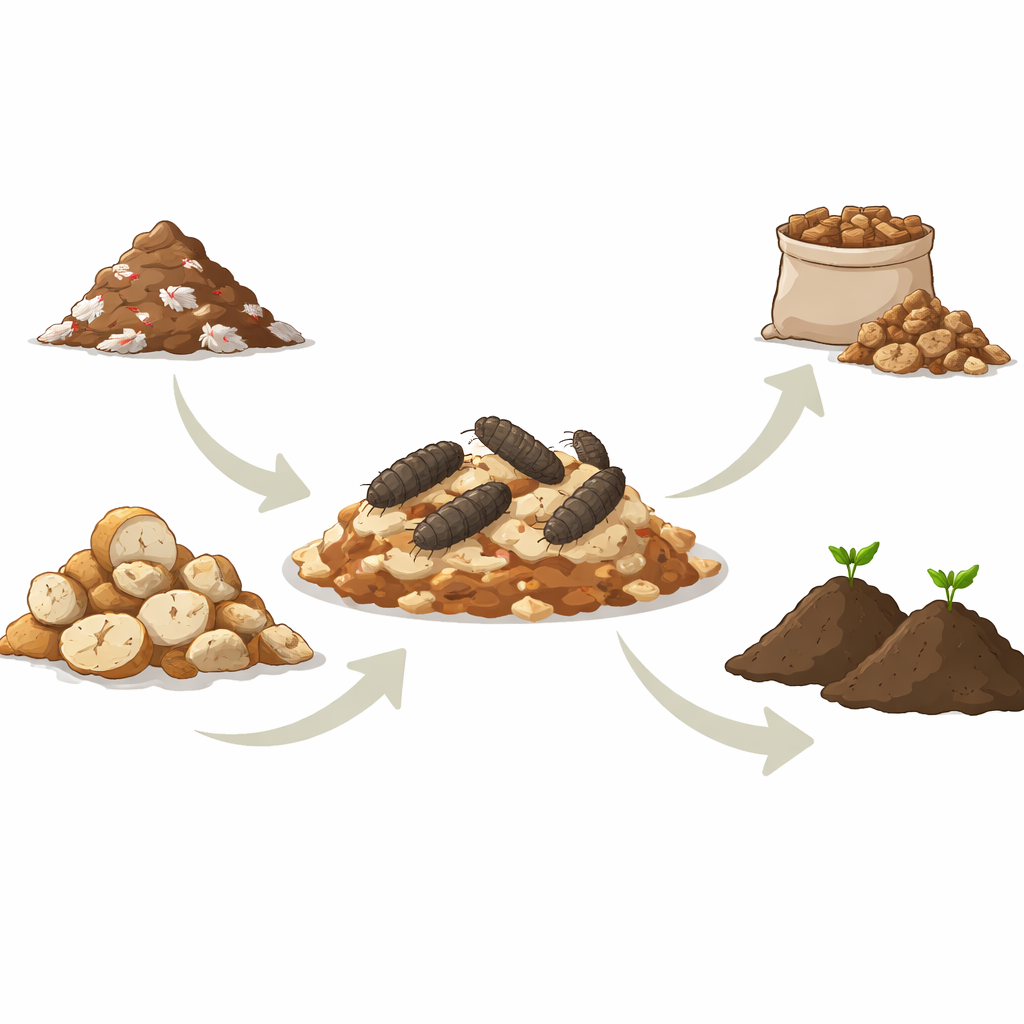
Modern farms produce huge amounts of leftovers, from smelly chicken droppings to piles of stale bread. Getting rid of this waste is costly and can pollute air, water, and soil. At the same time, farmers are searching for new, affordable protein sources to feed chickens and fish as fishmeal and soy become more expensive. This study explores how the larvae of the black soldier fly—a harmless insect already used in waste recycling—can transform chicken manure and bread waste into nutritious animal feed, especially when helped by friendly bacteria.
Why Bugs Love Bread More Than Manure
The researchers first tested how well black soldier fly larvae grow on different diets made from chicken manure and leftover bread. Chicken manure is rich in nitrogen and minerals but relatively low in energy; bread waste is packed with carbohydrates but lighter in protein. When larvae were fed only manure, they stayed small and converted very little of the waste into body mass. When the team mixed the two ingredients, especially at a 1:1 ratio, the larvae grew much larger, produced more total biomass, and needed less feed to gain weight. This balance between protein and carbohydrates created a more comfortable “buffet” for the larvae, giving them enough energy to use the nitrogen efficiently instead of wasting it as excess ammonia.
What Goes Into the Larvae Shapes What Comes Out
The diet did not just change how fast the larvae grew; it also altered their body composition. Larvae raised on bread alone accumulated the most fat and protein but are less practical because bread waste has economic value as feed itself. Larvae raised on manure alone were leaner, with lower fat and more ash (leftover minerals). The mixed diets, particularly the 1:1 blend, produced larvae with a more balanced profile of fat, protein, and minerals. This means that combining manure with bread waste can turn a low-value, messy residue into a more desirable insect meal that is closer in quality to traditional animal feeds.
Helpful Microbes in the Insect Gut
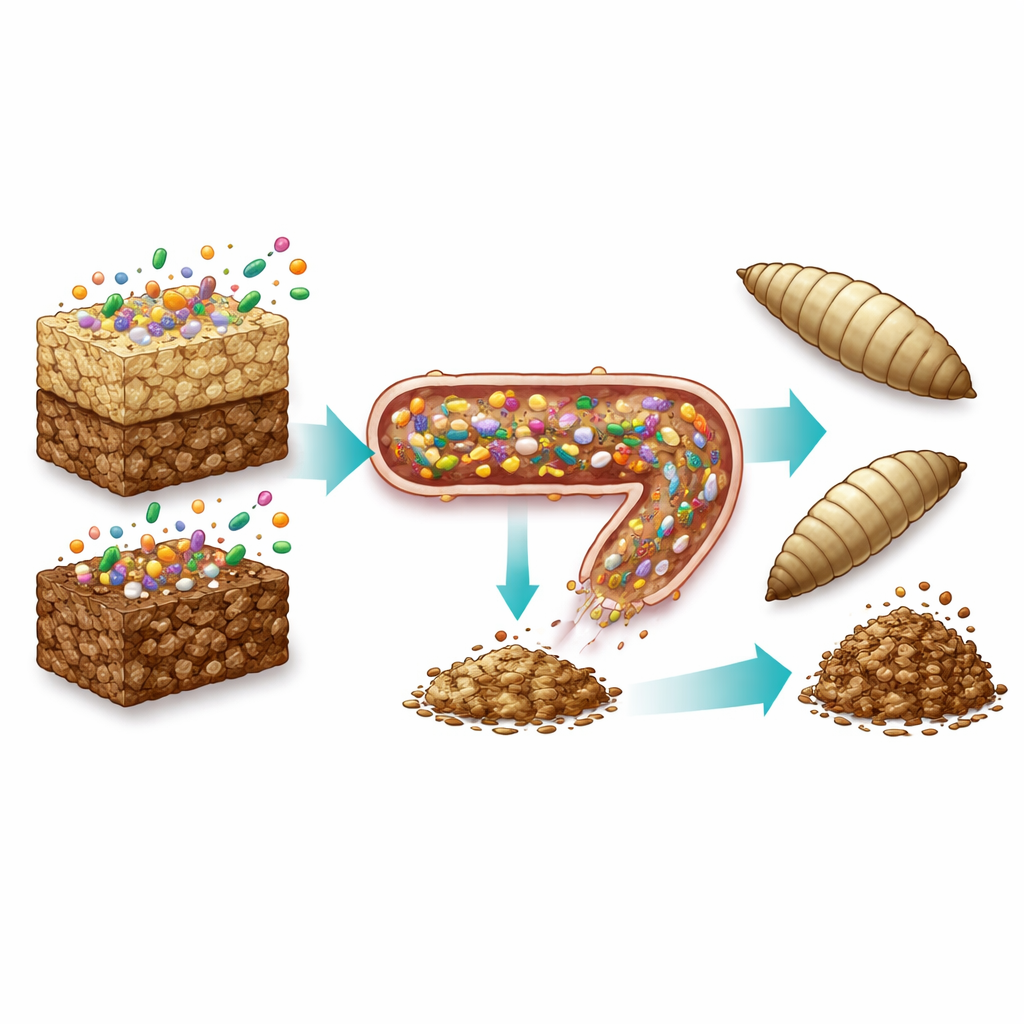
In the second part of the study, the scientists looked at the tiny partners that live with the flies: bacteria found on black soldier fly eggs and in larval guts. They isolated several strains that make digestive enzymes capable of breaking down proteins and urea, then identified them using genetic tools. Five main bacterial species were selected, including Microbacterium paraoxydans, Bacillus subtilis, and Morganella morganii. When these bacteria were added to manure-based diets, they boosted larval dry weight, improved how efficiently the insects converted feed into body mass, and changed the chemical makeup of the larvae. Some combinations shifted larvae toward more fat and fiber, while others increased useful carbohydrates and improved the balance of nutrients.
Supercharging the Larval Protein Profile
One bacterial partner, Microbacterium paraoxydans, showed especially striking effects when combined with a diet containing three parts manure to one part bread. Larvae on this “enhanced” diet had much higher levels of both essential and non‑essential amino acids—the building blocks of protein. Essential amino acids such as valine, leucine, phenylalanine, lysine, and others increased by roughly half compared with larvae raised on the same diet without added bacteria. Many of these amino acids are exactly those that commonly limit the quality of plant-based feeds for poultry and fish. By helping to break down proteins and recycle nitrogen in the gut, the bacteria made more of these valuable nutrients available to the larvae and, in turn, to any animals that might be fed with them.
From Waste Problem to Protein Solution
To a non‑specialist, the main message is simple: by cleverly combining wastes and harnessing friendly microbes, we can turn a disposal headache into a useful resource. Mixing chicken manure with bread waste gives black soldier fly larvae a better diet, helping them grow faster and convert more waste into body mass. Adding select bacteria further improves this process, enriching the larvae with high‑quality protein and key amino acids needed in animal feed. The approach reduces environmental pressure from farm waste, lowers reliance on fishmeal and soy, and produces both insect meal and a nutrient‑rich residue that can serve as fertilizer. In short, insects and microbes working together can close loops in agriculture and support a more circular, sustainable food system.
Citation: Abdelmaksoud, E.M., El-Sayed, W., Rashwan, R.S. et al. Enhancing chicken manure with bread waste and black soldier fly associated bacteria to increase larval biomass. Sci Rep 16, 8262 (2026). https://doi.org/10.1038/s41598-026-39463-x
Keywords: black soldier fly, chicken manure recycling, bread waste valorization, insect protein feed, beneficial gut bacteria