Clear Sky Science · en
Ecological and human health risks of metal contamination in sediments along Egypt Western Mediterranean coast
Why Metals in Sea Mud Matter to You
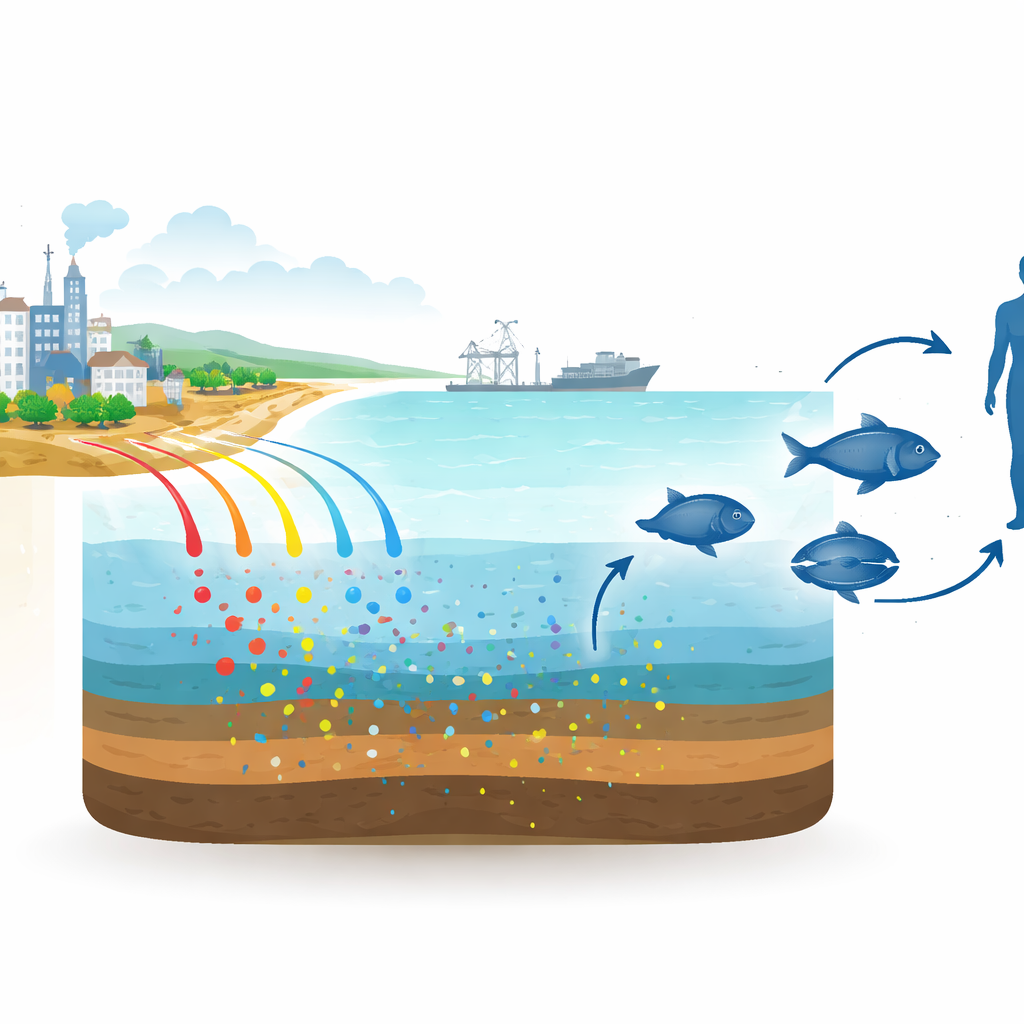
Along Egypt’s western Mediterranean coast, the mud on the seafloor quietly stores a record of what we put into the sea. This study set out to measure a wide range of metals in those sediments, to see where they come from, how concentrated they are, and what risks they pose to marine life and to people, especially children, who may ultimately eat contaminated seafood. The work provides an important baseline for one of the region’s busiest stretches of coastline, where industry, agriculture, tourism, and shipping all converge.
Taking the Pulse of a Busy Coast
The researchers sampled surface sediments from 21 locations spread across 11 sectors between El-Mex and Salloum, including industrial hotspots such as Sedi Krrir and quieter areas like Marsa Matrouh and Salloum. Using a sensitive technique called ICP-MS, they measured 24 elements, from common ones like iron and aluminum to toxic trace metals such as cadmium and lead. Overall, total metal concentrations varied widely, from about 2,500 to nearly 5,900 micrograms per gram of dry sediment, with the highest loads at Sedi Krrir near major industrial and wastewater discharges. By contrast, the more remote western stations, with less human activity, showed the lowest levels.
Sorting Natural Background from Pollution
Not all metals in sediments are man-made pollution; many are part of the natural geology. To tease apart these contributions, the team applied several widely used pollution indices. They compared measured values with typical “background” levels in shale, and calculated geoaccumulation (a measure of how much a site deviates from natural conditions), enrichment factors (how strongly a metal is boosted relative to a stable reference element), and combined indices such as the pollution load index and contamination degree. Most metals, including aluminum, titanium, chromium, manganese, iron, cobalt, nickel, copper and zinc, fell into the “unpolluted” class across the region. However, cadmium stood out: at several stations near Salloum, its enrichment was extremely high, suggesting a strong local source that goes well beyond natural inputs and demands further investigation.
What the Patterns Reveal About Sources
Statistical tools helped the authors link these metals back to their likely origins. A principal component analysis grouped elements that tended to rise and fall together. Metals such as manganese, iron, aluminum, and nickel formed one cluster, pointing to shared, mostly natural sources like local rocks and sediments. In contrast, cadmium, lead, copper, and zinc showed signals consistent with human activities—industrial and sewage discharges, maritime operations, and agricultural runoff enriched with fertilizers and pesticides. This picture matches what is known about nearby coastal cities and ports, where petroleum refineries, cement plants, shipyards, and dense urban neighborhoods all feed waste into the sea.
Risks for Sea Life and People
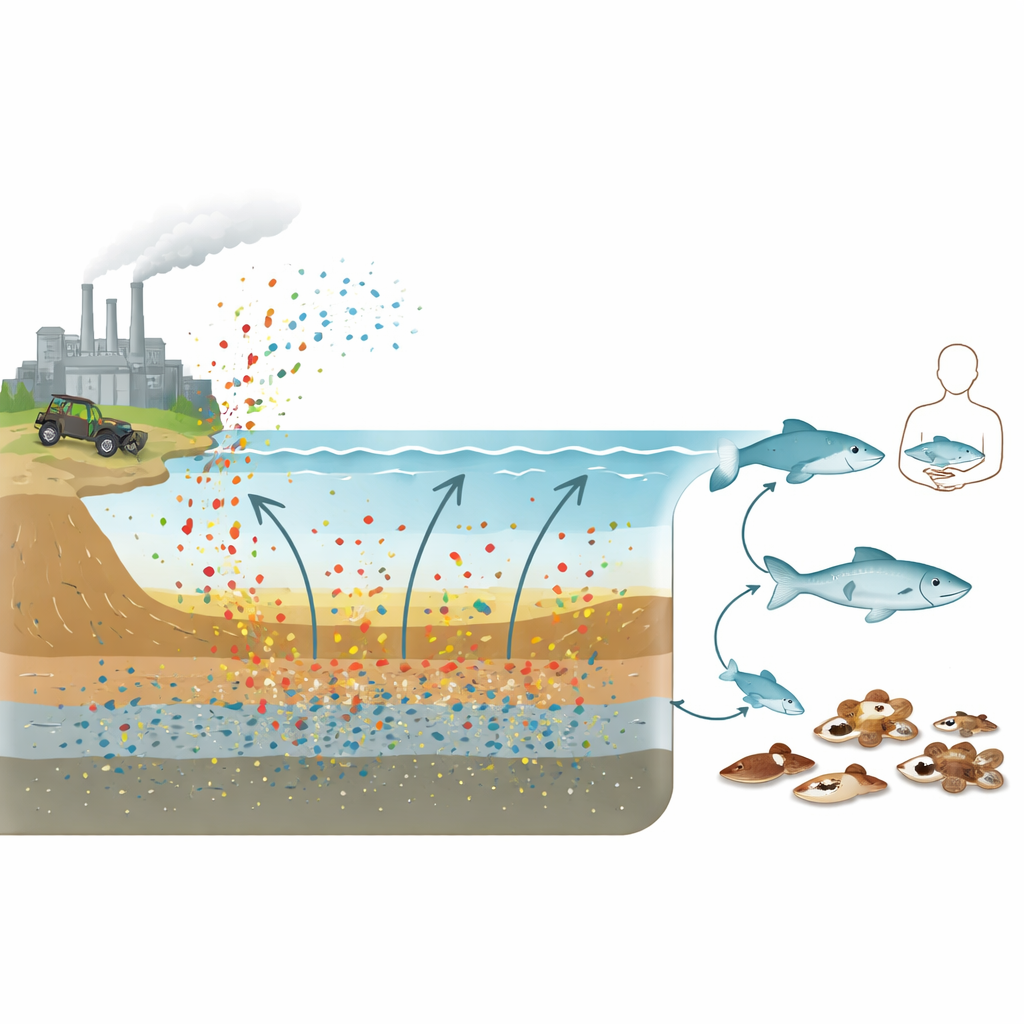
The team then asked what these concentrations mean for living organisms. They compared sediment values with international sediment quality guidelines that flag levels associated with harmful effects. For copper, zinc, and nickel, the Egyptian sediments generally stayed below worrisome thresholds. Cadmium again was different: its average levels exceeded guideline values at some sites, indicating a real possibility of toxic impacts on bottom-dwelling creatures that live in or on the mud. Because those organisms are eaten by fish and shellfish, cadmium can move up the food chain. To estimate health risks to people through skin contact with contaminated sediment, the authors calculated standard hazard quotients and cancer risk values for men, women, and children. Children consistently showed risk values three to four times higher than adults, with cadmium dominating the non-cancer and cancer risk estimates, although typical lead levels implied very low cancer risk via this skin pathway.
What This Means for the Coast and Its People
In plain terms, this stretch of Egypt’s Mediterranean coast is not a metal disaster zone—but it is not pristine either. Most metals sit near natural background levels, yet cadmium is clearly elevated in certain areas linked to intense human activity, and this metal alone may be enough to threaten bottom-dwelling organisms and raise long-term health concerns, especially for children. The study shows that both nature and people contribute to metal levels in the sediments, and it underscores the need for better control of industrial and agricultural discharges, ongoing monitoring, and exploration of cleanup tools such as plant-based remediation. By providing a detailed baseline map of metal contamination today, the work gives coastal managers a starting point to track future changes and to protect both marine ecosystems and the communities that depend on them.
Citation: Hassaan, M.A., Dardeer, A.G., Said, T.O. et al. Ecological and human health risks of metal contamination in sediments along Egypt Western Mediterranean coast. Sci Rep 16, 8725 (2026). https://doi.org/10.1038/s41598-026-39462-y
Keywords: marine sediments, heavy metals, cadmium pollution, Mediterranean coast, ecological health risk