Clear Sky Science · en
Whole-genome analysis of CVA4 in children with herpangina in two cities of Shandong, China
Why this childhood throat infection matters
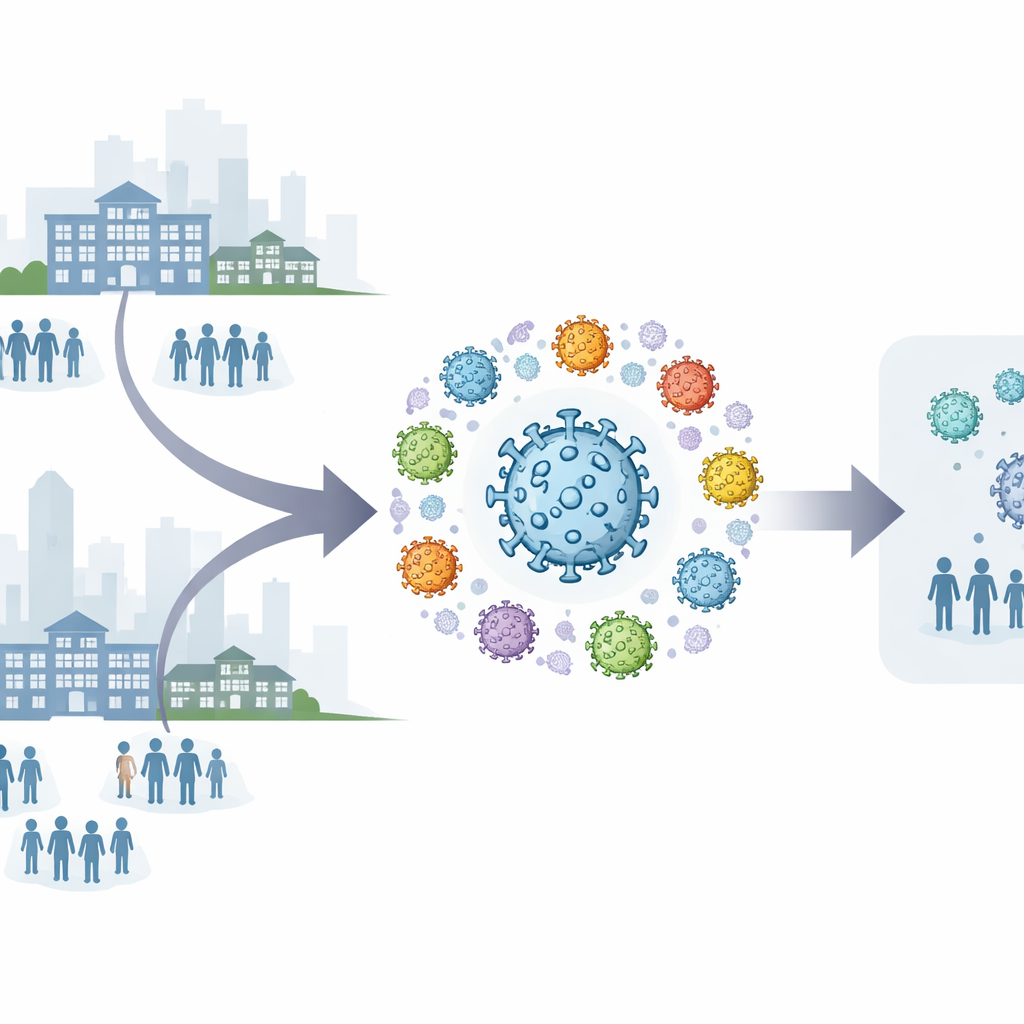
Parents may know herpangina only as a short-lived but miserable sore-throat illness that sends children home from daycare. Yet behind those tiny blisters lies a family of rapidly changing viruses. This study follows one such virus, Coxsackievirus A4 (CVA4), in children from two cities in Shandong Province, China, to understand how it is spreading, how its genetic makeup is shifting over time, and what that might mean for future outbreaks and vaccines.
A closer look at a common kids’ virus
Herpangina and the better-known hand, foot and mouth disease are both caused by enteroviruses that mainly infect young children. Symptoms are usually mild—fever, sore throat, and small ulcers in the back of the mouth—but some related viruses can occasionally trigger serious complications such as meningitis. In recent years, CVA4 has emerged as one of the leading culprits behind herpangina in East Asia, yet it has received far less attention than other pediatric viruses. To fill this gap, the researchers collected throat swabs in 2024 from 256 children with herpangina in the cities of Linyi and Yantai, isolating 60 CVA4 viruses and fully decoding the genomes of 50 of them.
Reading the virus’s genetic fingerprint
CVA4 is a small RNA virus with a single long stretch of genetic material that encodes both the proteins forming its outer shell and the machinery it uses to copy itself. By comparing the sequences of a key outer-shell gene (called VP1) from the Shandong samples to hundreds of CVA4 viruses collected worldwide since 1948, the team found that all of the new viruses belong to a branch known as the C2 subgenotype, which has become the dominant form circulating globally. When the full genomes were analyzed alongside more than 170 previously published CVA4 genomes, all of the Shandong strains clustered within one large evolutionary group that contains most recent Chinese viruses, suggesting intense local circulation with some regional clustering.
How viruses swap parts of their genomes
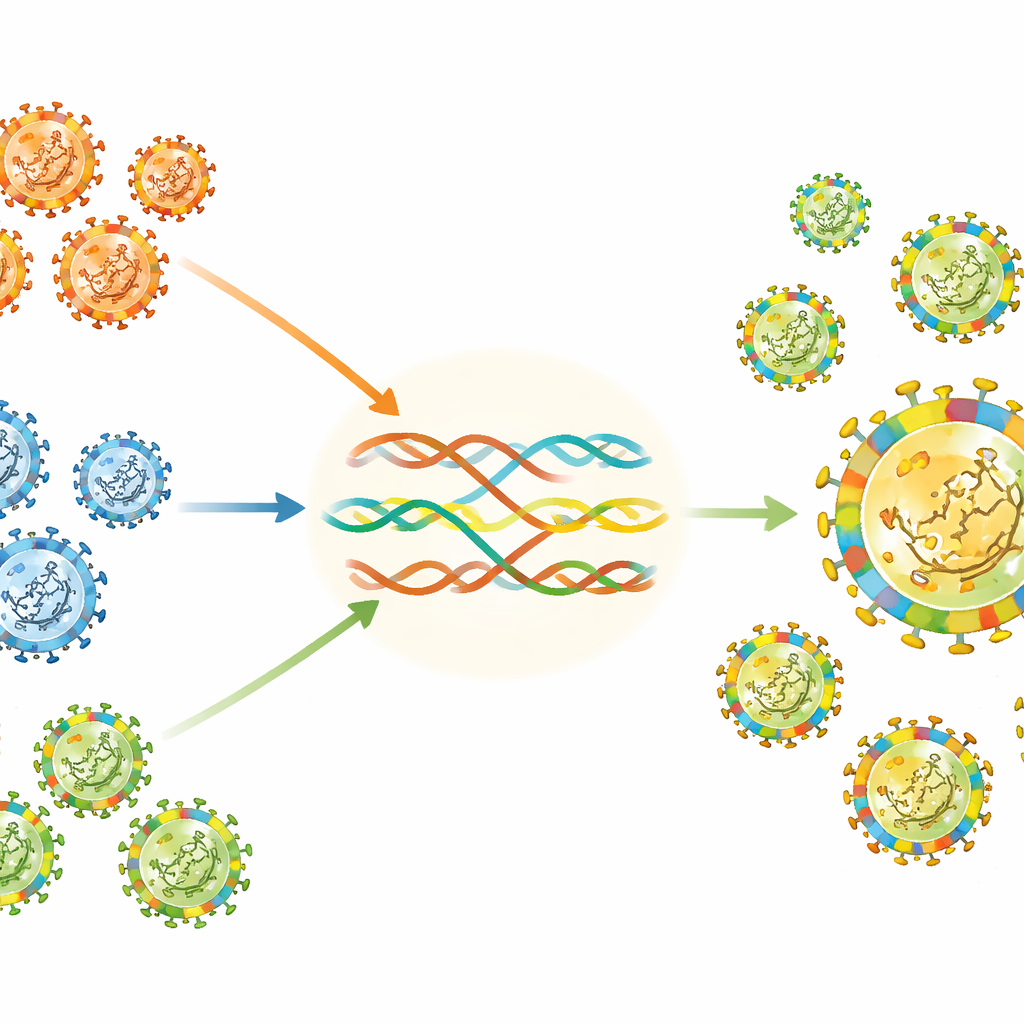
RNA viruses like CVA4 do not just slowly accumulate random mutations; they can also recombine—effectively swapping chunks of genetic material when two related viruses infect the same cell. To look for these mix-and-match events, the authors compared different genome regions of their CVA4 samples with those of several related enteroviruses. In the section that encodes the virus’s outer coat, the Shandong strains looked most like the historical CVA4 “prototype,” reinforcing that this region is relatively stable and remains a reliable basis for classifying strains. But in regions that encode internal enzymes, particularly a portion known as 3D that helps copy the viral genome, some CVA4 strains suddenly resembled other enteroviruses instead.
Evidence of viral “hybrids”
Using specialized software to scan for recombination, the team identified three clear events where parts of the CVA4 genome appear to have been acquired from cousins called CVA2 and CVA8. Five Shandong viruses shared a short segment in the 3D region that matched CVA2, implying that an early hybrid virus spread successfully in the local population. One strain, named LY17, was even more complex: it carried two distinct imported fragments, one most similar to CVA8 and another to CVA2, both again in the 3D region. These rearrangements underscore that CVA4’s evolution is not linear but involves repeated genetic reshuffling in a specific “hotspot” of its replication machinery.
What this means for families and public health
The study does not claim that these genetic changes have already made CVA4 more dangerous, but it highlights how actively the virus is evolving as it circulates among children. Because existing vaccines in China target a different enterovirus, EV-A71, other viruses such as CVA4 now play a larger role in everyday outbreaks of herpangina and related illnesses. By mapping how CVA4 strains are related worldwide and pinpointing where they recombine with other viruses, this work provides a genetic roadmap for future surveillance and vaccine design. For families, the key message is that even routine childhood infections are driven by dynamic viruses, and sustained monitoring helps health authorities anticipate and blunt the impact of new epidemic waves.
Citation: Ma, W., Dong, Z., Mou, X. et al. Whole-genome analysis of CVA4 in children with herpangina in two cities of Shandong, China. Sci Rep 16, 7881 (2026). https://doi.org/10.1038/s41598-026-39455-x
Keywords: herpangina, Coxsackievirus A4, enterovirus, viral recombination, pediatric infection