Clear Sky Science · en
Tissue-specific distribution of cytotoxic triterpene saponins in three Red Sea sea cucumbers
Sea Delicacies With Hidden Healing Power
Sea cucumbers are odd, sausage-shaped animals that many people in East Asia eat as a health food. This study asks a simple but intriguing question: do these creatures from Egypt’s Red Sea contain natural chemicals that could help fight cancer, and if so, where in their bodies are those chemicals hiding? By carefully mapping these substances and testing their effects on cancer cells in the lab, the researchers uncovered promising clues that could guide future drug discovery.
What Makes These Creatures Special
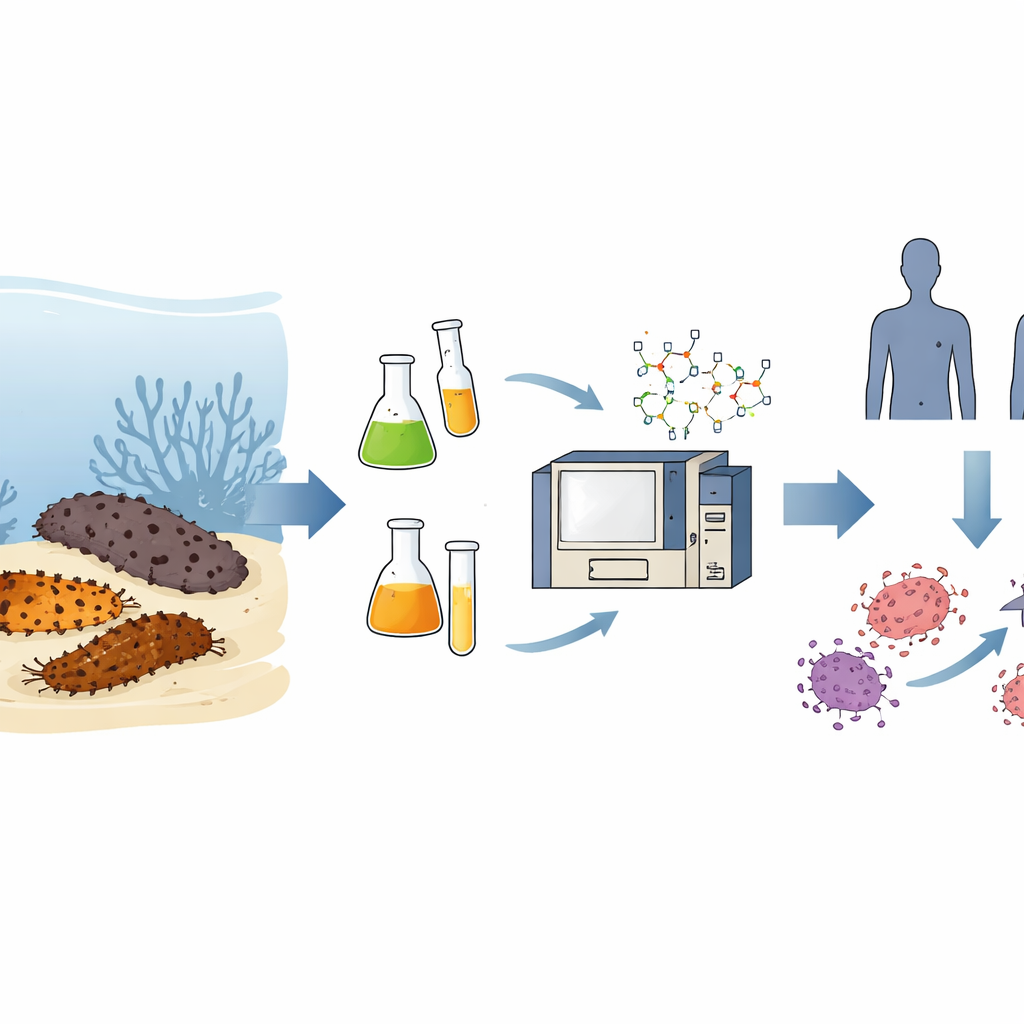
The team focused on three edible sea cucumber species common in the Red Sea: Holothuria atra, Holothuria impatiens, and Bohadschia vitiensis. These animals are already valued as nutritious foods rich in protein, vitamins, and minerals. But they also produce a family of soap-like molecules called saponins, which they likely use as chemical defenses. Earlier studies hinted that some sea cucumber saponins can kill cancer cells. However, there was little information about how these compounds are distributed between the tough outer body wall that people usually eat and the internal organs that are often discarded.
Finding the Potent Compounds
To answer this, the scientists collected sea cucumbers by scuba diving off Hurghada on the Red Sea coast. They separated the muscular body walls from the soft internal organs, extracted their chemical contents with alcohol, and then profiled the mixtures using high-precision mass spectrometry. This technique sorts molecules by their mass, allowing the team to identify 35 distinct saponins and compare how much of each appeared in wall versus organ extracts. In H. atra and B. vitiensis, most of the saponins concentrated in the body wall. In contrast, H. impatiens stored a richer variety and higher levels of these compounds in its internal organs.
Putting Sea Cucumber Chemistry to the Test
The researchers then asked which extracts were actually harmful to cancer cells. They exposed several human cancer cell lines—including colon, prostate, and lung cancer cells—to the different wall and organ extracts. The internal organ extract of H. impatiens stood out, sharply reducing the survival of all tested cancer cells while the others showed weaker or inconsistent effects. To pinpoint the most active constituents, they further split this potent extract into several solvent-based fractions. A fraction extracted with dichloromethane showed especially strong cancer-cell killing power, with colon cancer cells barely surviving exposure in laboratory tests.
Zooming In on Two Star Molecules
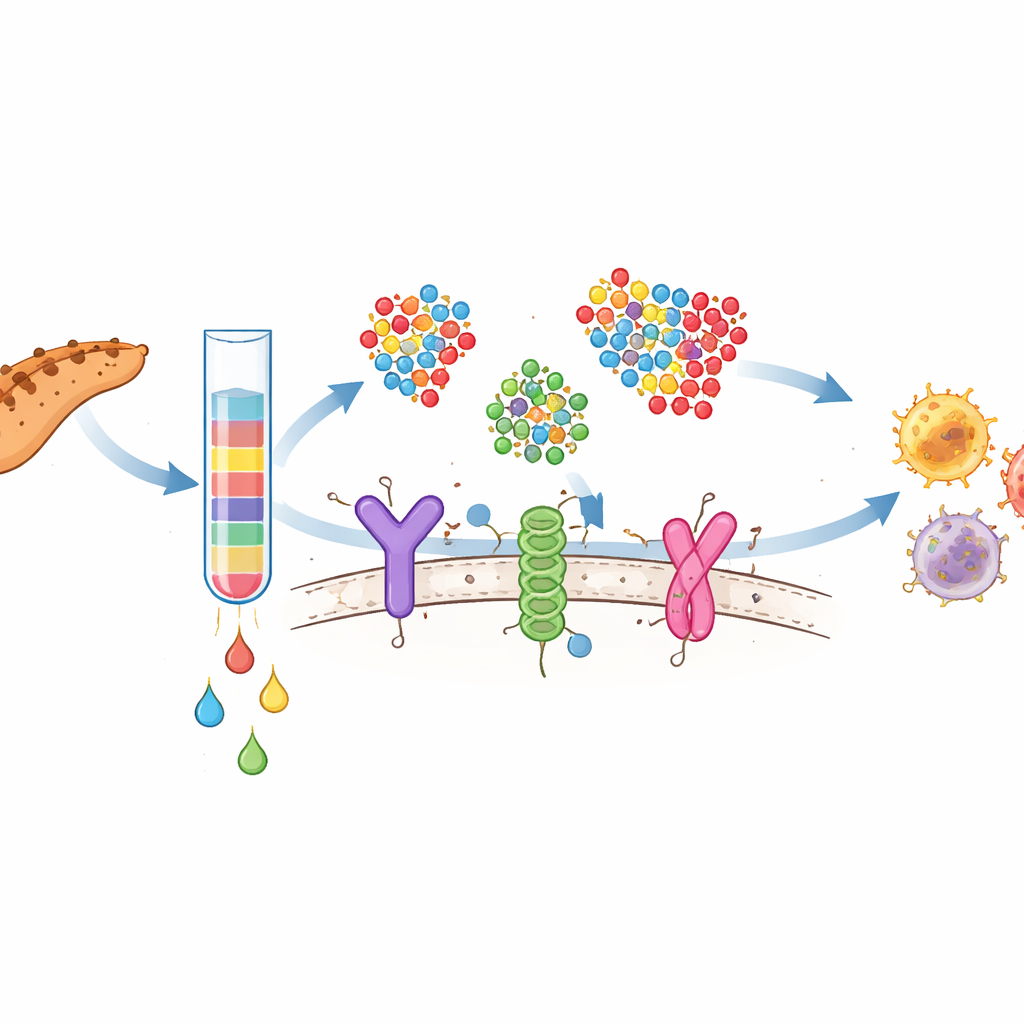
Next, the team combined their chemical data with a network-style analysis that links the presence of specific molecules to biological effects. In these “molecular maps,” the most bioactive signals clustered around a group of saponins, especially two compounds called bivittosides C and D. These molecules were enriched in the most potent fractions, present at lower levels in less active fractions, and completely absent from the inactive fraction. Using databases of known protein targets, the scientists predicted that bivittosides C and D may interact with key proteins that drive cancer growth, including those in the PI3K/Akt pathway and surface receptors such as EGFR. Computer docking simulations supported this idea: both bivittosides fit snugly into the binding pockets of cancer-related proteins like STAT3, Akt1, and EGFR, with interaction strengths comparable to known inhibitors.
Why This Matters for Food and Medicine
Overall, the work shows that Red Sea cucumbers are more than just a traditional delicacy; they are also complex chemical factories. The study reveals that different species, and even different tissues within the same animal, stockpile saponins in distinct ways. The internal organs of H. impatiens, in particular, are a rich source of two saponins that strongly damage cancer cells in the lab and appear capable of disrupting major growth and survival pathways in tumors. While this does not mean eating sea cucumbers will cure cancer, it does highlight their potential as a starting point for designing new anticancer drugs and adds scientific weight to their long-standing reputation as functional foods.
Citation: Fayez, S., Abed, K., Moussa, M.S. et al. Tissue-specific distribution of cytotoxic triterpene saponins in three Red Sea sea cucumbers. Sci Rep 16, 8005 (2026). https://doi.org/10.1038/s41598-026-39441-3
Keywords: sea cucumbers, natural anticancer compounds, marine saponins, Red Sea biodiversity, drug discovery