Clear Sky Science · en
Synergistic effect of naphthalene acetic acid and salicylic acid on the growth and tolerance mechanism of cucumber under salt stress
Why salty soils matter for your salad
As the world gets hotter and drier, more farmland is turning salty, making it harder for crops to grow and cutting into the yields of everyday foods like cucumbers. This study asks a practical question with big consequences for food security: can we give plants a kind of “vitamin shot” that helps them stay healthy and productive even when their roots sit in salty ground? The researchers tested a pair of simple plant treatments to see whether together they could help cucumbers keep growing, stay greener, and produce better-quality fruits under salt stress.
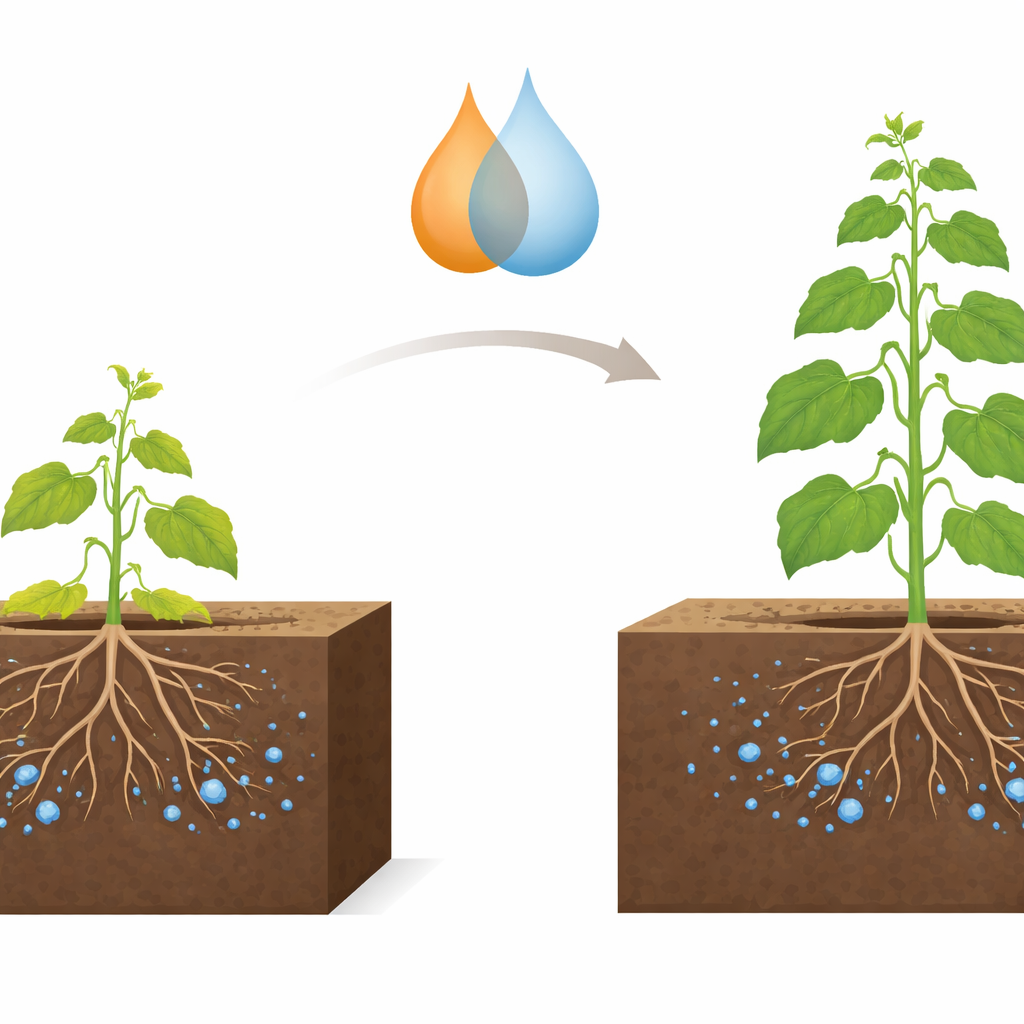
Salty ground and struggling plants
When soil salt levels rise, plants face a triple threat. Salt makes it harder for roots to draw up water, throws off the balance of vital nutrients, and sparks harmful oxygen-based molecules inside cells. In cucumbers, which are especially sensitive, this shows up as weaker seedlings, smaller leaves, and stunted plants. In the experiment, young cucumber plants were grown in soil made salty with a level of salt that commonly harms crops. Unsurprisingly, these plants grew poorly: their roots and shoots weighed roughly half as much as those of plants in normal soil, their leaves were smaller, and their overall height was cut by more than half. Inside the cells, telltale signs of damage rose sharply, including leaky membranes and the breakdown of fats in cell walls.
Two helpers team up
The team focused on two widely used plant treatments: naphthalene acetic acid (NAA), a synthetic version of a natural growth hormone, and salicylic acid (SA), a simple molecule related to the active ingredient in aspirin that is known to boost plant defenses. On their own, each treatment could soften some of the blow from salt, but the researchers wanted to know whether using them together would be better than the sum of their parts. They grew cucumbers under five conditions: normal soil, salty soil alone, salty soil plus NAA, salty soil plus SA, and salty soil with both NAA and SA together. Then they tracked growth, leaf color, stress markers, internal chemistry, and finally the quality of the fruits.
Stronger growth and greener plants under stress
Combining NAA and SA had striking effects. Under salty conditions, plants given both treatments almost recovered their normal size: plant height bounced back to essentially match that of unstressed cucumbers, and root and shoot weights climbed close to control levels. Leaf area, while still somewhat reduced, was much better than under salt alone. The plants also showed healthier chlorophyll readings, which reflect their ability to capture light for photosynthesis, and their roots regained much of their activity, suggesting they were again able to take up water and nutrients effectively. In other words, the two treatments together helped cucumbers behave much more like plants growing in non-salty soil.
Inside the plant: cleaner chemistry and steadier fuel
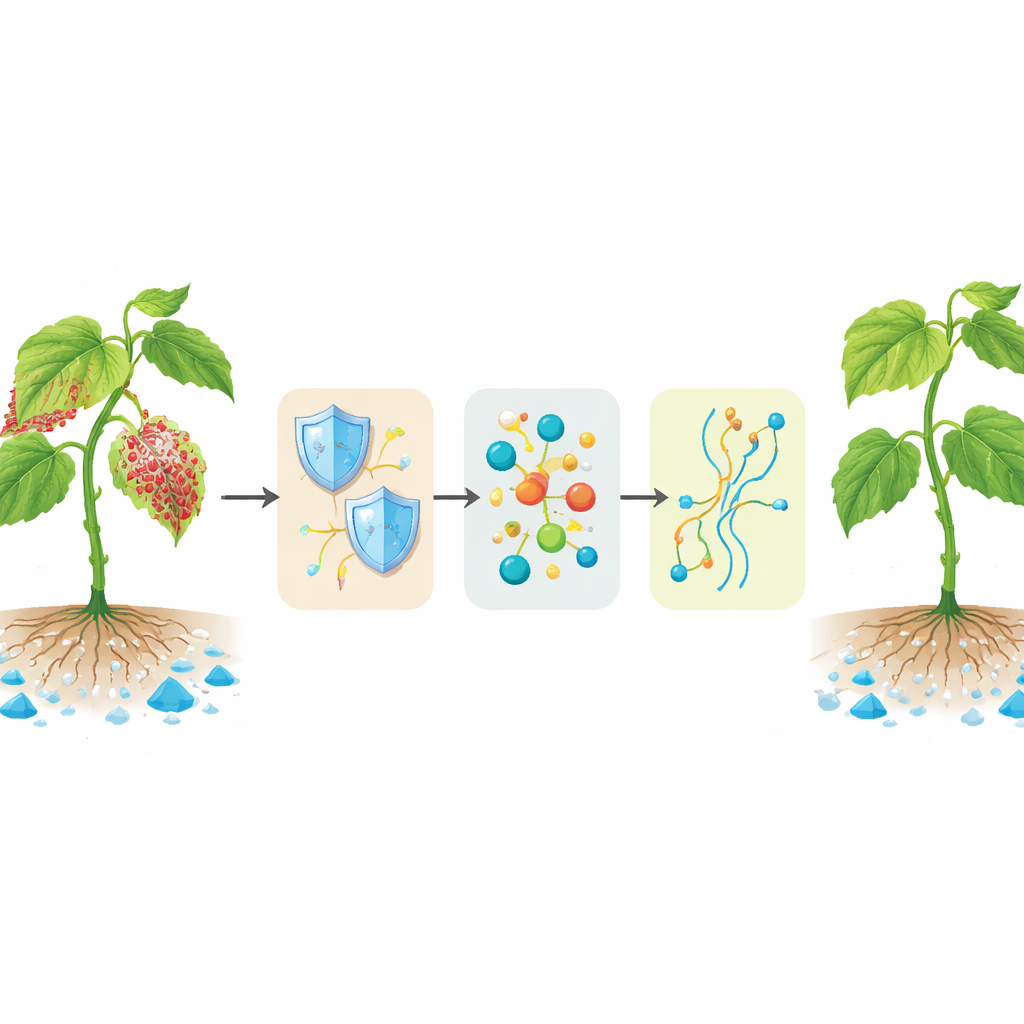
Under the surface, the benefits were just as clear. Salt normally causes cell membranes to leak and fats to break down, both signs of severe stress. The combined treatment cut these damage markers, indicating sturdier cell walls and less internal injury. Levels of proline, a small molecule plants use to hold onto water and protect their proteins, rose further with NAA and SA, helping cells keep their shape in salty conditions. Key protective enzymes that neutralize reactive oxygen—biological “rust removers” like catalase and other antioxidants—became even more active with the combined treatment than with salt alone, suggesting a stronger built-in defense system. At the same time, enzymes that manage sugars and nitrogen, the basic building blocks for growth, were rebalanced so that the plants could keep turning raw nutrients into proteins and energy despite the salt.
Better cucumbers on the plate
The improvements were not just visible in the greenhouse; they showed up in the fruits themselves. Salt-stressed plants usually produce cucumbers with less vitamin C, fewer soluble sugars, and lower protein—all changes that reduce both taste and nutritional value. With the combined NAA and SA treatment, vitamin C, sugar, and protein levels in the fruits rebounded, in some cases reaching or surpassing those of plants grown in normal soil. Total nitrogen in the leaves, a sign that the plant is successfully turning fertilizer into growth, was also fully restored. Statistical analyses confirmed that using both treatments together often produced “synergistic” gains—benefits larger than what either NAA or SA could deliver on its own.
What this means for farmers and consumers
For growers facing creeping soil salinity, this work suggests a practical tool: pairing two simple, known plant treatments can help cucumbers stay taller, greener, and more nutritious even when the soil is salty. By reinforcing growth, shoring up internal defenses, and keeping sugars and proteins flowing, the NAA–SA combination turns a hostile environment into one that plants can handle much more easily. While more work is needed to fine-tune doses and test other crops, the study points toward affordable ways to protect vegetable yields and quality on salt-affected land—helping secure fresh cucumbers, and other sensitive produce, for a world with increasingly stressed soils.
Citation: Mohamed, E., Abdelgalil, S.H., Kaseb, M.O. et al. Synergistic effect of naphthalene acetic acid and salicylic acid on the growth and tolerance mechanism of cucumber under salt stress. Sci Rep 16, 9203 (2026). https://doi.org/10.1038/s41598-026-39439-x
Keywords: salt stress, cucumber, plant growth regulators, salicylic acid, crop resilience