Clear Sky Science · en
Allelopathic and autotoxic effects of sorghum extract and residues on seed behavior, and morphological, physiological, and biochemical responses of several plants
How One Crop Can Help Control Weeds—But Also Harm Itself
Sorghum, a hardy cereal grown in many dry regions, does more than just survive tough conditions. Its roots and leftover stalks release natural chemicals that can slow or stop the growth of nearby plants. This raises an intriguing possibility for farmers: could sorghum help control weeds without synthetic herbicides? At the same time, these same chemicals may sometimes backfire, weakening sorghum itself or future crops in rotation. This study explores that double-edged sword, asking when sorghum’s natural “plant weapons” are helpful and when they become harmful—especially under drought.
Plants That Talk Through Chemicals
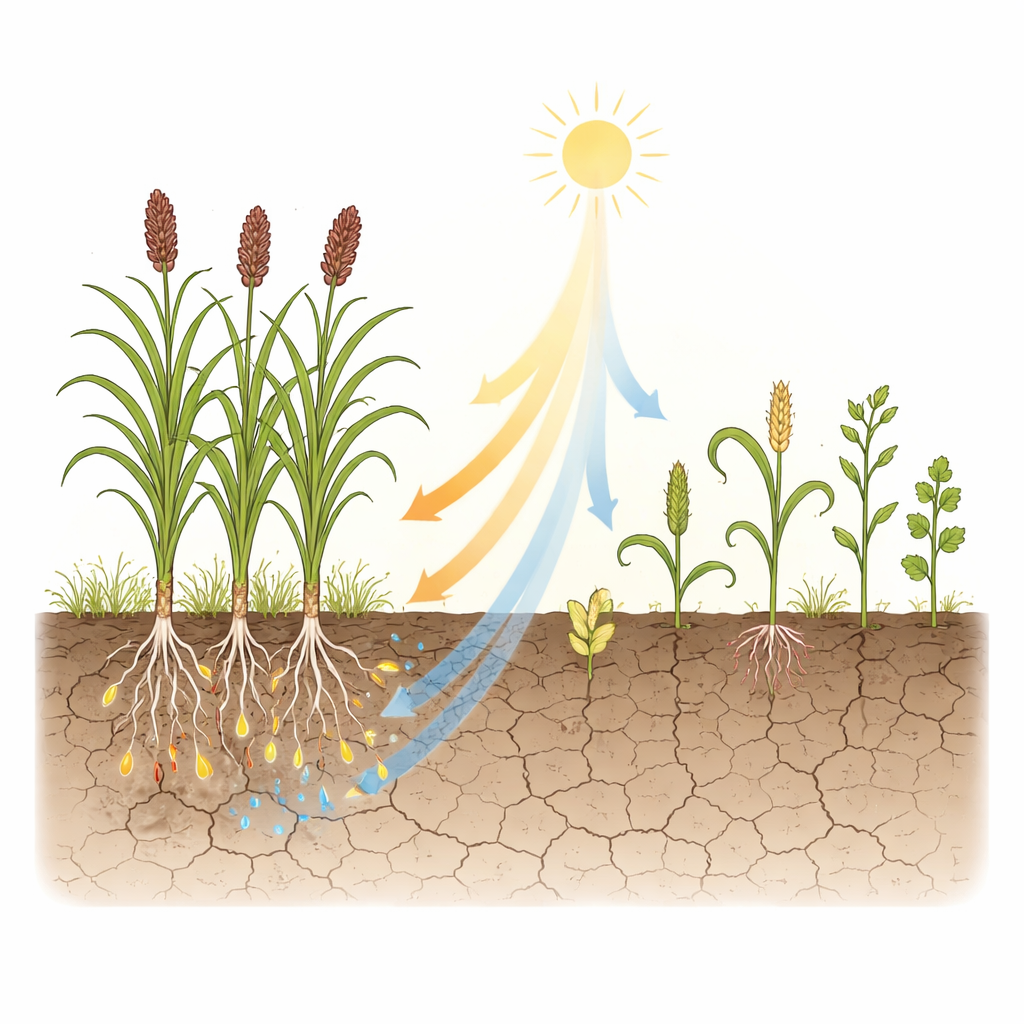
Plants do not move, but they constantly interact with their neighbors through invisible chemical signals. Sorghum is a champion in this regard. Its roots, leaves, and decaying residues release a mix of oily compounds and plant acids into the soil. These substances can interfere with how other seeds take up water, breathe, and use energy, slowing their germination and stunting young seedlings. In this study, researchers tested water extracts made from sorghum tissues at different strengths, along with intact roots and burned root residues, on eight common crops: sorghum, corn, wheat, barley, sunflower, rapeseed, alfalfa, and cowpea. They also added a laboratory-made drought treatment, using a substance called PEG-6000 to make water harder for roots to absorb, mimicking dry soil.
Testing Seeds in a Controlled Mini-World
The team first worked in Petri dishes—simple plastic plates lined with moist paper—to follow seeds from the moment they began to swell through the early days of root and shoot growth. They measured how many seeds sprouted, how fast they did so, and how long their roots and shoots became. They also examined color-rich molecules like chlorophyll and carotenoids, which drive photosynthesis, and tracked protective substances such as proline, soluble sugars, and antioxidant enzymes that help plants cope with stress. Stronger sorghum extracts, especially at 6 and 8 percent, consistently reduced germination success, slowed growth, and lowered pigment levels across most species. When drought stress was added on top of these extracts, the negative effects became much stronger, revealing a powerful one-two punch of chemical and water stress. Legumes such as alfalfa and cowpea were particularly sensitive and performed so poorly that they were dropped from the later greenhouse phase.
From Laboratory Plates to Potted Plants
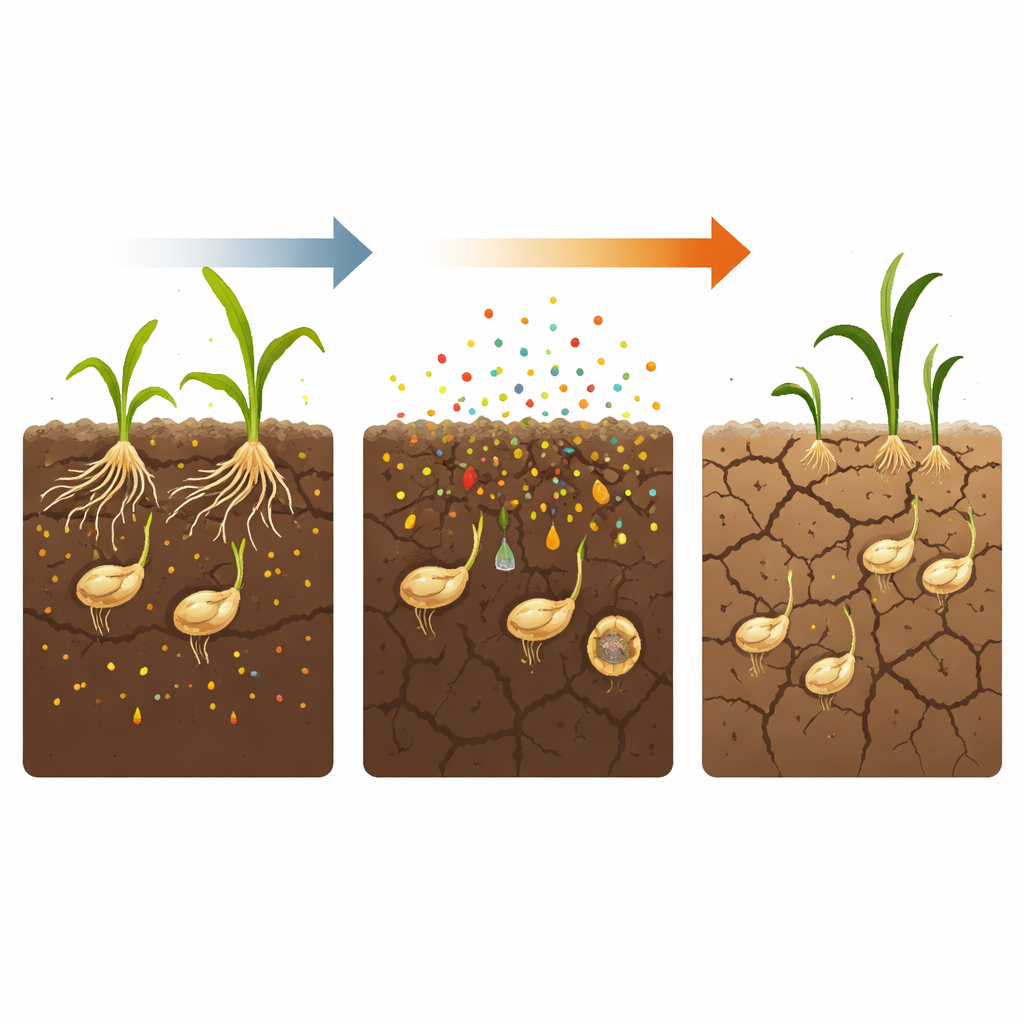
In the second phase, the researchers moved into greenhouse pots filled with soil, a closer stand-in for field conditions. They focused on the more tolerant species—sorghum, corn, wheat, barley, sunflower, and rapeseed—and mixed real sorghum root residues into the soil at a moderate level. Importantly, they varied the timing: residues were added at planting or one, two, or three months before sowing. This allowed them to track how the breakdown of residues over time changed their impact. Overall, fresh residues reduced leaf pigments and stressed plants, as seen in lower activity of protective enzymes and changes in sugars and proline. But when residues were added well before planting, crops tended to recover better, with higher chlorophyll levels and less apparent stress, suggesting that time helps the soil community detoxify or dilute the harmful compounds.
Winners, Losers, and the Role of Stress Shields
Not all crops reacted the same way. Sorghum itself and corn consistently emerged as the “winners,” showing strong seed vigor, longer roots, and more stable pigment levels even under strong extract plus drought treatments. They also maintained higher activities of antioxidant enzymes—tiny molecular shields that mop up damaging reactive molecules produced under stress. In contrast, alfalfa and cowpea struggled badly, with poor germination, weak seedlings, and lower defense capacity. Other crops sat in the middle, showing clear stress but partial coping abilities. These differences highlight that some species naturally tolerate sorghum’s chemical neighborhood, while others are easily overwhelmed, especially when water is scarce.
Making Sorghum’s Powers Work for Farmers
To a non-specialist, the main message is that sorghum’s natural chemicals can act like a soft, built-in herbicide, helping suppress weeds and possibly some competing crops. But this power must be managed carefully. High concentrations of sorghum extracts and freshly mixed residues, especially under drought, can damage sensitive crops and even sorghum itself. By choosing tolerant companion crops like corn or rapeseed, timing when sorghum residues are incorporated into the soil, and avoiding continuous sorghum on the same field without a break, farmers may harness its weed-fighting ability while reducing the risk of self-harm. The study points the way toward cropping systems that rely less on synthetic herbicides and more on the quiet chemical conversations plants are already having underground.
Citation: Shahmohammadi, F., Abdi, M., Faramarzi, A. et al. Allelopathic and autotoxic effects of sorghum extract and residues on seed behavior, and morphological, physiological, and biochemical responses of several plants. Sci Rep 16, 8631 (2026). https://doi.org/10.1038/s41598-026-39434-2
Keywords: sorghum allelopathy, natural weed control, drought stress in crops, crop residue management, autotoxicity