Clear Sky Science · en
Sociability and whole-brain resting-state connectivity
Why Our Social Lives Matter to the Brain
Spending time with others is not just about friendship and fun; it is closely tied to mental health and even how our brains work at rest. This study asks a simple but powerful question: do people who are more socially engaged show different patterns of brain activity, even when they are just lying still in a scanner? Using data from tens of thousands of adults, the researchers map how everyday sociability relates to the brain’s communication networks, shedding light on why social isolation can feel so mentally and emotionally draining.
Looking at Quiet Brains in a Big Population
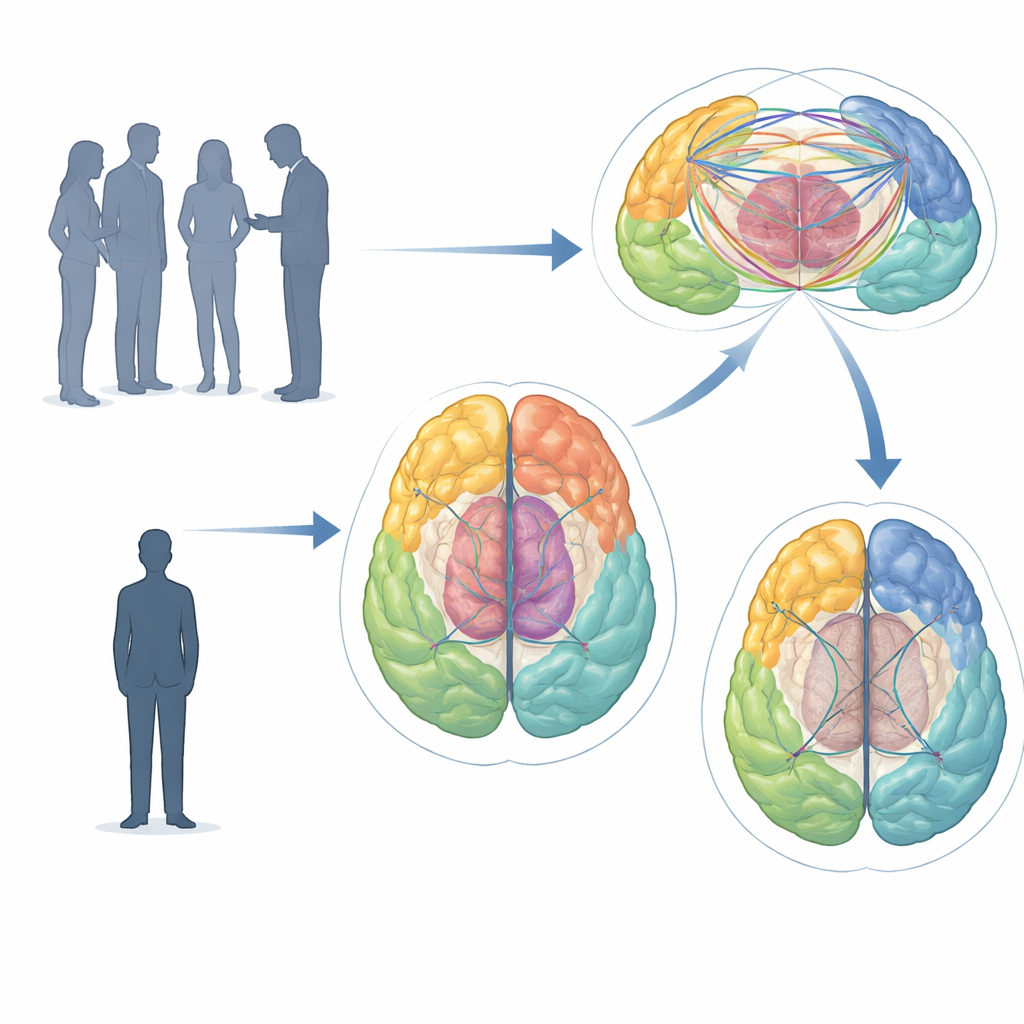
The team drew on the UK Biobank, a large health project that includes brain scans and lifestyle information from over 30,000 middle-aged and older adults. Each person completed a short questionnaire capturing both how often they meet others and how lonely they feel, combined into a single sociability score. In the scanner, volunteers simply rested while their brain activity was recorded. The researchers did not focus on single spots in the brain. Instead, they examined 21 large-scale networks—sets of regions that tend to activate together—such as those involved in movement, sensing the world, internal thoughts, and paying attention.
Movement and Senses Linked to Being Social
One of the clearest patterns came from networks that help us move and feel our bodies and surroundings, known broadly as sensorimotor systems. People with higher sociability scores tended to show stronger internal coordination within these networks. In other words, the brain regions that support actions like speaking, gesturing, and processing sounds and touch were more tightly in sync at rest among more sociable individuals. Connections between nearby, similar networks—such as different movement or language networks—also tended to be stronger in more sociable people, suggesting a brain that is well integrated for everyday interaction.
When Inner Thoughts Become Cut Off
Another focus was on networks involved in daydreaming, self-reflection, and imagining others’ minds, often called the brain’s “inner world” systems. The study found that higher sociability was linked to a subtle loosening of tight, inward-looking links within these networks, especially in areas tied to emotions and memory. At the same time, these inner-world regions, together with a key “switching” network that helps the brain move between rest and task-focused modes, showed stronger connections to networks responsible for attention, planning, and language. The authors propose a striking idea: when people are socially isolated, their inner thought network may become more sealed off from the rest of the brain, mirroring how they are cut off from other people.
Similar Brain Patterns With and Without Diagnoses
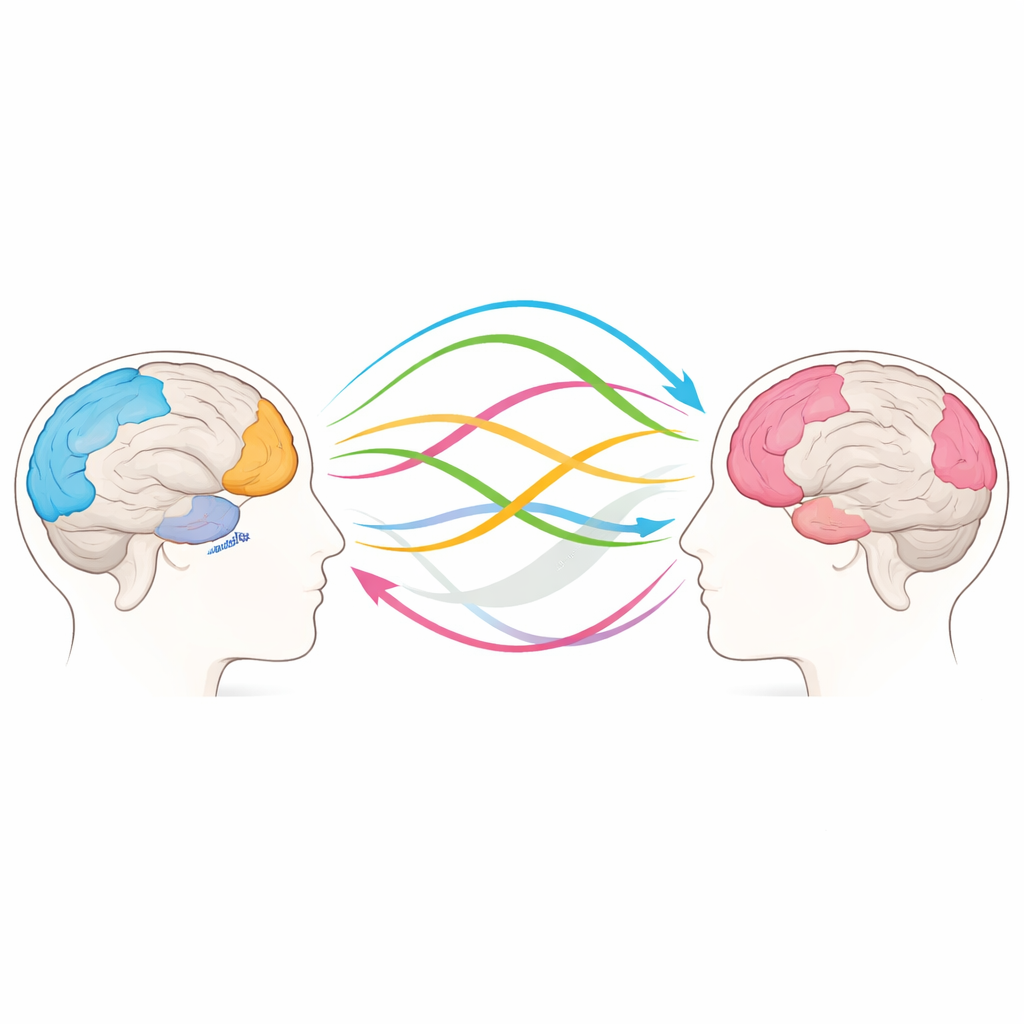
Because sociability is closely related to many mental health conditions, the researchers also compared people with a history of psychiatric diagnoses to those without. Surprisingly, the overall patterns linking sociability and brain connectivity were very similar across both groups. Effect sizes were small but consistent, suggesting that these brain–social links are general features of how human brains support social life, rather than being driven only by illness. This supports the idea that sociability is a shared dimension that cuts across many different diagnoses, rather than belonging to any single disorder.
What This Means for Everyday Life and Mental Health
For a layperson, the takeaway is that the brain seems to keep a kind of “social fingerprint” even when we are doing nothing at all. People who are more connected to others tend to show stronger coordination in networks that move and sense the world, and looser, better-integrated inner thought networks. Those who are more isolated may have brains in which the inner world is more cut off from systems for action, language, and control—perhaps echoing the emotional distance they feel. Although this study cannot prove cause and effect, it points toward brain systems that may help explain why building and maintaining social connections can be protective for mental health, and why loneliness can be so hard on both mind and brain.
Citation: Rovný, M., Sprooten, E., Ilioska, I. et al. Sociability and whole-brain resting-state connectivity. Sci Rep 16, 9978 (2026). https://doi.org/10.1038/s41598-026-39424-4
Keywords: sociability, social isolation, brain networks, resting-state fMRI, mental health