Clear Sky Science · en
Targeting aggression with prefrontal high-definition transcranial direct current stimulation
Why calming the brain matters for everyday conflict
From road rage to bar fights, moments of anger can quickly turn into actions people later regret. Scientists are searching for ways to help the brain hit the brakes before an impulsive outburst happens. This study explored whether a gentle, noninvasive form of electrical brain stimulation could make people less likely to lash out when they feel provoked, offering a potential new tool to support self-control and reduce harmful aggression.
A new way to nudge the brain
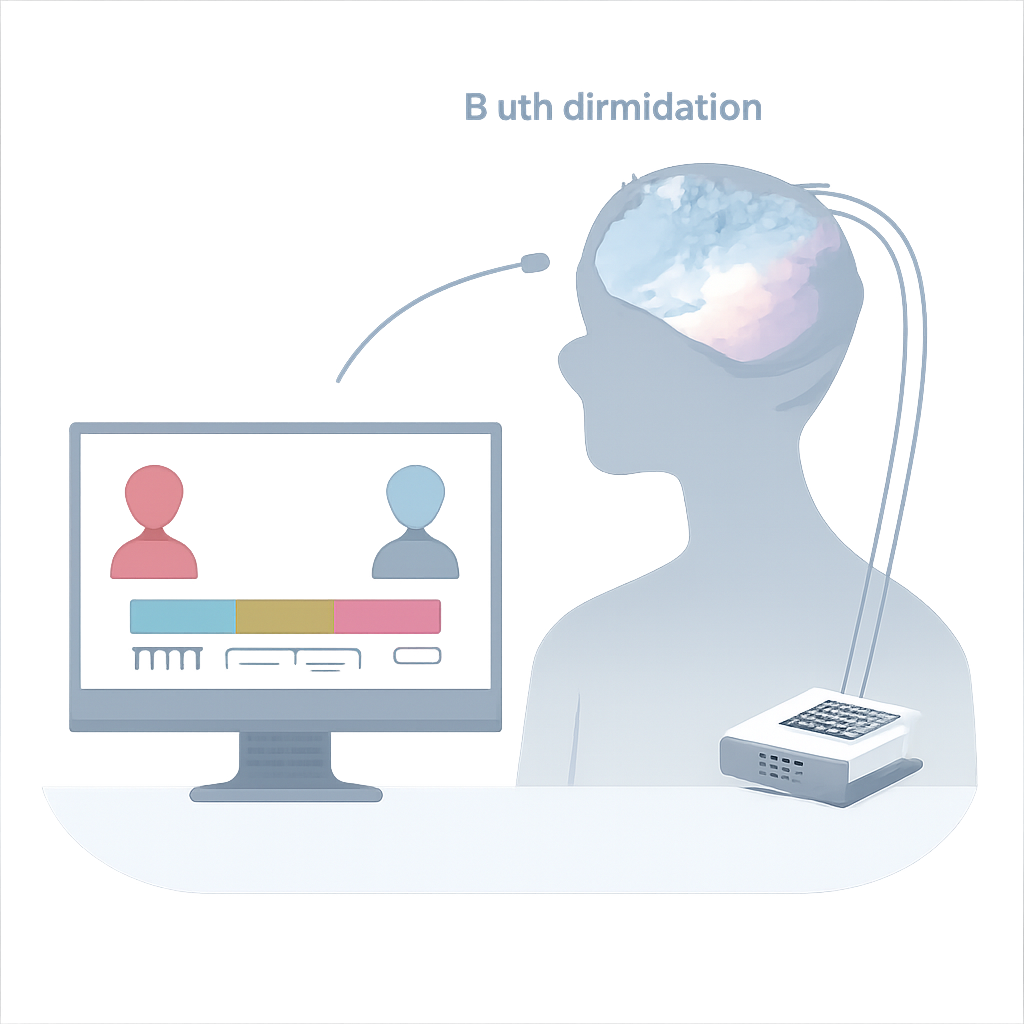
Our ability to stop ourselves from acting on angry impulses depends on a network of brain regions in the front and side of the head. A key player is an area behind the right temple that helps us pause and reconsider before we act. The researchers used a refined technique called high-definition transcranial direct current stimulation, which delivers a very weak electric current through small electrodes on the scalp. Unlike older versions that affected broad swaths of the brain, this method is designed to focus more tightly on specific regions involved in self-control.
Putting provocation to the test
To see whether this targeted stimulation could alter aggressive responses, the team recruited 41 healthy young men. Participants were randomly assigned to receive either real stimulation or a sham version that felt the same but did not deliver current. After the 20-minute session, all participants entered a brain scanner and played a competitive reaction-time game. They believed they were facing a real opponent who could punish them with loud noise blasts; in reality, the computer controlled the game. Before each round, players chose how loud a noise blast they would send if they won, providing a controlled way to measure how strongly they struck back when the opponent appeared more or less provocative.
Less escalation, not less anger
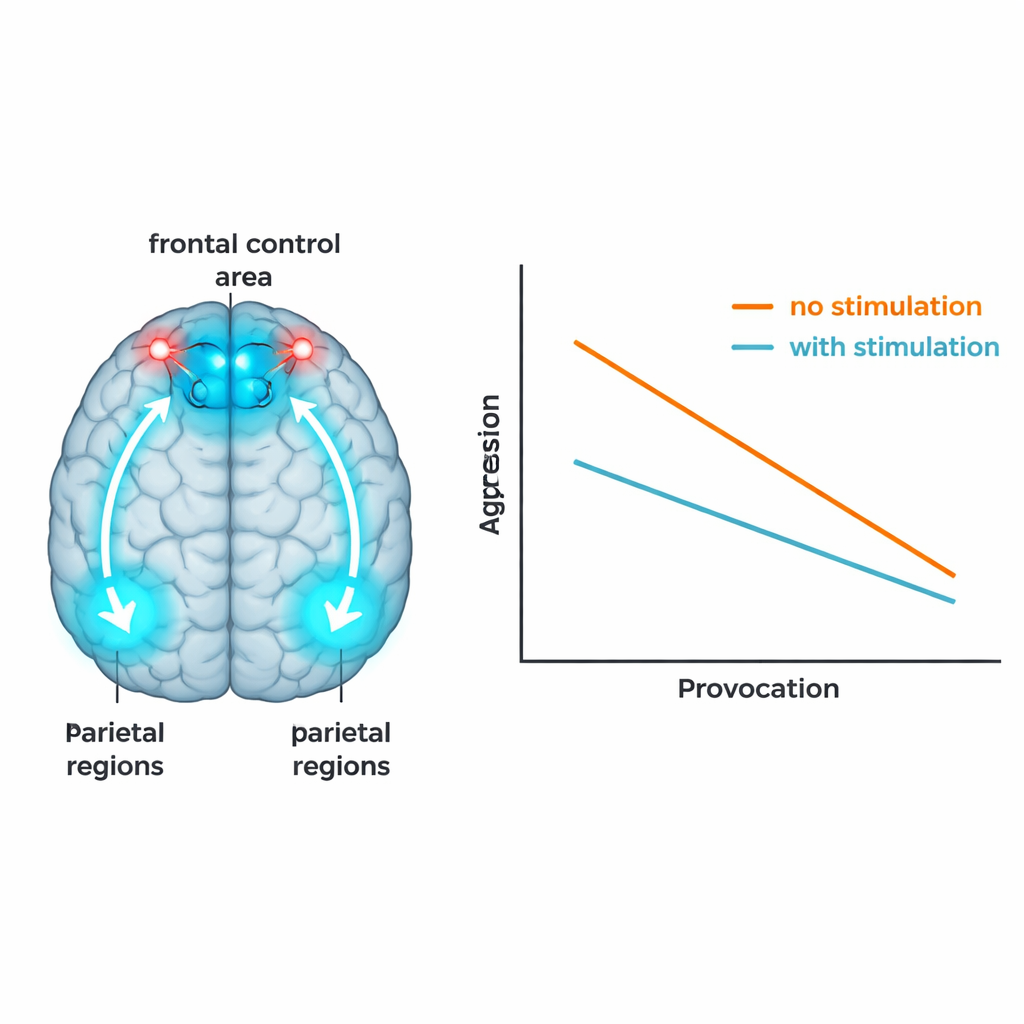
Overall, the brain stimulation did not simply make people less aggressive: both groups still tended to increase punishment when provoked. The crucial difference lay in how sharply their behavior escalated. In the sham group, higher levels of provocation led to a steep rise in chosen punishment levels. In the real-stimulation group, the same increases in provocation produced a noticeably gentler rise in retaliation. In other words, the electrical nudging of the frontal brain region did not erase aggressive impulses, but it seemed to blunt the tendency to “hit back harder” as the game became more hostile.
What the brain scans revealed
While the men played the game, the researchers also tracked changes in brain activity. They found that, compared with sham stimulation, real stimulation was linked to stronger activity in two regions along the sides of the brain, known for helping to integrate sensations and guide controlled actions. This difference appeared especially when provocation increased. The pattern suggests that stimulating the frontal control area may have boosted communication within a wider self-control network, allowing the brain to stay more engaged and deliberate under pressure instead of switching straight into automatic retaliation.
What this could mean for the future
For a layperson, the takeaway is that carefully targeted brain stimulation may help people keep a cooler head when they feel attacked, by strengthening the brain circuits that support restraint. This one-session study in healthy men did not eliminate aggression and does not yet translate into a treatment. But it offers early evidence that focusing stimulation on key control regions can soften the link between feeling provoked and acting out. With further research, including studies in women and in people at higher risk for violent behavior, such approaches might one day complement therapy and other interventions aimed at improving emotion regulation and reducing harmful aggression.
Citation: Lasogga, L., Hofhansel, L., Gramegna, C. et al. Targeting aggression with prefrontal high-definition transcranial direct current stimulation. Sci Rep 16, 5559 (2026). https://doi.org/10.1038/s41598-026-39423-5
Keywords: aggression, brain stimulation, self-control, prefrontal cortex, inhibitory control