Clear Sky Science · en
Carbon emission inequality of urban and rural households in China from 2000 to 2020
Why city and country living matter for the climate
Most of us think about climate change in terms of smokestacks and tailpipes, but the energy used in our homes—from heating and cooking to lights and appliances—is a major and growing source of carbon dioxide. In China, where hundreds of millions of people have moved from countryside to city in just a few decades, the gap between urban and rural household emissions has big implications for fairness, quality of life and the country’s path to its carbon peaking and neutrality goals.
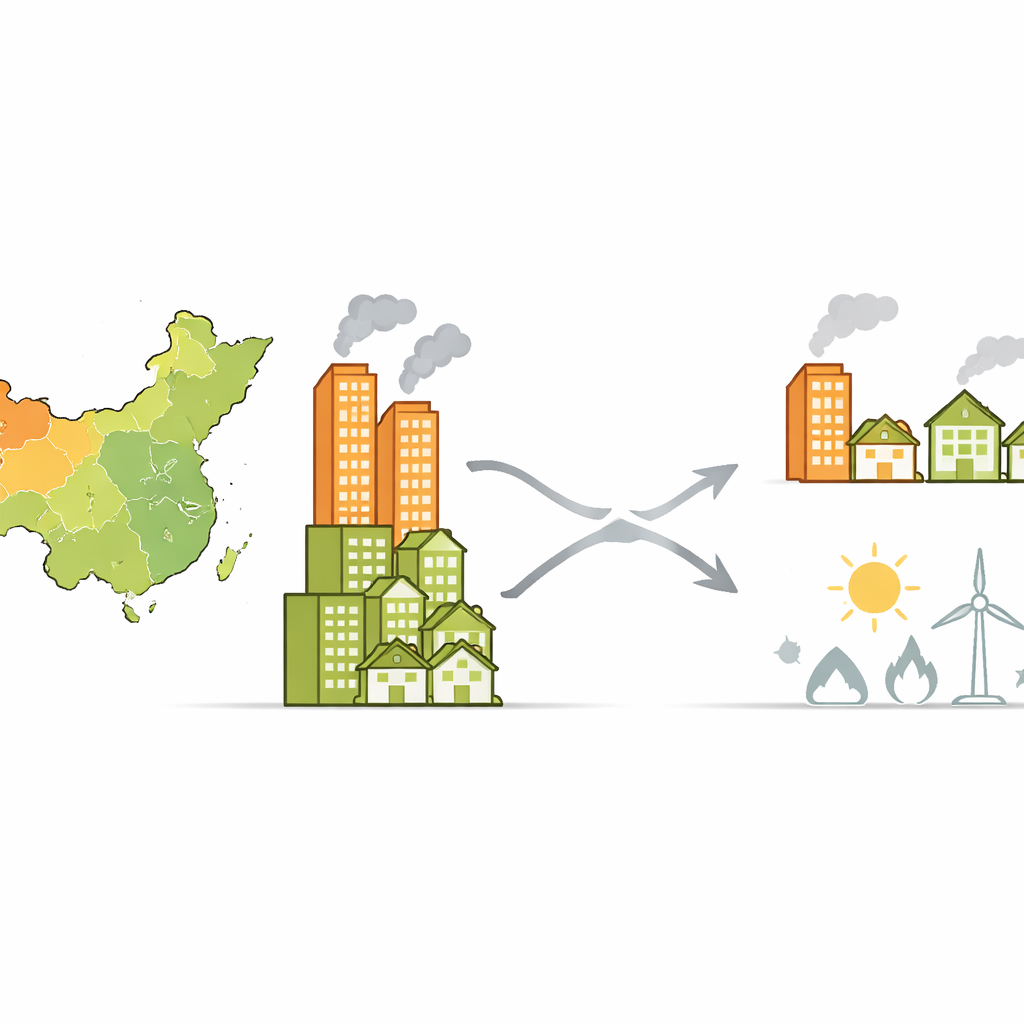
Tracking everyday carbon from 2000 to 2020
This study looks at how much carbon dioxide urban and rural households across 30 Chinese provinces released from direct energy use between 2000 and 2020. Using official energy statistics and standard conversion factors, the authors calculated emissions from fuels like coal, gas, electricity and heat used in homes. They then examined how these emissions were distributed: not just whether they rose or fell, but who was responsible for more or less of the total. To do this, they used an inequality index that captures how uneven emissions are across places and between city and countryside residents.
Rising footprints, shrinking gaps
The numbers show that household emissions per person climbed almost everywhere. In cities, average emissions per person grew from about 106 kilograms of carbon dioxide in 2000 to nearly 539 kilograms in 2020. In the countryside, they rose from roughly 35 to 202 kilograms. Urban households generally emitted much more than rural ones, especially in northern and heavily industrialized regions. Yet over the same period, the overall inequality in household emissions steadily narrowed: the national inequality index fell from 0.25 to 0.06. Most of the gap came from differences between provinces rather than differences between urban and rural areas within the same province, but both types of gaps shrank over time.
Where you live still shapes your energy use
Despite the broad trend toward convergence, regional contrasts remain. Provinces such as Xinjiang, Inner Mongolia and several in the northeast showed especially large gaps between urban and rural household emissions, though these gaps peaked around the mid‑2000s and have since eased. In some coastal provinces, the pattern even flipped: as rural incomes and access to commercial energy improved, some rural households began emitting more than their urban neighbors. Zhejiang stands out as a province where prosperous rural communities now have higher per‑person household emissions than city dwellers, reflecting successful rural development but also new environmental challenges.
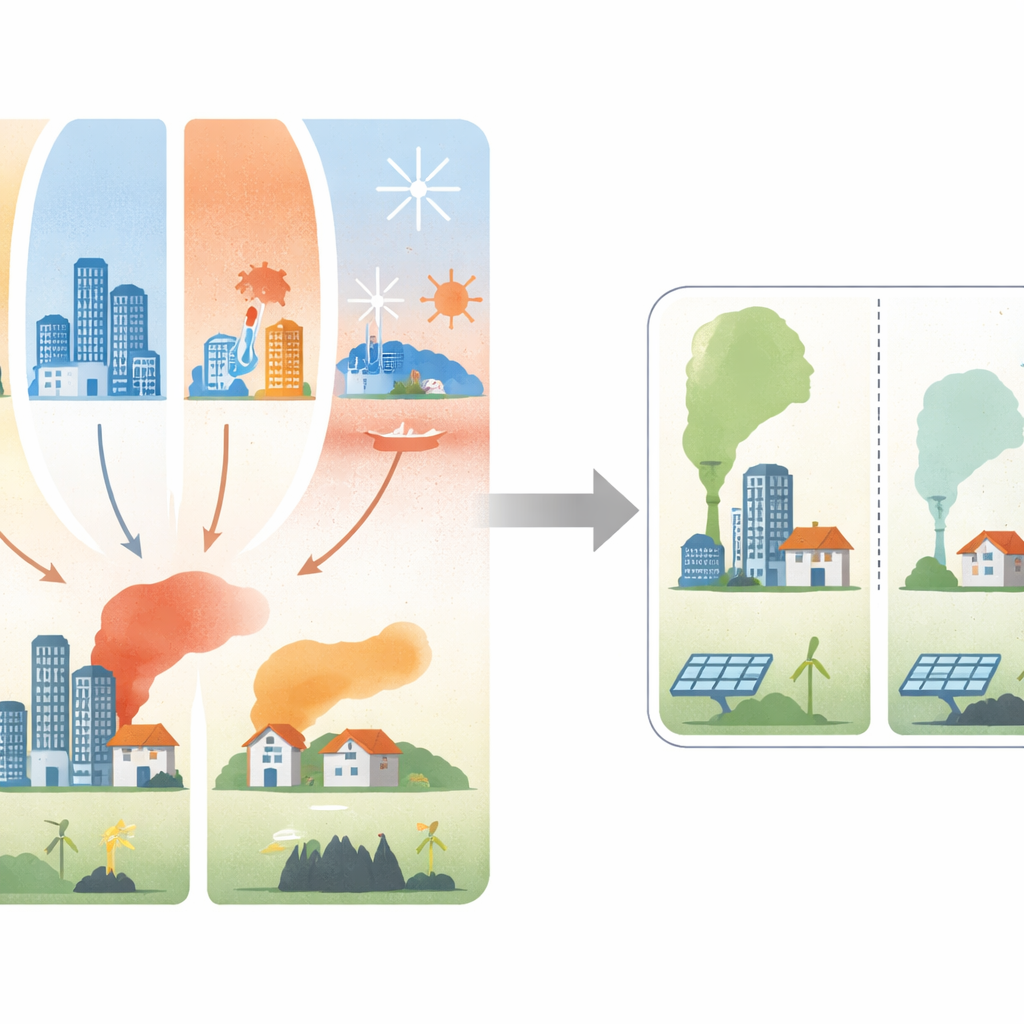
What drives the inequality—and what reduces it
To understand why these emission gaps change, the authors combined their emission estimates with data on the economy, population, climate and energy systems. They found that richer provinces, more urbanized regions, a larger share of electricity in household energy use and wider access to natural gas in rural areas were all linked to lower inequality between urban and rural household emissions. In other words, as people become better off and switch from coal and biomass to cleaner fuels and electricity, city–country gaps narrow. By contrast, colder climates with more days requiring heating were linked to higher inequality, especially where city residents benefit from efficient central heating while rural residents rely on scattered coal and other traditional fuels.
Lessons for a fair low‑carbon future
For non‑specialists, the core message is straightforward: China’s household carbon emissions are still rising, but the divide between city and countryside is slowly shrinking as incomes grow and cleaner energy spreads. Policies that boost local economies, expand modern electricity and gas networks in rural areas and tailor clean heating solutions to cold regions can cut emissions while making energy access fairer. If these trends continue, China can move toward a future where households in both high‑rise apartments and village homes enjoy decent, modern energy services without deep inequalities in their climate impact.
Citation: Zhou, T., Zhou, X. & Wang, Q. Carbon emission inequality of urban and rural households in China from 2000 to 2020. Sci Rep 16, 8340 (2026). https://doi.org/10.1038/s41598-026-39422-6
Keywords: household energy, urban rural inequality, carbon emissions China, clean energy transition, heating and climate