Clear Sky Science · en
Association of early vedolizumab trough levels with clinical, biochemical, endoscopic response and drug optimization during maintenance therapy in patients with inflammatory bowel diseases
Why drug levels matter for people with gut inflammation
For people living with chronic gut illnesses such as Crohn’s disease and ulcerative colitis, powerful medicines can calm the immune system and bring long-awaited relief. But the same dose does not work equally well for everyone. This study asks a practical question that many patients and doctors face: can measuring how much of a gut‑targeted drug is in the bloodstream early in treatment help predict who will do well months later, and who may need their treatment plan adjusted?
Looking at a gut‑focused medicine in real life
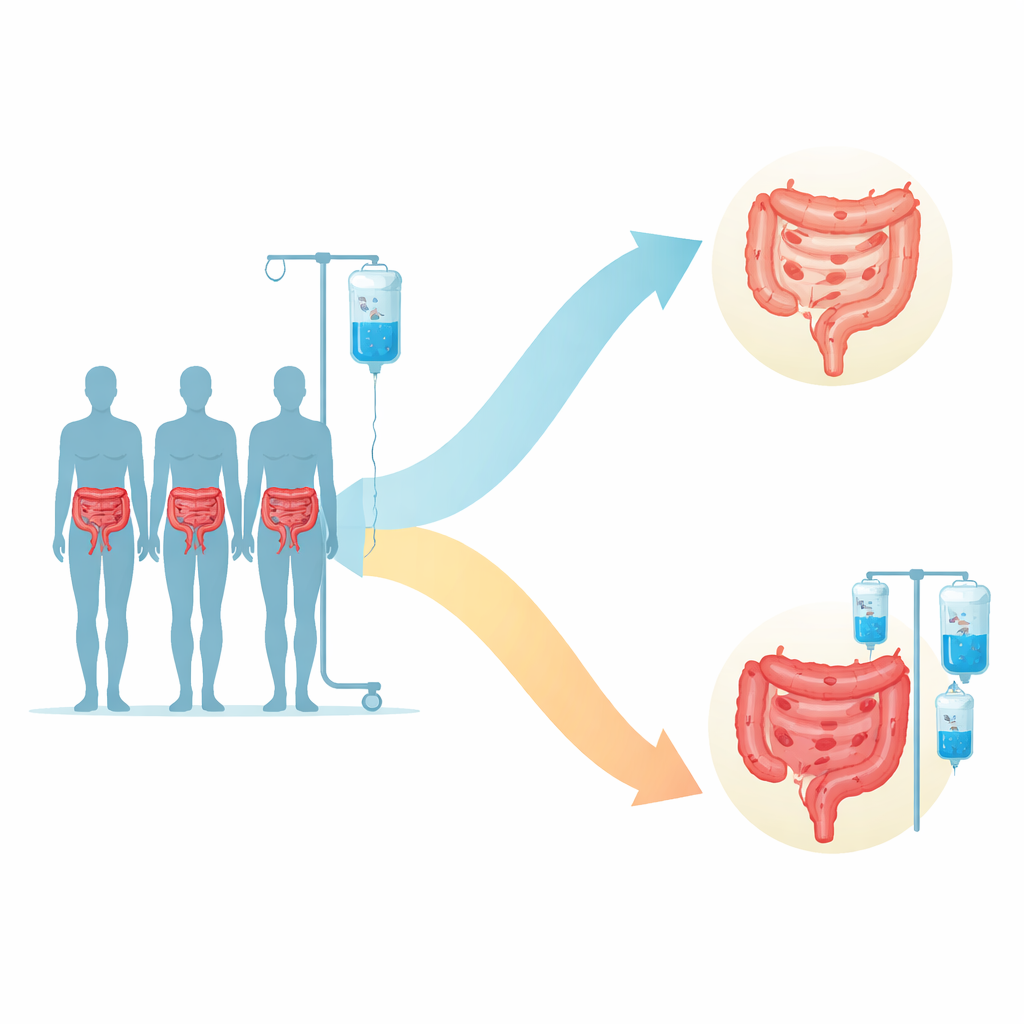
The researchers focused on vedolizumab, a drug that targets immune cells traveling into the intestine and is widely used when other treatments have failed. They followed 67 adults in Korea with inflammatory bowel disease—39 with Crohn’s disease and 28 with ulcerative colitis—who were already treated with other biologic drugs in the past. All patients received standard vedolizumab infusions at weeks 0, 2, and 6, and then every 8 weeks if they seemed to benefit. Blood samples were taken just before the infusions at weeks 2, 6, 14, and later in some patients, to measure how much vedolizumab remained in circulation, known as the “trough level.” The team then compared these early drug levels with several signs of improvement, including symptoms, stool and blood markers of inflammation, camera checks of the bowel, and whether patients needed more frequent dosing later on.
Early signals from the blood and the stool
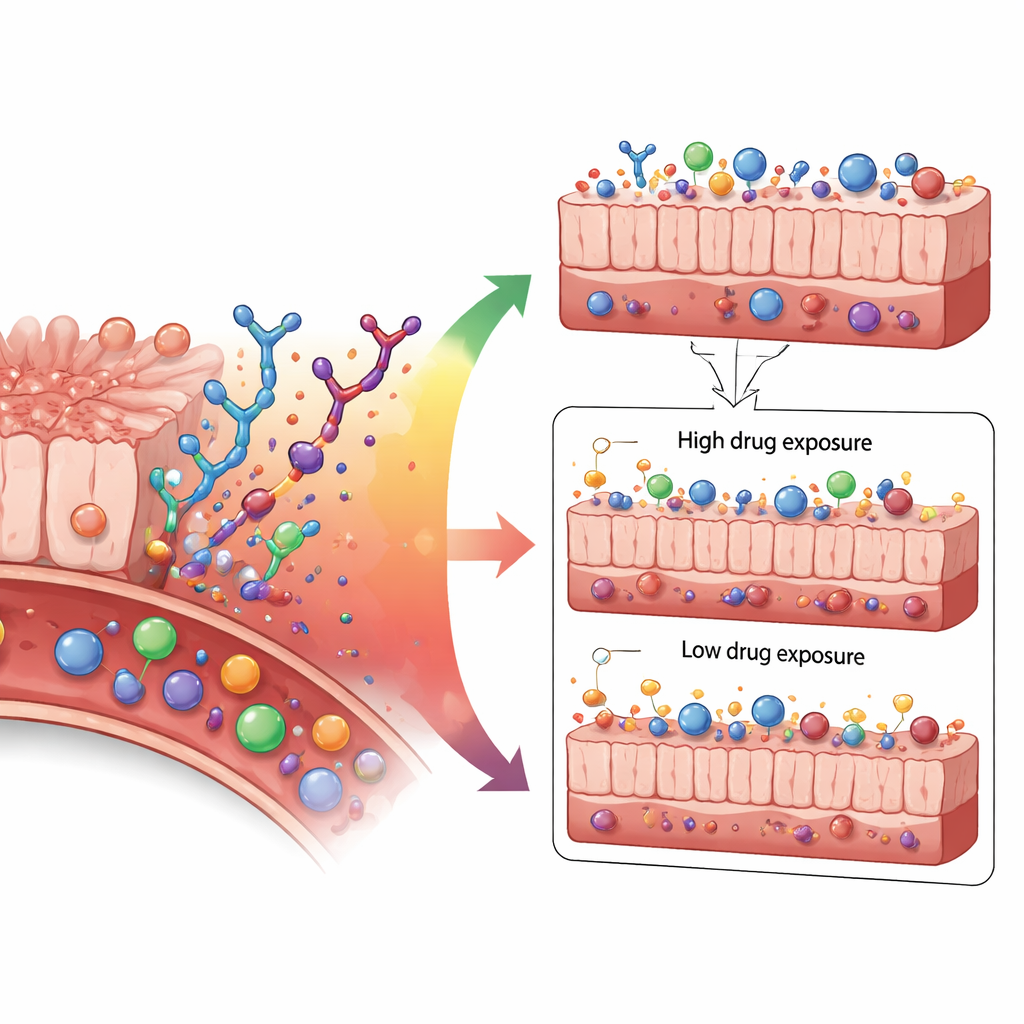
To judge how well the intestines were healing, the study relied heavily on objective laboratory markers. One was C‑reactive protein, a blood test that rises with body‑wide inflammation. Another was fecal calprotectin, a protein in stool that closely tracks irritation and injury in the gut lining. In patients with Crohn’s disease, those whose blood inflammation improved by week 14 tended to have higher vedolizumab levels at weeks 6 and 14. Likewise, patients whose stool marker showed lasting improvement at week 54 had notably higher drug levels at week 14 than those who did not improve. In ulcerative colitis, people who reached steroid‑free remission, had better stool markers, or showed healed bowel lining at week 14 generally had higher early drug levels, especially at week 2 and week 6, although these differences did not always persist at later time points.
Linking drug levels to gut healing and dose needs
Camera examinations of the bowel provided a direct look at tissue healing. Among people with ulcerative colitis, those whose bowel lining had visibly healed by week 14 showed higher vedolizumab levels at weeks 2 and 6 than those whose lining remained inflamed. For Crohn’s disease, however, there were too few follow‑up scopes and no clear healing events, so the team could only describe patterns rather than test them statistically. Another important finding came from how often treatment had to be intensified. Roughly half of all patients eventually needed their infusions moved from every 8 weeks to every 4 weeks. In Crohn’s disease, those who later needed this “dose escalation” had clearly lower drug levels at week 14 than those who stayed on the standard schedule, suggesting that a low level at this time point may flag patients who are more likely to need changes later.
What the numbers can and cannot tell us
From these patterns the researchers suggested rough “cut‑off” levels at specific weeks that were most closely linked with favorable outcomes, such as better stool markers or less need for dose escalation. For example, in Crohn’s disease a week‑14 level above about 5 micrograms per milliliter was often seen in patients with healthier stool markers at week 54, and levels above about 4.6 micrograms per milliliter were less common in those who later needed more frequent dosing. However, the study was relatively small, took place at a single Korean center, and all participants had previously tried other biologic drugs. Strict insurance rules in Korea also shaped when doctors were allowed to adjust dosing, which may limit how well these exact threshold values apply to other countries or to patients starting biologic treatment for the first time.
How this could guide care going forward
Overall, the work supports a simple idea: for this gut‑targeted medicine, higher early drug levels are generally associated with better long‑term control of inflammation and less need to intensify treatment, especially in Crohn’s disease. For now, the authors see early monitoring of vedolizumab levels as a way to better understand a patient’s likely treatment path rather than as a strict rule for changing doses. A person with low levels at week 14 might merit closer follow‑up, more frequent stool tests, and early discussion of next steps, while a person with higher levels and good markers may feel more reassured. Larger, carefully designed trials will be needed to prove whether adjusting doses based on these measurements can actively improve outcomes, but this study offers a key step toward more personalized care in inflammatory bowel disease.
Citation: Kim, K., Yoon, AR., Oh, K. et al. Association of early vedolizumab trough levels with clinical, biochemical, endoscopic response and drug optimization during maintenance therapy in patients with inflammatory bowel diseases. Sci Rep 16, 9289 (2026). https://doi.org/10.1038/s41598-026-39413-7
Keywords: inflammatory bowel disease, vedolizumab, therapeutic drug monitoring, Crohn’s disease, ulcerative colitis