Clear Sky Science · en
Removal of Sr (II) from aqueous solutions by adsorption using amberlite XAD-7 resin impregnated with TOPO extractant
Why cleaning this hidden hazard matters
Radioactive strontium is an invisible threat that can linger in the environment for decades after nuclear accidents or improper waste handling. Once in drinking water, it behaves like calcium and can accumulate in our bones, raising the risk of cancers. This study explores a promising way to pull strontium out of water more efficiently, using tiny plastic beads coated with a special chemical. The work points toward safer and more practical methods for treating contaminated water from nuclear power plants, medical facilities, and legacy waste sites.
A new twist on water-cleaning beads
Many water treatment systems already rely on small resin beads that act like sponges for unwanted metals. The authors focus on one such material, a commercial resin called Amberlite XAD-7. On its own, this resin can capture some strontium, but the team set out to boost its performance by loading it with a liquid extractant known as TOPO, a molecule that holds metal ions especially well. By soaking the resin in a TOPO solution and then drying it, they created “solvent-impregnated resins,” where each bead combines the strengths of a solid filter and a liquid solvent in one reusable material. 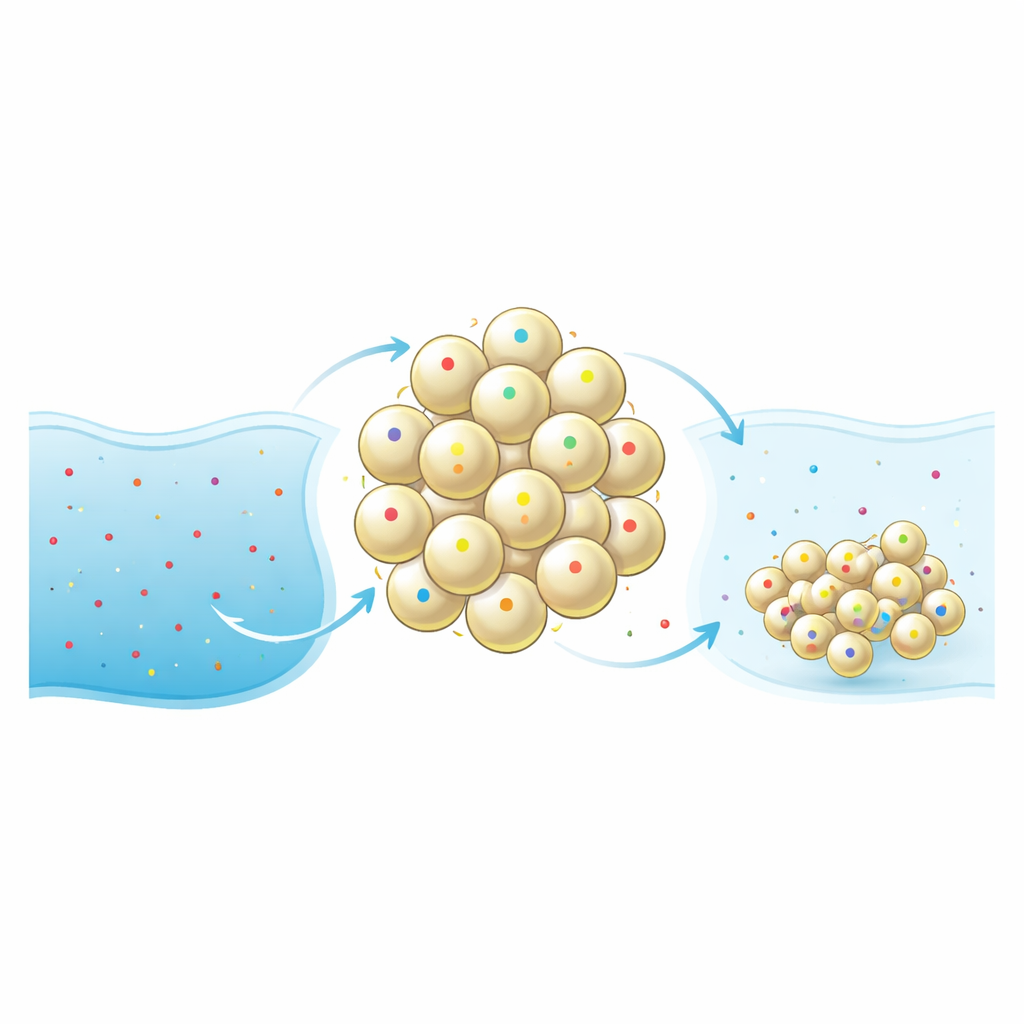
How the upgraded beads grab strontium
To check that TOPO was truly attached and playing a role in capture, the researchers examined the beads before and after treatment. Infrared spectroscopy confirmed the appearance of chemical signals belonging to the TOPO coating, and these signals weakened after strontium exposure, consistent with active binding. Electron microscope images showed that impregnation changed the surface from smooth and compact to rough and more open, with pores filling in after strontium was adsorbed. These changes support the idea that strontium ions move into the resin’s pores and latch onto the coated surfaces, with both the plastic framework and the TOPO layer helping to hold them in place.
Finding the sweet spot for best performance
The team then explored how different conditions affect how much strontium the beads can remove. Acidity turned out to be crucial: at very low pH, hydrogen ions crowd the surface and block strontium, while at higher pH the metal can partially convert to forms that interact more easily with TOPO. The removal efficiency peaked around mildly acidic to near-neutral conditions (pH 6) and declined again if the solution became too basic, where strontium can start to form solid particles instead of staying dissolved. They also found that increasing the amount of TOPO on the resin significantly raised the amount of strontium captured, and that most removal happened during the first hour of contact, with full equilibrium reached after about four hours.
What the numbers say about capacity
To translate their test results into practical performance, the researchers applied standard models used to describe how much of a contaminant a material can hold. The time-dependent data matched a so-called second-order kinetic pattern, which is often associated with stronger, site-specific interactions between the solid and dissolved ions. When they looked at how capacity changed with increasing strontium concentration, the behavior fit a model in which the beads are covered by a single, orderly layer of ions at well-defined sites. Under the best conditions, the TOPO-loaded Amberlite XAD-7 achieved a maximum uptake of about 65.79 milligrams of strontium per gram of resin—substantially higher than the untreated resin and competitive with many other advanced materials reported in the literature. 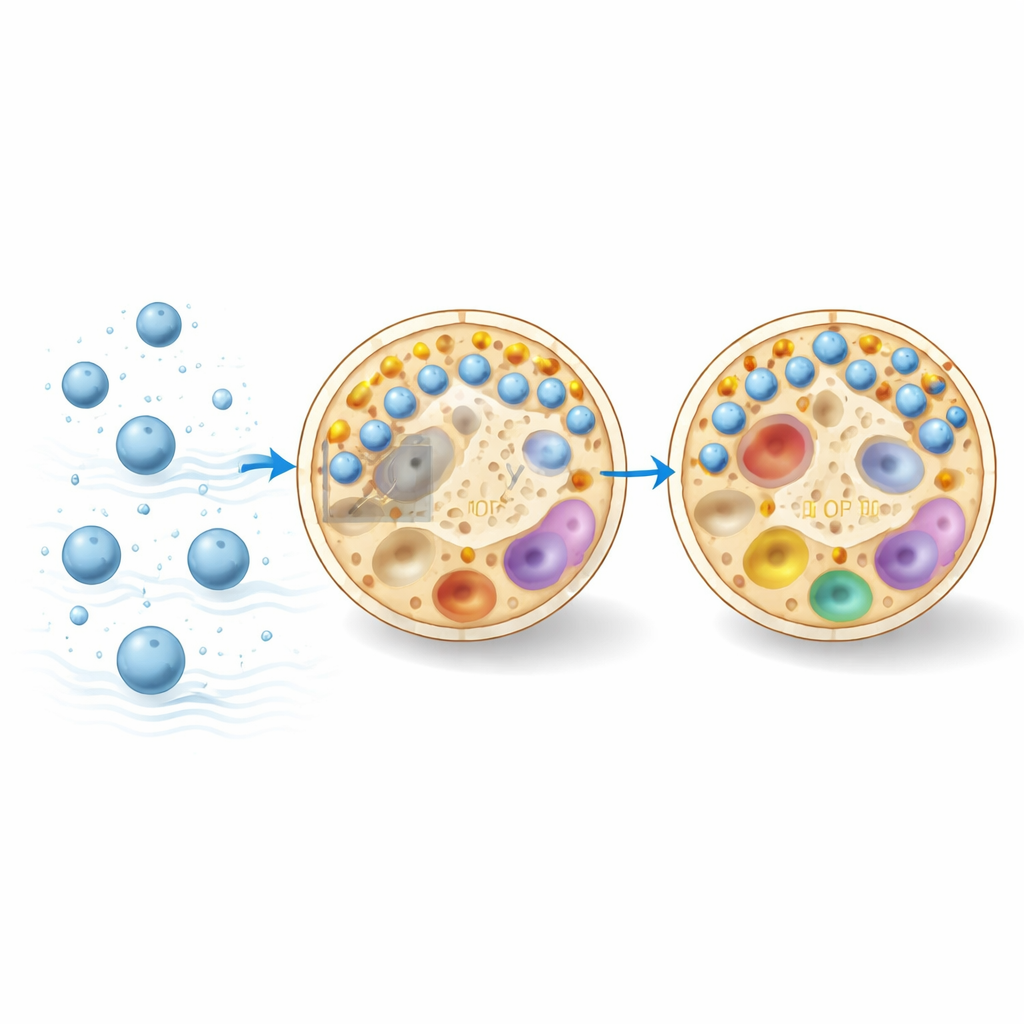
What this means for safer water
For a non-specialist, the key message is that the authors have turned a standard water-cleaning bead into a more powerful, targeted trap for radioactive strontium by coating it with a carefully chosen metal-loving liquid. The upgraded beads work best at near-neutral conditions, capture strontium relatively quickly, and can hold significant amounts before becoming saturated. While questions about cost and large-scale deployment remain, the study shows that this hybrid solid–liquid design is a strong candidate for treating radioactive wastewater and helping to reduce long-term health risks from persistent nuclear contaminants.
Citation: Khani, M.H., Khamseh, A.A.G. Removal of Sr (II) from aqueous solutions by adsorption using amberlite XAD-7 resin impregnated with TOPO extractant. Sci Rep 16, 8067 (2026). https://doi.org/10.1038/s41598-026-39402-w
Keywords: strontium removal, radioactive wastewater, adsorbent resin, TOPO impregnated resin, water purification