Clear Sky Science · en
Assessing the cytotoxicity and apoptosis-inducing ability of solar irradiated Salmonella Typhimurium in the RAW264.7 cell line in vitro
Why Sunlight and Dirty Water Matter
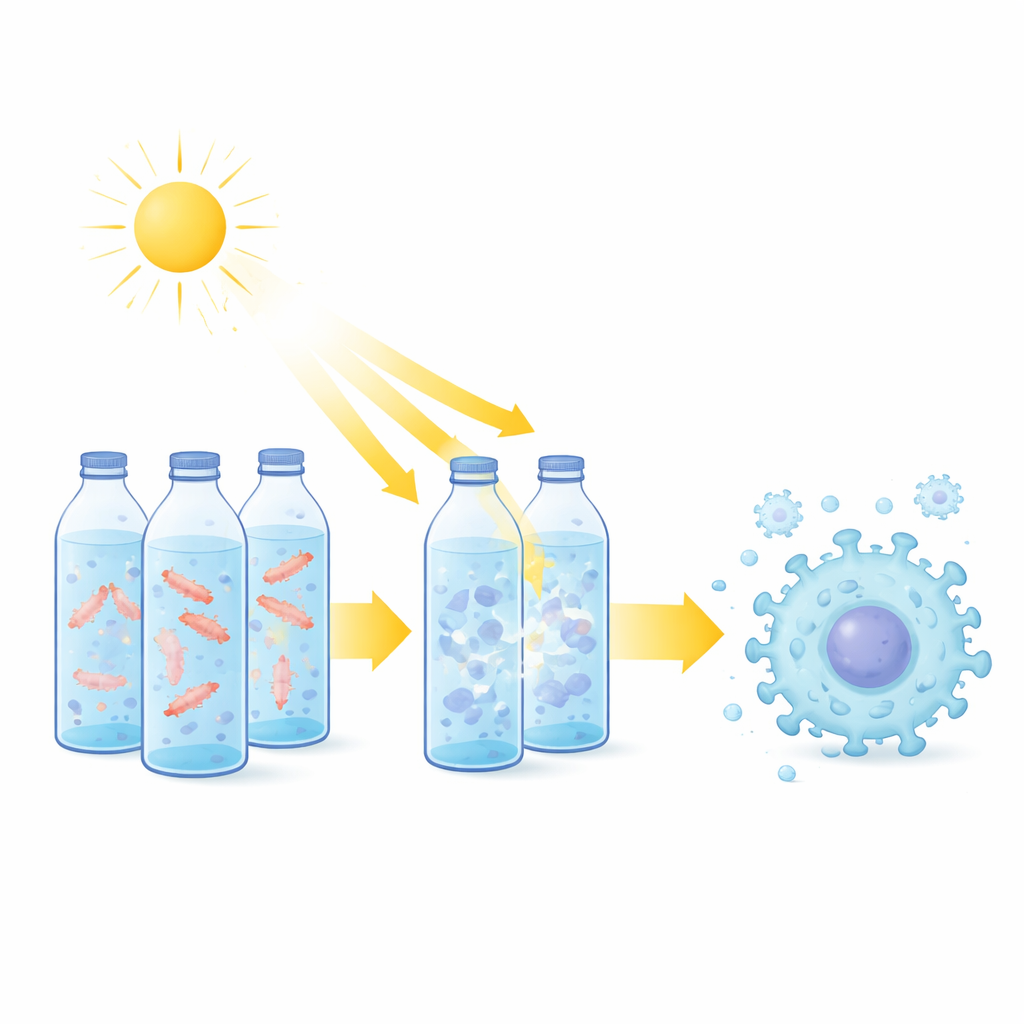
In many parts of the world, families rely on simple methods like leaving clear bottles of water in the sun to make their drinking water safer. This approach, known as solar water disinfection, can kill germs such as Salmonella, a common cause of severe diarrhea. But an important question has remained: even if these germs are no longer able to grow, could their damaged remains still harm our body’s defense cells if we drink the treated water? This study set out to test that concern in detail using a well-known strain of Salmonella and a standard type of mouse immune cell.
Sunlight Versus a Dangerous Gut Germ
The researchers focused on Salmonella Typhimurium, a microbe that frequently contaminates food and water and can cause serious intestinal illness, especially in low‑resource regions. They compared three versions of the bacteria: living cells kept in the dark, living cells exposed for several hours to natural sunlight, and bacteria killed by a combination of heat and chemicals. The key idea was to mimic what happens in a clear bottle left outdoors, and then see how each type of bacteria behaved when brought into contact with macrophages, the immune cells that normally swallow and destroy invading microbes.
Testing If Sun-Damaged Germs Can Come Back
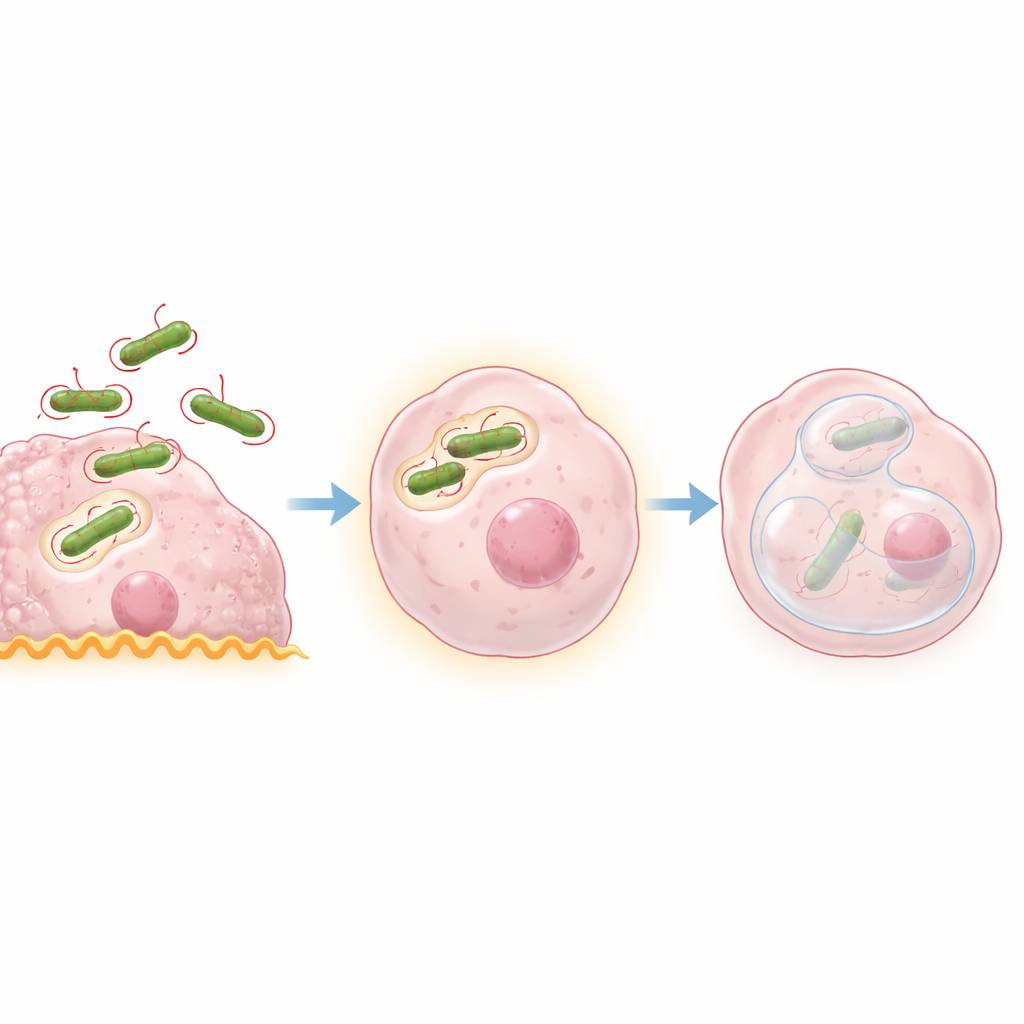
To find out whether sun‑exposed Salmonella could “wake up” again inside immune cells, the team mixed the bacteria with macrophages and tracked bacterial survival over two days. Bacteria that had never seen the sun behaved as expected: they invaded the macrophages, multiplied inside them, and eventually increased in number after an initial dip as the cells tried to fight back. In sharp contrast, bacteria that had been left in direct sunlight for four or eight hours, or killed by heat and chemicals, did not grow at all in the water or inside the macrophages. Once inactivated by sunlight, they showed no sign of recovery or replication, closing the door on the worry that they might revive inside the body.
How Immune Cells Look When Things Go Wrong
The scientists also watched what happened to the macrophages themselves. Under the microscope, cells exposed to live, non‑irradiated Salmonella began to round up, lose their shape, detach from the surface, and break apart over 24 to 48 hours—clear signs of severe damage. The same cells released large amounts of an enzyme called LDH into the surrounding fluid, a standard signal that their outer membranes were rupturing. In contrast, macrophages that encountered sun‑inactivated or heat‑killed bacteria mostly kept their structure, with only mild swelling or rounding and far less debris. Their LDH release stayed low, especially at early time points, showing that their membranes remained largely intact.
Peering Into Subtle Forms of Cell Death
To go beyond surface appearances, the team used flow cytometry, a technique that tags living, dying, and dead cells with fluorescent dyes and counts them. Living Salmonella drove a rapid shift toward destructive forms of cell death, with many macrophages becoming leaky and necrotic. Sun‑treated bacteria still triggered some immune activation and a modest increase in damaged cells, but the response was markedly weaker, especially after longer sun exposure. The pattern hinted at more controlled inflammatory processes—which can help alert the immune system—rather than the overwhelming, tissue‑damaging death seen with fully virulent bacteria. Heat‑killed bacteria caused even less necrosis, showing that different inactivation methods leave different “imprints” on how the immune system responds.
What This Means for Everyday Water Safety
Put simply, this work shows that several hours of strong natural sunlight can completely strip Salmonella Typhimurium of its ability to grow and multiply, both in water and inside immune cells. Although the remains of these sun‑damaged germs can still be noticed by macrophages, they cause far less cell injury than live bacteria and do not appear capable of staging a hidden comeback inside the body. For communities that depend on solar water disinfection, these findings strengthen the case that this low‑cost method not only kills dangerous pathogens but also greatly limits their capacity to damage key immune cells after drinking. Future research will dig deeper into the fine‑scale immune signals involved, but the overall message is reassuring: under realistic sunny conditions, clear‑bottle disinfection looks both effective and biologically safe with respect to this important waterborne germ.
Citation: Chihomvu, P., Ssemakalu, C.C., Ubomba-Jaswa, E. et al. Assessing the cytotoxicity and apoptosis-inducing ability of solar irradiated Salmonella Typhimurium in the RAW264.7 cell line in vitro. Sci Rep 16, 8369 (2026). https://doi.org/10.1038/s41598-026-39398-3
Keywords: solar water disinfection, Salmonella, waterborne disease, macrophages, cell death