Clear Sky Science · en
Effectiveness of core strength training for racket sport athletes’ performance: a systematic review and meta-analysis
Why the Middle Matters in Racket Sports
Anyone who has watched a blistering tennis serve or a lightning-fast badminton smash might assume that it all comes from the arm or the racket. This study shows that the real engine sits in the middle of the body—the core. By pooling results from 18 experiments on tennis, badminton, and table tennis players, the researchers asked a simple but important question: does training the muscles around the abdomen, hips, and lower back genuinely make racket athletes faster, more precise, and more stable, or is it just another training fad?
How the Study Was Put Together
Instead of running a single trial, the authors performed a systematic review and meta-analysis, which is like doing a "study of studies." They searched major scientific databases for carefully controlled experiments in which healthy racket sport athletes were randomly assigned either to a core training program or to a comparison condition, such as regular practice, traditional weight training, or no extra training. Only trials lasting at least four weeks and published in peer-reviewed journals were allowed in. In total, 18 randomized controlled trials, mostly involving adolescent and young adult competitors, met these strict criteria.
What Athletes Did in Core Workouts
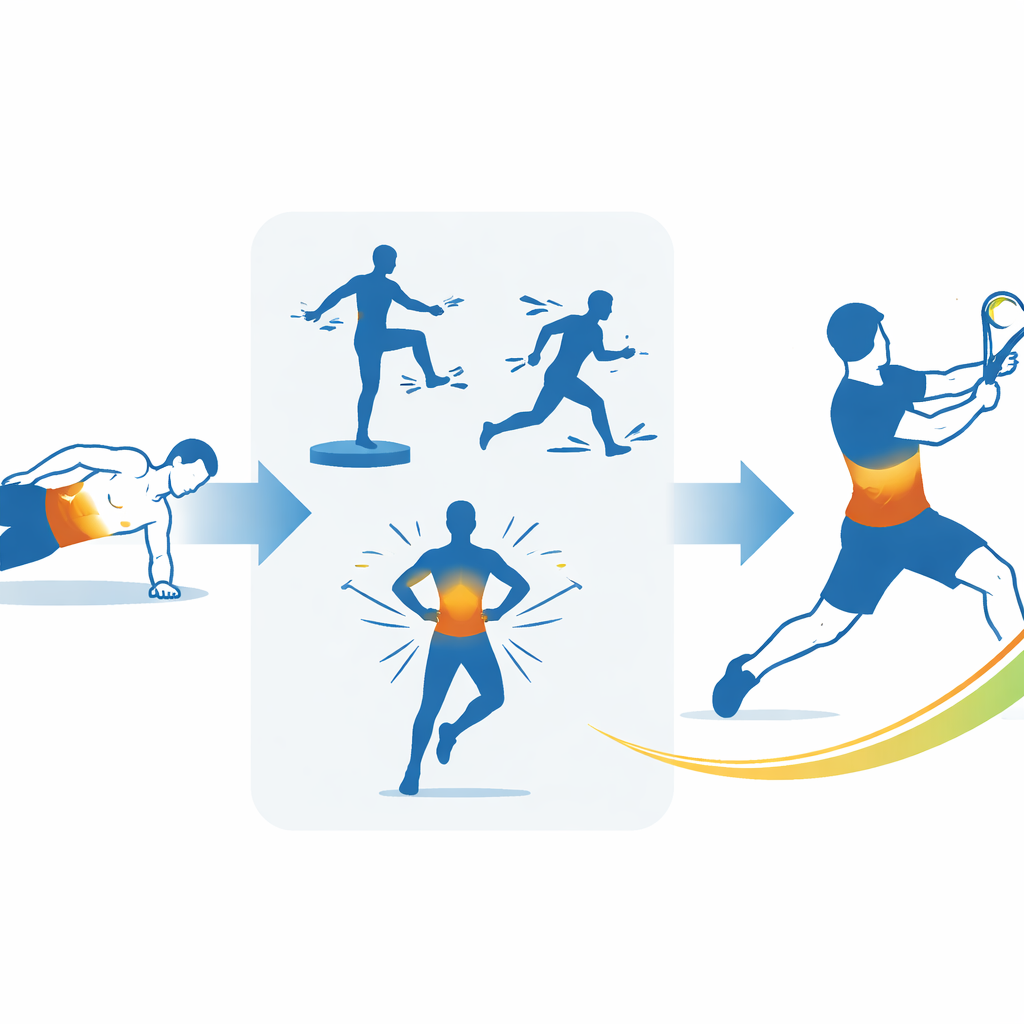
The training programs focused specifically on the midsection rather than on general fitness. Athletes performed a mix of static holds, such as planks and bridges, and dynamic drills, such as medicine-ball throws and rotational movements. Sessions typically lasted around 20 to 60 minutes, two to four times per week, over periods ranging from five to sixteen weeks. Importantly, the comparison groups still trained for their sport or did other forms of conditioning, so any advantages seen in the core-training groups had to go beyond what normal practice or standard strength work could offer.
Gains in Balance, Agility, and Stability
The clearest benefits showed up in whole-body control. When results were pooled, athletes who completed core strength training displayed substantially better balance in tests that challenged them to reach in different directions while standing on one leg. Their agility—how quickly they could change direction—also improved, with a large overall effect compared with control groups. Measures of trunk stability and core endurance, such as holding demanding positions or resisting sway, showed some of the biggest gains. Together, these changes suggest that a stronger, better-coordinated midsection helps athletes stay upright and react quickly as they lunge, pivot, and recover during rallies.
Sharper Shots and Faster Balls
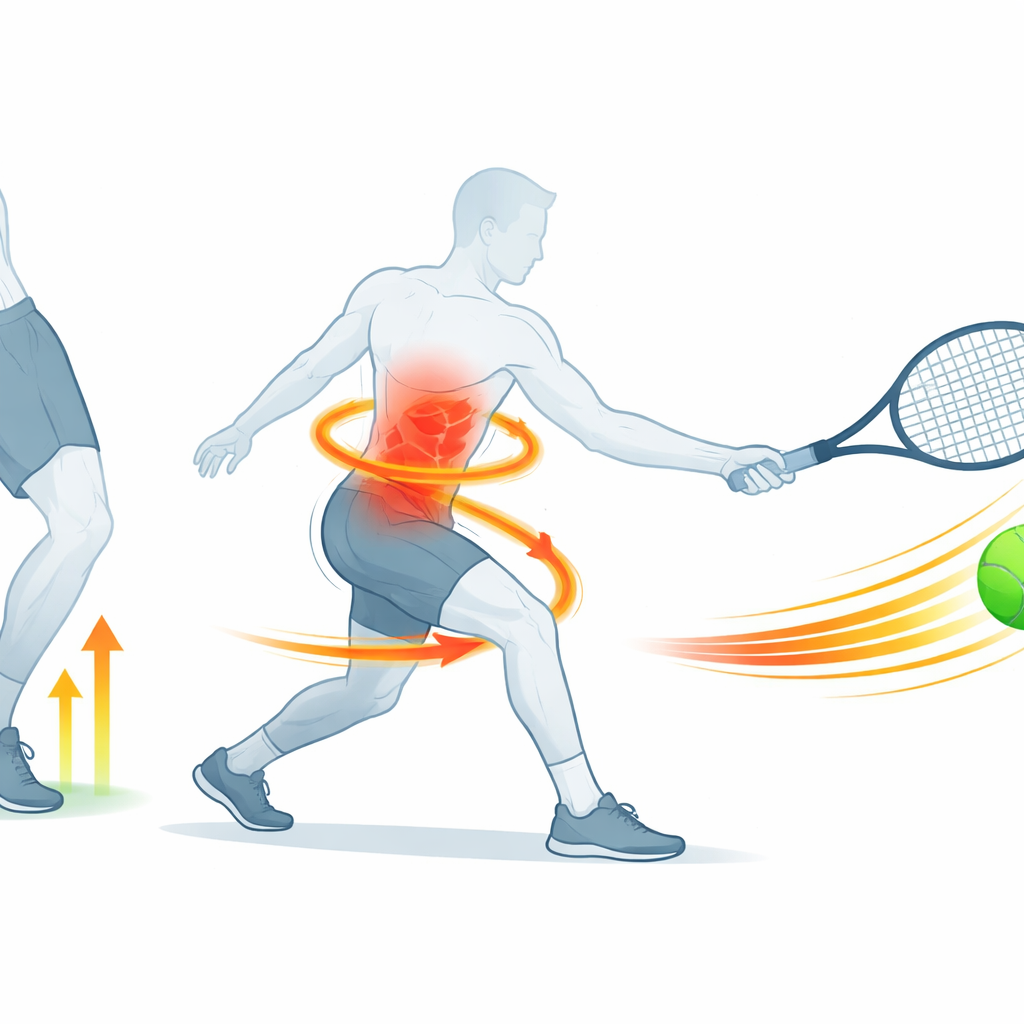
Beyond general fitness, the review looked at what matters most in competition: how well athletes can hit the ball. Across eight studies, core training consistently boosted technical skills. A combined analysis of six trials found that ball speed—whether measured as tennis serve speed or badminton smash velocity—rose by a meaningful amount in athletes who did dedicated core work. Other studies reported better shot accuracy and improved ability to control spin, allowing players to place balls more precisely and vary their trajectories. These improvements fit with the idea of the body as a linked chain: force starts in the legs, travels through the hips and trunk, and only then reaches the arm and racket. A stronger, more stable core acts as a solid bridge in this chain, helping more of that ground-up power translate into the ball.
What This Means for Players and Coaches
The authors conclude that core strength training is not just a fitness trend but a practical tool for racket sport performance. When added two to three times per week for at least a month, targeted midsection exercises can help athletes move with better control, change direction more quickly, and hit faster, more accurate, and more varied shots. While the underlying studies were not perfect—many lacked full blinding and used small samples—the overall pattern is clear: paying attention to the middle of the body can pay off at the edges of the court and the face of the racket.
Citation: Yu, X., Yin, H. & Zhang, J. Effectiveness of core strength training for racket sport athletes’ performance: a systematic review and meta-analysis. Sci Rep 16, 7862 (2026). https://doi.org/10.1038/s41598-026-39391-w
Keywords: core strength training, racket sports, tennis performance, badminton training, sports agility