Clear Sky Science · en
One-year body weight loss and gain as independent predictors of frailty-related outcomes and mortality in an aging Japanese population
Why Small Weight Changes Matter As We Age
Many people keep an eye on their weight, but for older adults even modest changes over a single year may signal deeper shifts in health. This study from Tama City, a suburb of Tokyo with a rapidly aging population, followed more than fifteen thousand residents to ask a simple question: when an older person’s weight goes up or down by just a few kilograms in one year, does that foreshadow problems like dementia, fractures, heart failure, or the need for nursing care? The findings suggest that both short-term weight loss and weight gain can be early warning signs of frailty and serious illness, long before a crisis sends someone to the hospital.
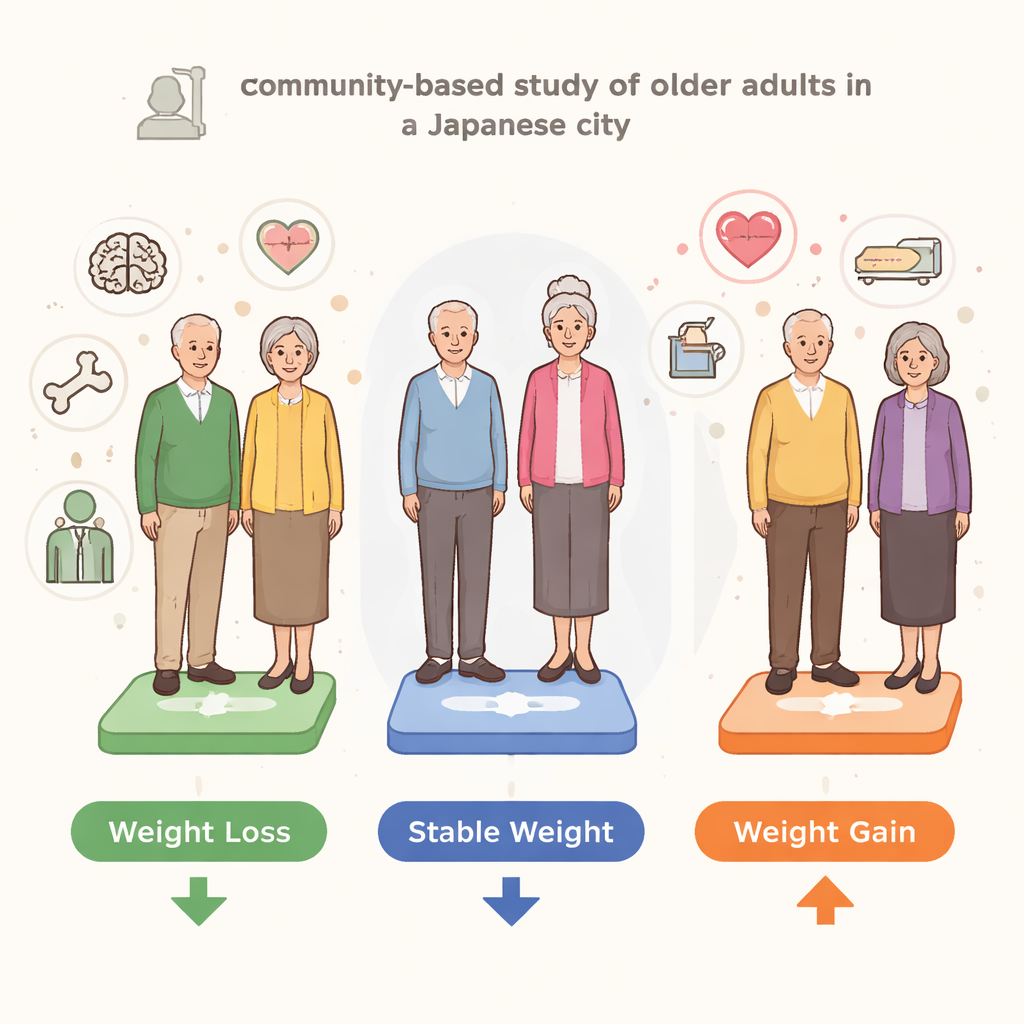
A Citywide Health Check as a Living Laboratory
Japan’s national health insurance system requires routine checkups, creating a rich source of real-world health data. In this project, researchers analyzed records from 15,700 adults aged 40 and older in Tama City, most of whom were over 60 and already in their retirement years. Everyone had their body weight measured in 2016 and again in 2017, and their medical and long-term care records were then tracked for six more years, through 2023. The team focused on three groups: people who lost at least 5% of their body weight within one year, those whose weight stayed within 5%, and those who gained at least 5%. They then linked these patterns to later diagnoses, hospital stays, and certifications for long-term care.
Weight Loss, Weight Gain, and the Road to Frailty
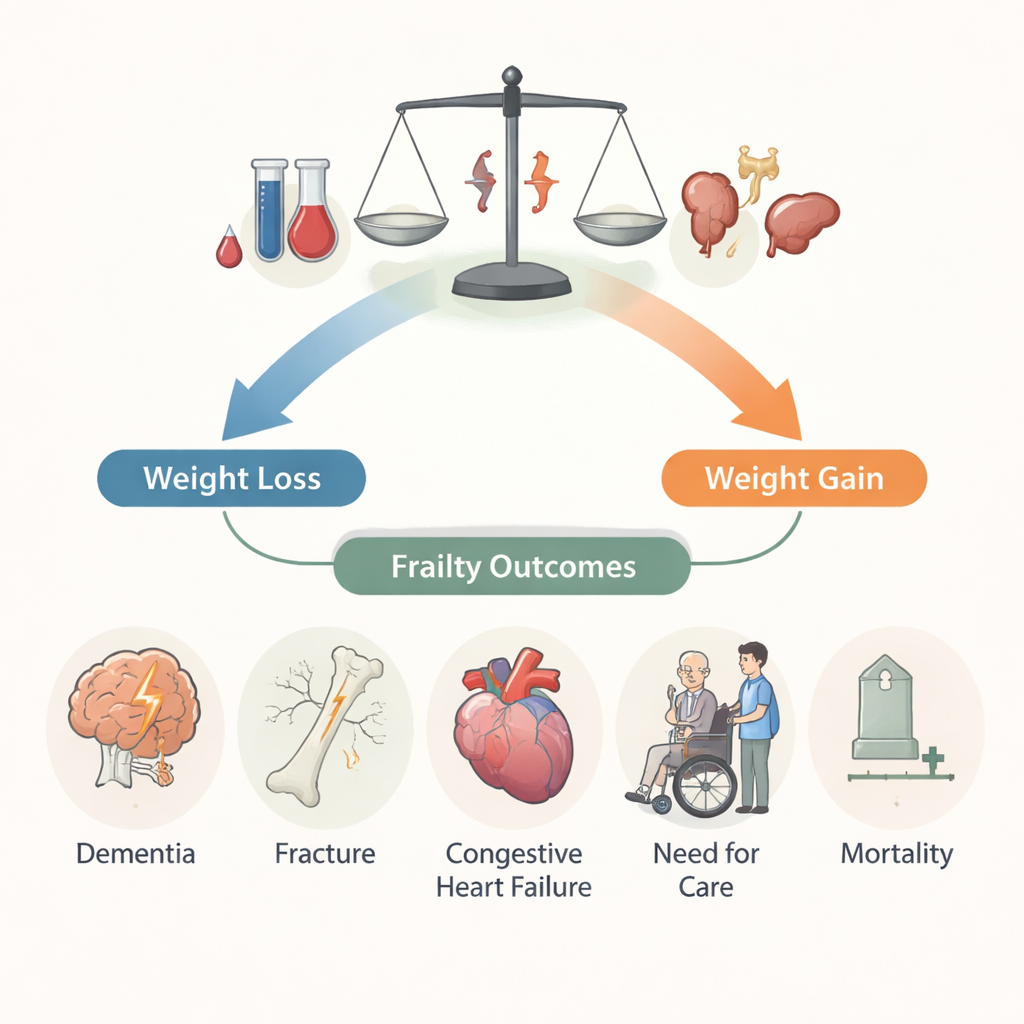
Most participants maintained a fairly stable weight, but about 7% lost at least 5% of their body weight in a year and 6% gained that much. When the researchers followed what happened next, a clear pattern emerged: people who lost weight had the highest rates of dementia, fractures, stroke, congestive heart failure, need for long-term care, and death. Those who gained weight also fared worse than people with stable weight, especially for needing care and dying during the study period, though their risks were generally lower than those who lost weight. These relationships held even after accounting for age, sex, blood pressure, and many lab tests, suggesting that short-term weight swings themselves are meaningful health signals.
Hidden Clues in Medications and Blood Tests
The study also looked at everyday medical details that might explain why weight shifts predict frailty. Older adults who lost or gained weight were more likely to be taking many medicines at once, including sleeping pills, blood thinners, and acid-suppressing drugs known as proton pump inhibitors. Some of these medicines were linked to higher risks of fractures, stroke, dementia, or heart failure, although it is hard to know how much of the danger comes from the drugs themselves versus the illnesses they treat. Simple blood tests added further clues: low hemoglobin (a sign of anemia), poorer kidney function, low levels of “good” HDL cholesterol, and certain liver enzyme patterns all pointed toward higher risks of frailty-related outcomes. Together with body weight, these routine measurements provided a surprisingly powerful picture of who was most vulnerable.
From Static Numbers to Moving Targets
One of the most important messages from this research is that change over time matters more than any single number. A low body mass index in late life was linked to fractures, dementia, and early death, but even people who started at a healthy weight faced higher risks if they lost weight quickly. On the other hand, this study did not find that simply being heavier protected against illness or that higher body fat alone drove poor outcomes, adding nuance to debates about an “obesity paradox” in older age. Instead, the authors argue that rapid loss may reflect muscle wasting, undernutrition, or undiagnosed disease, while rapid gain may signal swelling or fluid overload from heart or kidney problems.
What This Means for Everyday Life
For families, clinicians, and policymakers, the takeaway is straightforward: in older adults, rapid weight loss or gain over a single year should not be ignored, even if it seems modest. Regularly tracking weight at home or during checkups, paying attention to appetite, strength, and swelling, and reviewing medication lists may help catch frailty early, when changes in diet, activity, or treatment are more likely to help. Although this study was observational and based on one Japanese city, it suggests that watching the scale over time—along with a few simple blood tests—could become a low-cost way to identify older people who might soon struggle with independence, and to intervene before frailty and disability take hold.
Citation: Fujii, H., Kodani, E., Kaneko, T. et al. One-year body weight loss and gain as independent predictors of frailty-related outcomes and mortality in an aging Japanese population. Sci Rep 16, 7778 (2026). https://doi.org/10.1038/s41598-026-39383-w
Keywords: frailty, older adults, body weight change, dementia risk, long-term care