Clear Sky Science · en
Diversity of specialized metabolites in Phaeoacremonium species revealed by untargeted metabolomics and bioactivity assays
Hidden chemistry of plant and human fungi
Fungi that sicken crops or people rarely make headlines, yet they quietly threaten our food supply and health. This study focuses on Phaeoacremonium, a group of fungi that can infect both woody plants like grapevines and olives and, in some cases, humans. By mapping the vast array of small chemicals these fungi release, the authors show that Phaeoacremonium is chemically far richer and more complex than previously thought—an insight that matters for farmers, doctors, and anyone concerned with emerging infections.
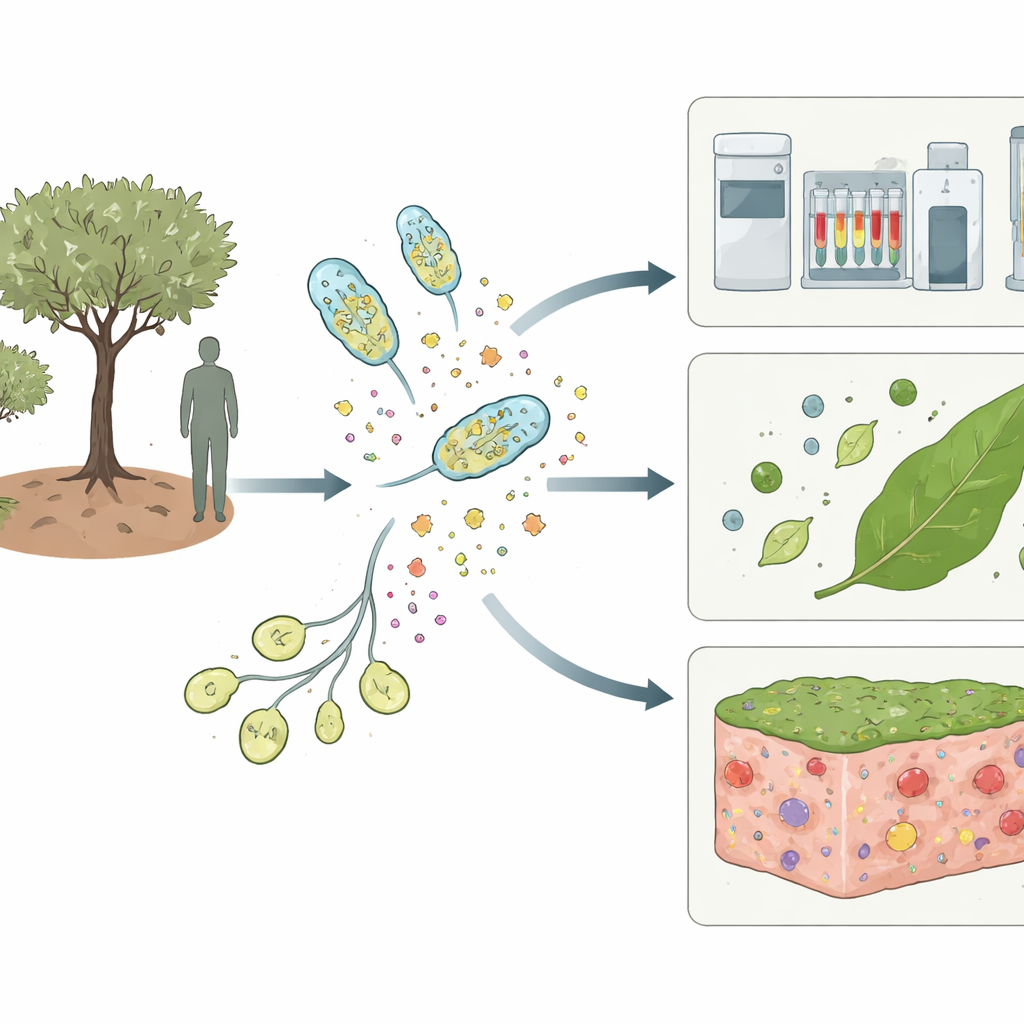
Fungi that cross from vines to people
Phaeoacremonium species live mostly in soil and inside wood of valuable crops, where they are involved in trunk diseases that slowly weaken vines and trees. A dozen species, however, have also been found in human infections, usually after minor injuries that expose tissue to contaminated plant material. Because these fungi bridge plant and human health, they are a natural fit for the "One Health" idea, which treats human, animal, and environmental health as tightly linked. Yet, until now, only a handful of their chemical products—known as specialized metabolites—had been described.
Scanning fungal chemistry without a target
The researchers assembled 28 fungal isolates representing 24 Phaeoacremonium species from grapevines, olive trees, other plants, and human patients. They grew each fungus in liquid culture, extracted the molecules it released, and examined these extracts with high-resolution mass spectrometry. Instead of hunting only for known toxins, they used an "untargeted" approach: recording thousands of chemical signals, then using statistical software to pick out patterns and differences among species. In parallel, they applied a targeted method to precisely measure two already-suspected players, the dark pigments scytalone and isosclerone, which have been linked to grapevine trunk disease.
A diverse chemical fingerprint for each species
The analysis uncovered 206 significant chemical features spread across several major classes, including lipid-like molecules, amino acid–derived compounds, oxygen-rich carbonyls, and complex ring-shaped macrolides. Only 36 of these could even be tentatively matched to known natural products, and only scytalone and isosclerone were firmly identified, underscoring how much of this chemical space remains unexplored. Even so, the overall "fingerprints" were distinctive: multivariate statistics showed that Phaeoacremonium species can often be told apart by their metabolite patterns, providing a kind of chemical ID card that complements DNA-based identification. Strikingly, these patterns did not simply mirror the host from which the fungi were isolated, indicating that species identity matters more than host for the broad chemistry, even when the same species colonizes different plants.
When mixtures are more dangerous than single toxins
To connect chemistry to real-world impact, the team tested each extract on cucumber seedling leaves and on human skin cells grown in the lab. The pure compounds scytalone and isosclerone, alone or together, caused only mild damage to plant tissue and showed no detectable toxicity to human keratinocytes at the tested doses. In contrast, several crude extracts caused notable yellowing and dead patches on punctured cucumber leaves, and reduced survival of human skin cells to well below 75 percent. Extracts from grapevine-associated fungi tended to be the most damaging to both plants and human cells, while those from olive trees and especially human-derived isolates were generally milder. In some cases, lower extract doses were more harmful than higher ones, hinting at complex interactions among multiple metabolites that can either amplify or dampen toxicity.
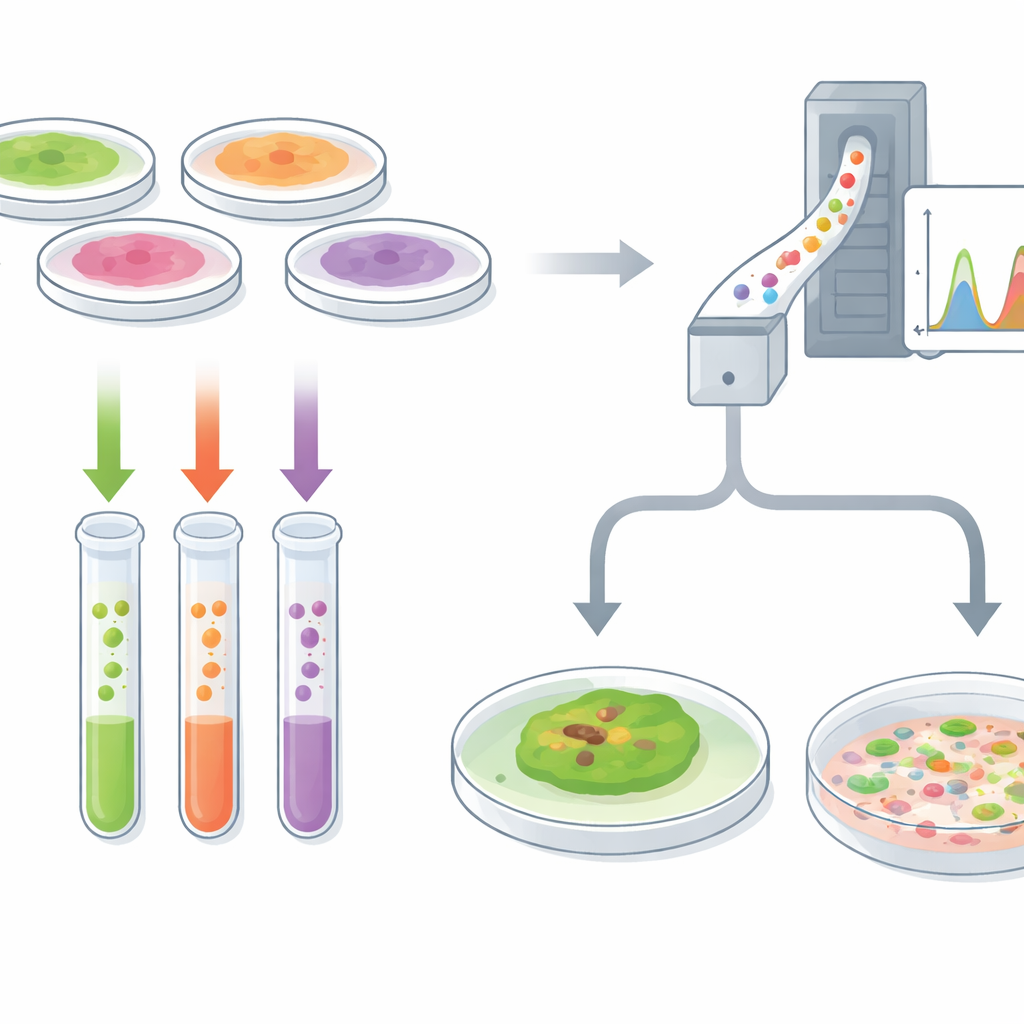
What this means for crops, patients, and shared environments
The work shows that no simple link exists between the amount of a single suspected toxin and how harmful a fungus is. Instead, Phaeoacremonium species deploy broad chemical arsenals whose combined effects shape disease in plants and may influence human infections. By charting this neglected chemical landscape and demonstrating that each species carries a distinctive metabolite "signature," the study opens the door to new diagnostic tools and more focused follow-up experiments in living plants and animals. For a lay reader, the key message is that the same fungi lurking in vineyards and olive groves produce a surprisingly rich and still-mysterious chemistry that can touch both agriculture and human health—making it crucial to study them with an integrated, One Health perspective.
Citation: Reveglia, P., Raimondo, M.L., Paolillo, C. et al. Diversity of specialized metabolites in Phaeoacremonium species revealed by untargeted metabolomics and bioactivity assays. Sci Rep 16, 9254 (2026). https://doi.org/10.1038/s41598-026-39382-x
Keywords: Phaeoacremonium fungi, fungal metabolites, grapevine trunk disease, cross-kingdom pathogens, One Health