Clear Sky Science · en
Enhanced seed quality and physio-biochemical parameters in lentil through biochar and humic acid- based seed priming
Why better seeds matter for everyday food
Lentils are a staple food for millions of people and a quiet workhorse in farm fields, helping build soil health while supplying affordable protein. Yet many lentil seeds never make it past the first hurdle: they germinate poorly or produce weak seedlings, especially under dry or stressful conditions. This study explores a simple, low-cost way to give lentil seeds a head start before they ever touch the soil, using two natural materials—biochar and humic acid—to boost early growth and make crops more resilient.
Giving seeds a gentle head start
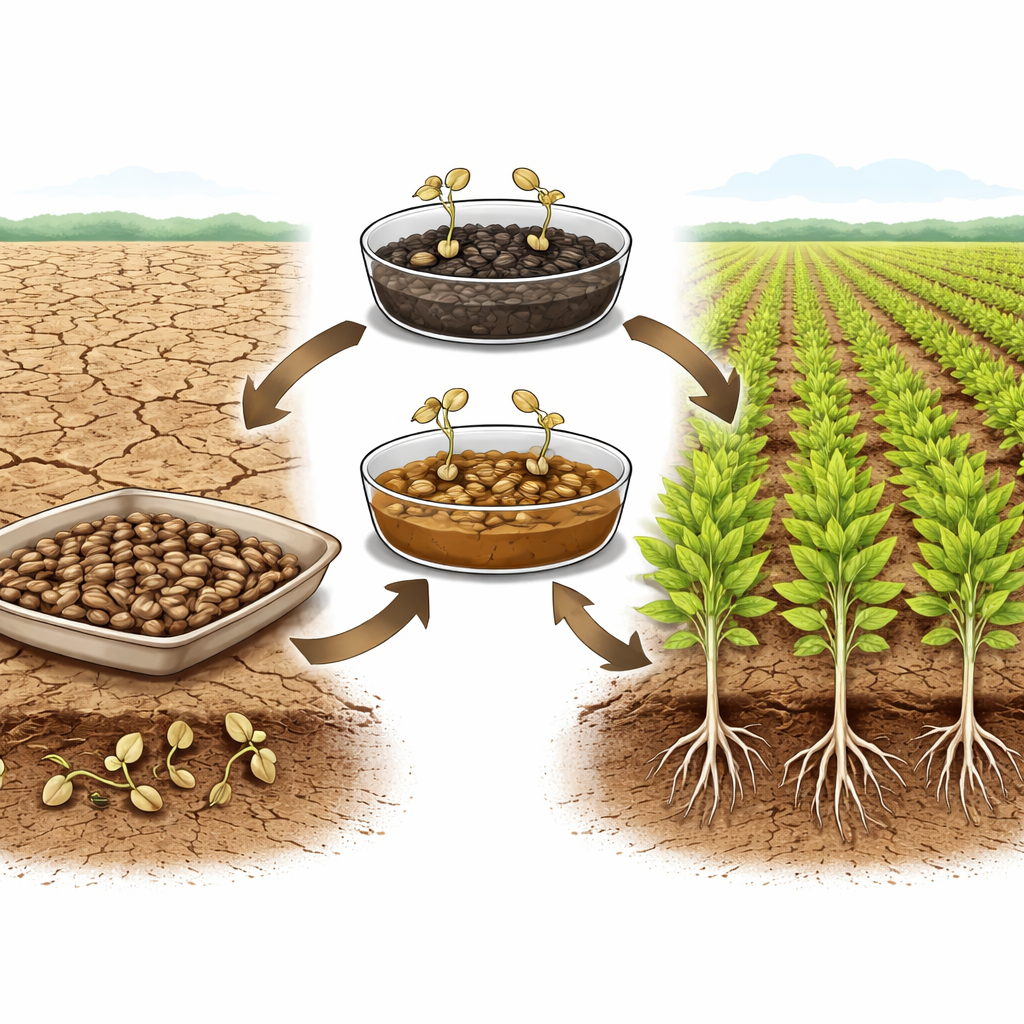
The researchers focused on a technique called seed priming, in which seeds are soaked in a solution and then dried again before planting. This brief treatment nudges the seed’s internal machinery into action, so it can sprout faster and more uniformly once it encounters real-world conditions. Instead of synthetic chemicals, the team tested two eco-friendly options: biochar, a charcoal-like material made by heating plant waste without oxygen, and humic acid, a natural component of decomposed organic matter that farmers have long used to stimulate plant growth.
Testing which treatment helps most
Using a widely grown lentil variety from India, the scientists first experimented with several concentrations of biochar and humic acid to find levels that boosted germination without causing harm. They settled on 4% biochar and 1% humic acid as the most promising treatments. Seeds were disinfected, soaked for 18 hours in these solutions, gently dried back to their original moisture, and then placed in controlled laboratory conditions. The team tracked how many seeds sprouted, how long the roots and shoots became, and calculated standard measures of seed vigor. They also measured green leaf pigments (chlorophyll) and examined chemical signs of stress inside the young plants.
Stronger, greener seedlings from treated seeds
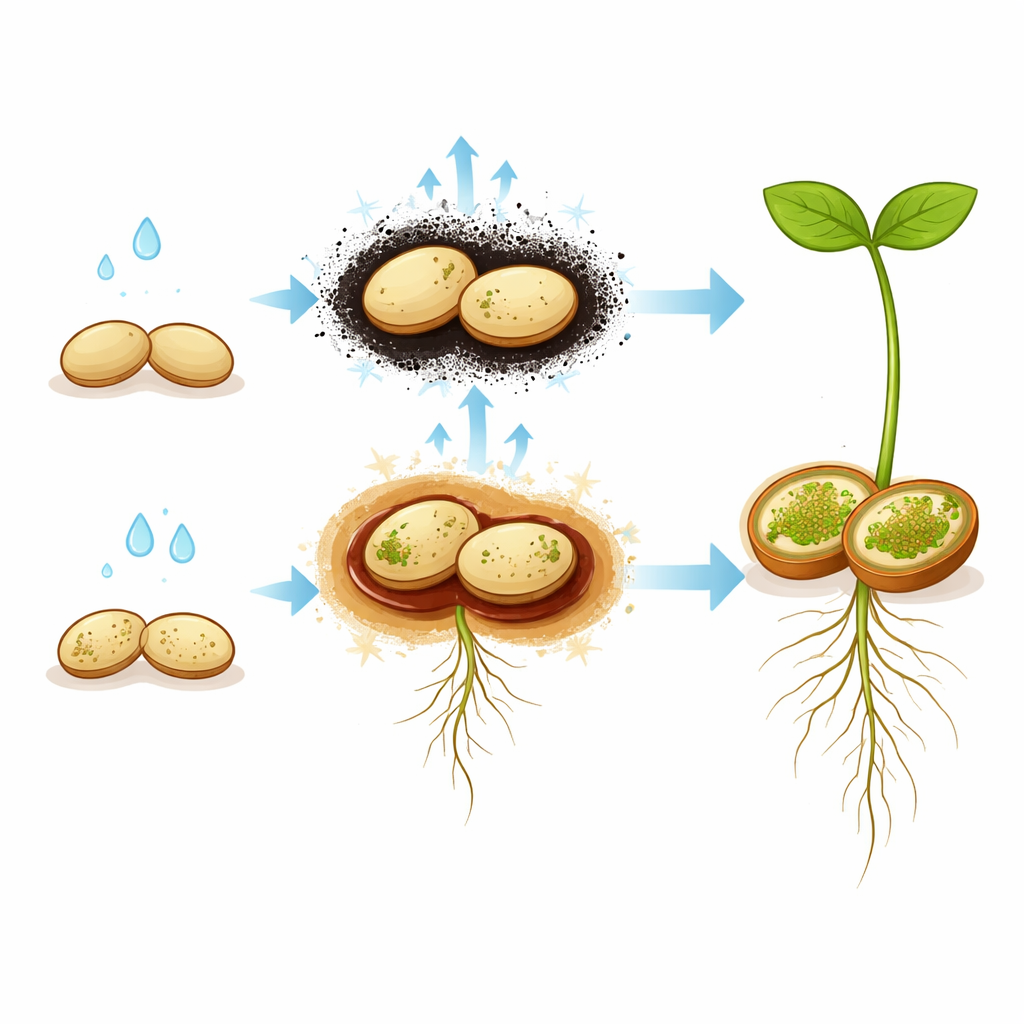
Compared with untreated seeds, both priming methods clearly improved performance, but biochar stood out. Seeds treated with 4% biochar showed the highest germination, with about 15% more seeds sprouting than the control. Their seedlings grew longer roots and shoots—roughly a quarter longer overall—and scored up to one-third higher on vigor indices, which combine germination and growth into a single health score. Humic acid at 1% also boosted germination and growth, but higher doses of humic acid actually reduced performance, likely because they made it harder for seeds to take up water properly. In addition, primed seedlings had more chlorophyll, especially in the biochar treatment, indicating that they were better prepared to capture sunlight and fuel further growth.
Less hidden stress inside young plants
Early growth is not only about how tall seedlings are, but how well they cope with internal stress. The team used a staining method to visualize hydrogen peroxide inside the tissues, a reactive molecule that rises when plants are under strain. Humic-acid–treated seedlings tended to show lower levels of this stress marker, suggesting a calmer internal environment. Biochar-treated seedlings showed signs of more active metabolism, which can include moderate stress signals that help kick-start the plant’s protective systems rather than damage them. Statistical analyses confirmed that better germination went hand in hand with longer roots and shoots and higher vigor, tying the physical improvements to underlying physiological changes.
What this means for farmers and food security
For farmers, especially those in dry or low-input regions, these findings point to an accessible way to improve lentil stands without relying on costly fertilizers or complex technology. A simple overnight soak of seeds in a 4% biochar solution, or a carefully controlled 1% humic acid treatment, can lead to more seeds sprouting, stronger seedlings, and plants that make better use of water and nutrients. Biochar, in particular, emerged as the most reliable option, combining improved germination, robust early growth, and higher leaf greenness with the bonus of being made from agricultural waste. While real farm fields are more variable than a laboratory, and further trials under different soils and climates are needed, this work suggests that smart use of natural seed treatments could help make lentil production more stable and climate-resilient, supporting both nutrition and sustainable agriculture.
Citation: Chauhan, S., Bhardwaj, K., Rao, D. et al. Enhanced seed quality and physio-biochemical parameters in lentil through biochar and humic acid- based seed priming. Sci Rep 16, 8004 (2026). https://doi.org/10.1038/s41598-026-39380-z
Keywords: lentil seed priming, biochar treatment, humic acid, seedling vigor, sustainable pulse production