Clear Sky Science · en
Rhubarb enhances gastrointestinal motility via calcium-mediated intestinal acetylcholine release: a network pharmacology study
Why this matters for people with gut trouble
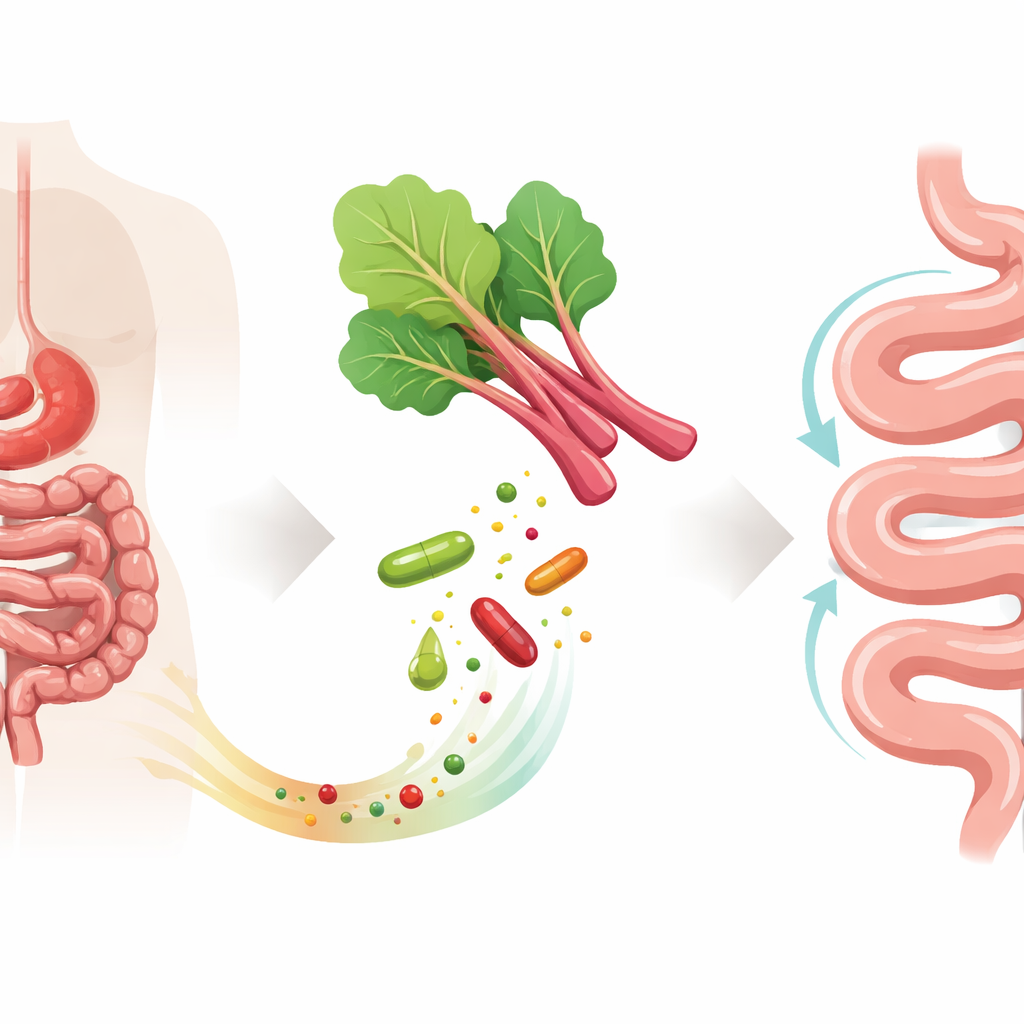
Acute pancreatitis is a painful and sometimes life-threatening illness that often brings the gut to a standstill, leading to bloating, infection risk, and longer hospital stays. Doctors in China have long used rhubarb, a traditional herbal remedy, to get the bowels moving again, but how it works inside the body has been unclear. This study combines computer-based network analysis, mouse experiments, and a small clinical trial to uncover how rhubarb may "switch on" the intestine’s own wiring to restore movement more safely and predictably.
Connecting an old remedy to modern biology
The researchers started by asking a simple question: which chemical ingredients in rhubarb could plausibly affect acute pancreatitis and gut motion? Using large online databases, they identified 16 candidate compounds and narrowed these down to 10 that were most likely to be active in the body. They then mapped how these compounds might interact with human proteins and genes linked to acute pancreatitis, revealing 55 shared gene targets. When they examined which biological pathways these genes clustered in, one signal stood out near the top: the machinery that controls calcium movement inside cells, a central driver of how intestinal muscles contract.
From computer networks to key gut signals
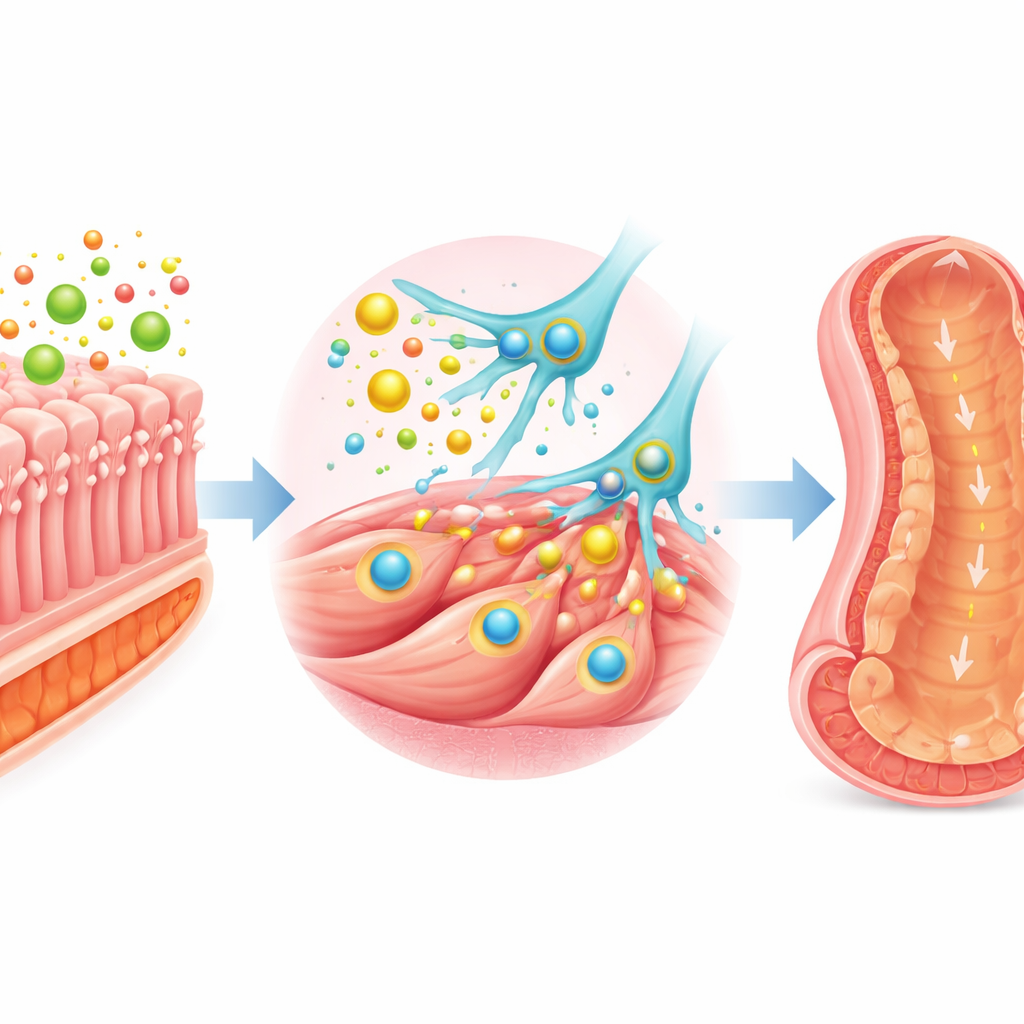
With this gene map in hand, the team built a network diagram linking rhubarb’s ingredients, the proteins they bind, and the disease processes they influence. Several plant compounds—especially β-sitosterol, aloe-emodin, catechin, and eupatin—emerged as likely "hubs" acting on many gut-related targets at once. Many of these targets sit on the surface of nerve and muscle cells in the intestine and help control calcium flow. When calcium surges inside these cells, it can trigger the release of acetylcholine, a natural chemical messenger that tells intestinal muscles to squeeze and push food along. The network analysis suggested that rhubarb might enhance this acetylcholine-based communication by nudging multiple calcium-sensitive switches at the same time.
Testing rhubarb in mice
To see if these predictions matched reality, the scientists gave rhubarb by mouth to healthy mice for two days and compared them with mice given only salt water. The rhubarb-treated animals developed loose stools, a sign that their intestines were moving faster. Measurements from the end of the small intestine showed that acetylcholine levels were higher in treated mice, and blood tests revealed increased activity of acetylcholinesterase, an enzyme linked to acetylcholine signaling. Gene-expression tests in the intestinal tissue showed that nine of ten targeted genes involved in calcium and nerve signaling changed in the direction predicted by the computer models—most were switched on, while one that can dampen movement was turned down. Together, these changes point to a more activated nerve–muscle system in the gut.
Trying rhubarb in people with pancreatitis
The team then ran a small, single-blind trial in 10 patients hospitalized with mild to moderate acute pancreatitis. All patients received standard medical care; half were randomly assigned to also receive an oral rhubarb solution for two days, while the others received a look-alike saline drink. Those who took rhubarb had more frequent bowel movements during the 48-hour period and showed higher acetylcholinesterase levels in their blood, echoing the changes seen in mice. Importantly, no treatment-related side effects were reported, suggesting that short-term use was well tolerated in this group, though the study was too small to fully assess safety.
What this could mean for future treatments
Put simply, this work suggests that certain compounds in rhubarb help wake up a sluggish intestine by fine-tuning calcium-driven signals and boosting acetylcholine-related activity in gut nerves and muscles. This appears to translate into quicker, softer stools in both mice and people with acute pancreatitis, without obvious harm in the short term. The authors caution that they did not directly measure calcium surges or protein changes in a full disease model, and the human trial was very small. Even so, the findings offer a mechanistic explanation for a long-used herbal remedy and support further, larger trials to test rhubarb—or purified versions of its key ingredients—as targeted treatments for gut motility problems in pancreatitis and possibly other digestive disorders.
Citation: Wen, Z., Liu, W., Li, J. et al. Rhubarb enhances gastrointestinal motility via calcium-mediated intestinal acetylcholine release: a network pharmacology study. Sci Rep 16, 8825 (2026). https://doi.org/10.1038/s41598-026-39372-z
Keywords: acute pancreatitis, gastrointestinal motility, rhubarb, calcium signaling, acetylcholine