Clear Sky Science · en
Tempo influences affective responses and perceived exertion during musical self-selected swimming in a randomized crossover trial
Why Music Matters in the Pool
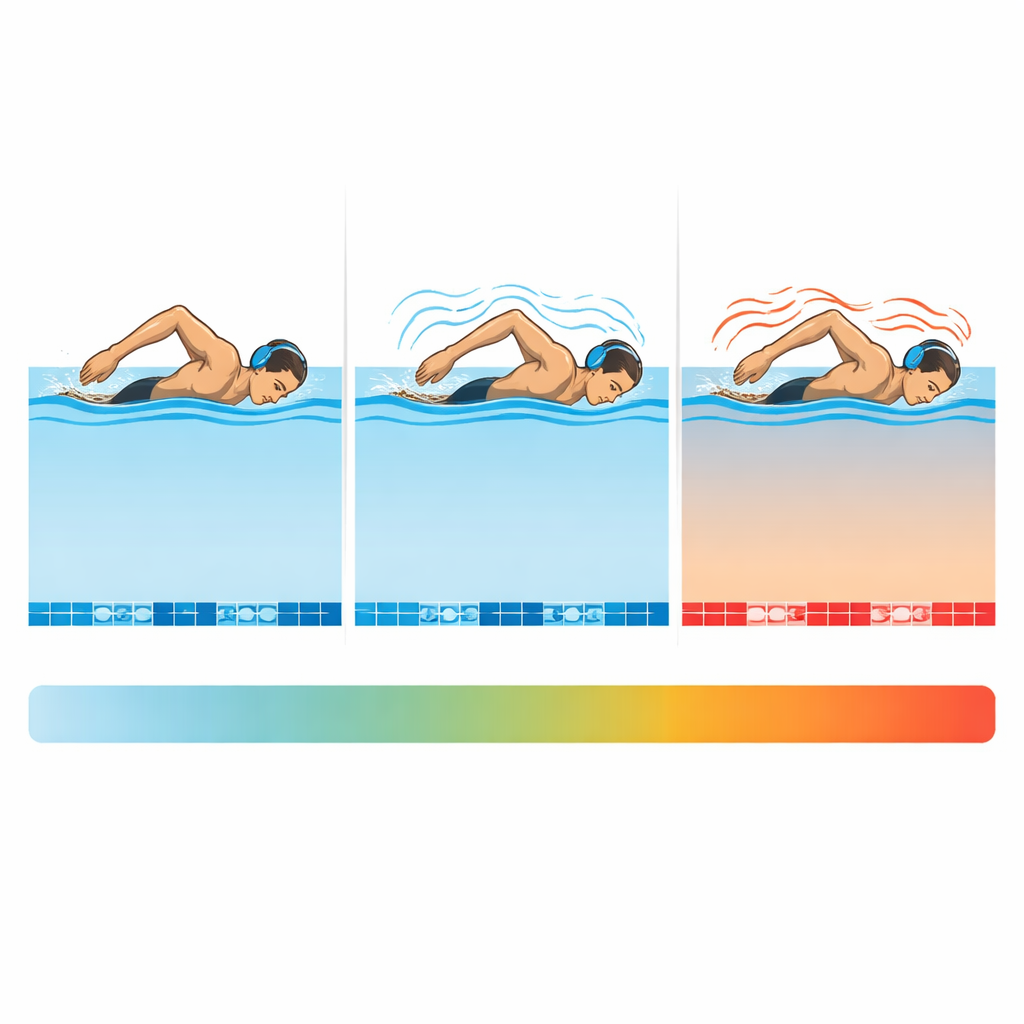
Many people instinctively put on headphones before going for a run or stepping into the gym, because music can make workouts feel easier and more enjoyable. But what happens when the workout takes place in water, where sound behaves differently and movement is more complex? This study asked a simple but practical question: can listening to music at different speeds while swimming change how hard the effort feels and how much people enjoy the session, even if it doesn’t actually make them faster?
The Big Question the Researchers Asked
The scientists focused on three everyday concerns for swimmers and fitness enthusiasts: performance, effort, and enjoyment. They wanted to know whether slow, steady beats or faster, driving rhythms would change how university swimmers swam an 800‑meter freestyle at their own chosen pace. Specifically, they compared three situations: swimming with no music, with slow beats (about one beat per second), and with fast beats (about two beats per second). Rather than chasing record times, the swimmers were told to choose a comfortable pace that felt natural to them, closely mirroring how many people exercise in real life.
How the Study Was Carried Out
Twenty‑four experienced university swimmers took part, each completing three separate 800‑meter swims under the different sound conditions. They used bone‑conduction headphones, which transmit sound through the bones of the skull and allow the ears to stay open to the water and the surroundings. After every swim, the swimmers rated how hard the effort felt, how they were feeling emotionally, and how much they enjoyed the activity using well‑established questionnaires. At the same time, cameras, heart‑rate straps, and timing tools tracked their stroke rate, stroke length, total time, and heart rate across all three conditions.
What Happened to Speed, Effort, and Feelings
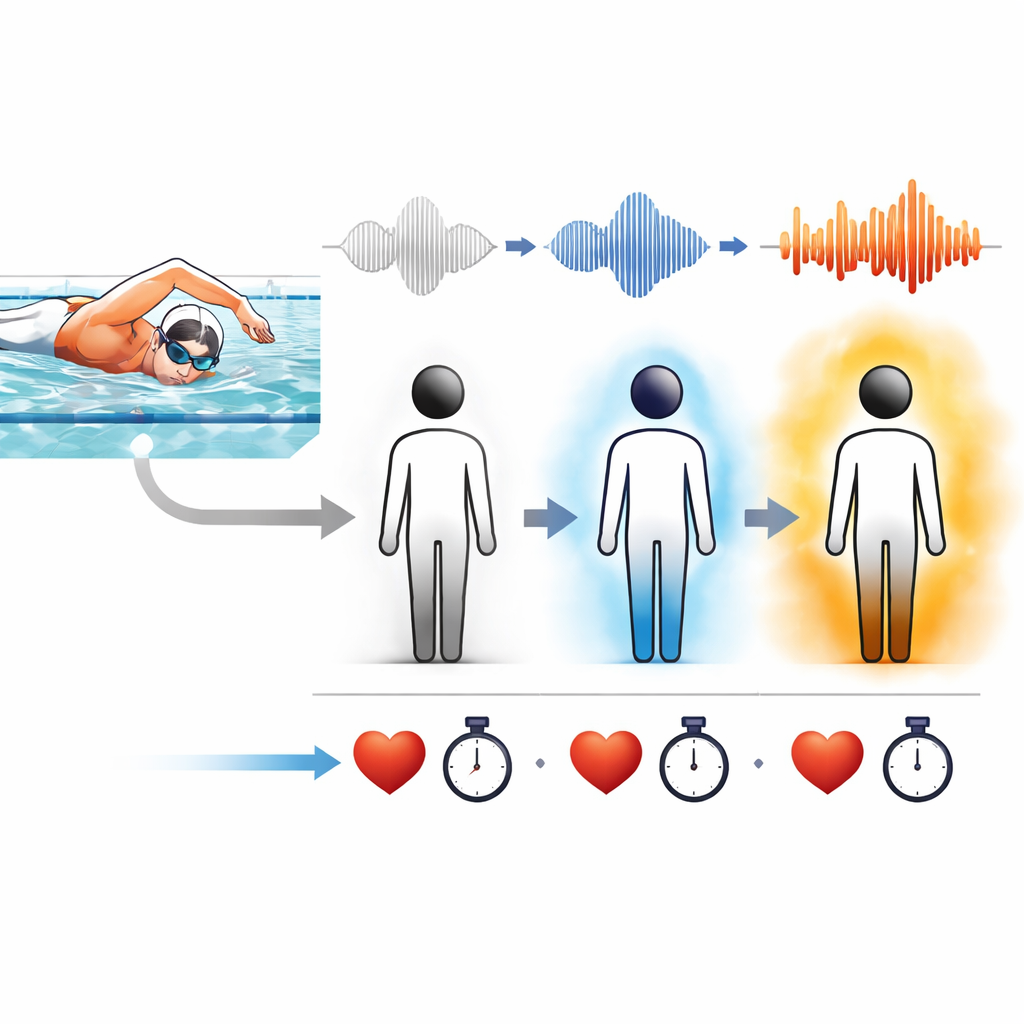
Surprisingly, the tempo of the music did not change how fast or how efficiently the swimmers moved through the water. Stroke rate, how far they traveled with each stroke, overall time, and heart rate all stayed essentially the same whether there was no music, slow beats, or fast beats. The swimmers also reported nearly identical levels of effort across conditions: the swims felt moderately hard regardless of the soundtrack. Where music did make a difference was inside the swimmers’ heads. Fast‑tempo music led to a clear rise in a feeling the researchers call “positive engagement”—a sense of enthusiasm, focus, and being absorbed in the activity. Both slow and fast music also boosted overall enjoyment scores compared with swimming in silence, even though the actual workload did not change.
Why Music Helped Mood but Not Muscles
The results suggest that in the pool, music behaves more like a mood shaper than a performance enhancer. Water muffles and distorts sound, and swimming strokes are harder to synchronize to a beat than, say, running steps or cycling revolutions. The swimmers in this study did not reliably match their arm movements to the musical tempo, which may explain why speed and efficiency did not improve. Instead, music likely drew attention away from the monotony of lap swimming and toward a more pleasant inner experience. Fast beats, in particular, appear to energize feelings of excitement and involvement, while even the slow beats made the session feel more enjoyable than no music at all.
What This Means for Everyday Swimmers
For recreational swimmers and coaches, the take‑home message is encouraging: music in the pool can make training feel emotionally richer without demanding more from the body. If the goal is to build a habit, stay motivated, or simply look forward to getting in the water, choosing music—especially at a quicker tempo that feels personally appealing—may help swimmers feel more engaged and enjoy their sessions more, even if their stopwatch times do not budge. In other words, music might not turn you into a faster swimmer overnight, but it can make the laps more satisfying, which is often the key to coming back to the pool again and again.
Citation: Cao, Y., Cui, C., Zeng, W. et al. Tempo influences affective responses and perceived exertion during musical self-selected swimming in a randomized crossover trial. Sci Rep 16, 9259 (2026). https://doi.org/10.1038/s41598-026-39356-z
Keywords: swimming, exercise motivation, music tempo, perceived exertion, exercise enjoyment