Clear Sky Science · en
The cortical and subcortical brain regions influence multitasking skills using immersive virtual reality simulation in experienced nurses
Why this matters for everyday hospital care
When you picture a busy hospital ward, you might imagine nurses constantly switching between patients, alarms, and urgent calls. This study asks a simple but important question: how does the brain of an experienced nurse handle all that multitasking differently from a student nurse’s brain, and can immersive virtual reality help us understand and train these skills more safely?
Stepping into a virtual hospital
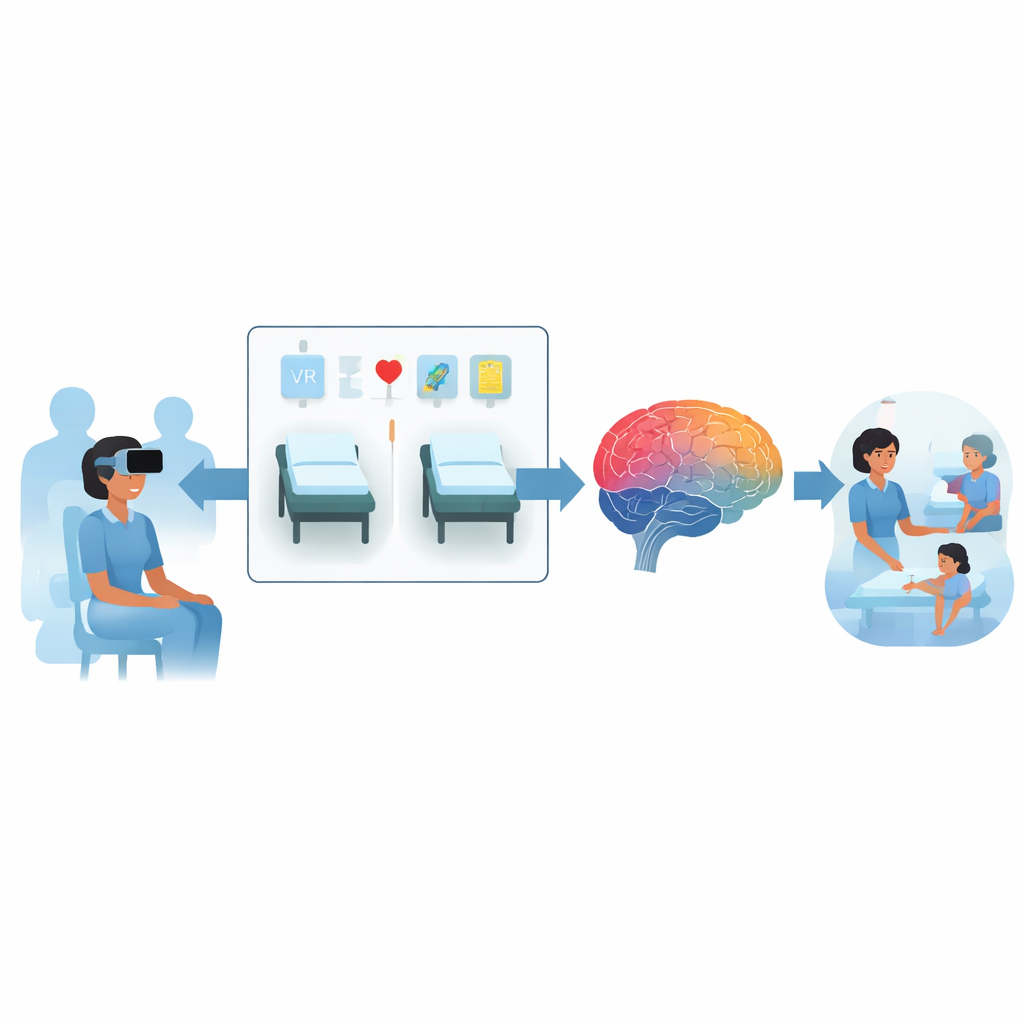
To explore this, researchers invited experienced nurses and senior nursing students to step into a virtual hospital using an immersive virtual reality headset. In this digital ward, each participant took the role of a nurse facing two realistic scenes. In the first, a nurse was checking a post‑surgery patient’s temperature when an intercom call reported another patient’s leaking ostomy pouch. In the second, a patient requested a clothing change but also showed sweating and discomfort. In both scenes, participants had to quickly choose which task to handle first and how to respond, mirroring the split‑second priority decisions nurses make every day.
Listening to decisions inside a brain scanner
Right before and right after this virtual reality session, the same participants lay in an MRI scanner while listening to audio versions of the very same scenarios. With their eyes covered, they heard the situations and choices and then gave their decisions out loud. This setup allowed scientists to track changes in brain activity tied to multitasking, clinical reasoning, and decision‑making without the visual distraction of the headset. Importantly, experienced nurses and students performed similarly on the decision questions: both groups generally chose safe and reasonable options. The main differences did not show up in the scores, but in how their brains tackled the challenge.
How experienced and novice brains work differently
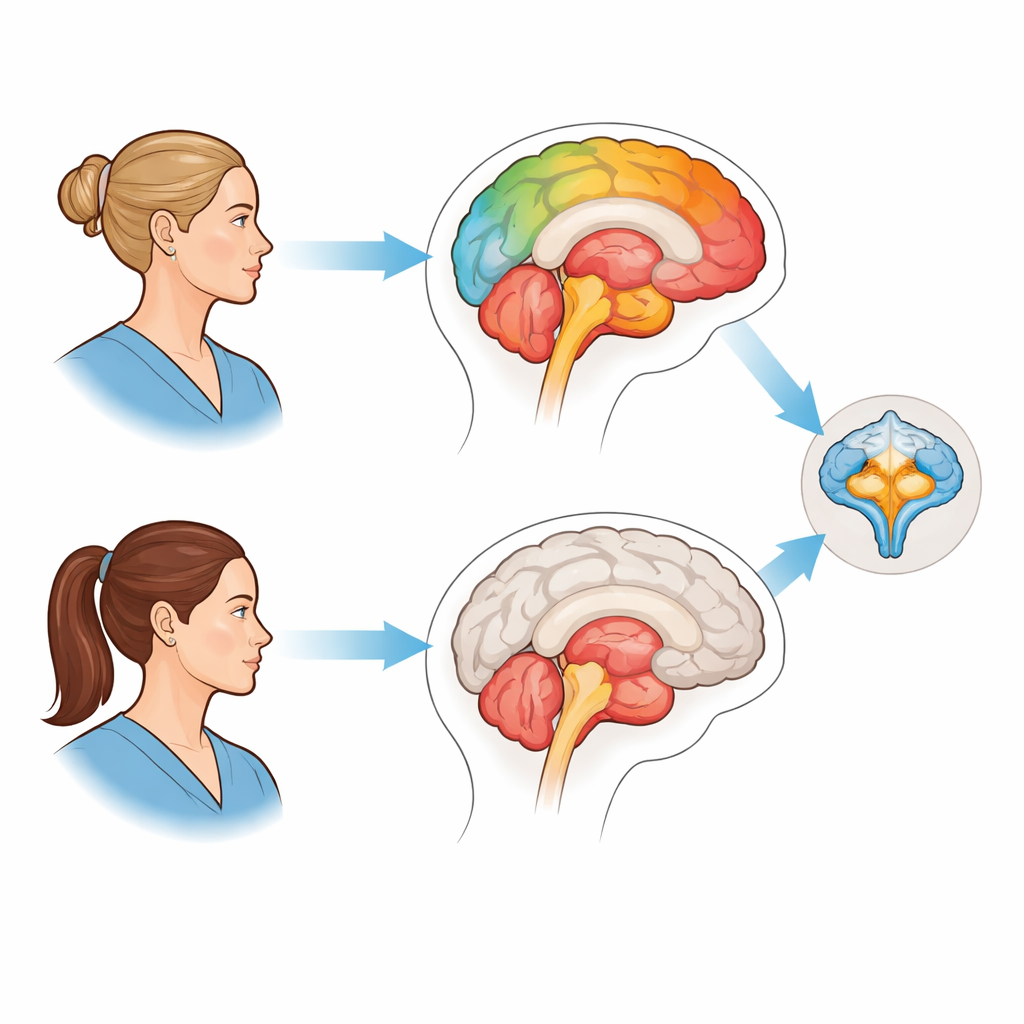
Brain scans showed that experienced nurses drew on a broad network of outer and inner brain regions when handling multitasking decisions. They engaged areas near the middle and back of the brain involved in focusing on problems and mentally simulating future outcomes, a deep region called the insula often linked to weighing risks and emotions, and regions along the top of the brain that help plan and imagine actions. At the same time, they also activated a central relay structure called the thalamus, which helps pull together information from many parts of the brain. This pattern suggests that years of practice may encourage nurses to combine problem‑solving, emotional awareness, and action planning into a coordinated response.
How students’ brains are still building habits
Nursing students showed a different pattern. Their brain activity was concentrated mainly in deeper structures known as the basal ganglia, along with the same thalamus hub seen in experienced nurses. These inner regions are often linked to habit formation and learning new skills—like rehearsing a new dance step or a new sports move. In other words, students appeared to rely more on building and applying fresh routines for handling the scenarios, rather than on the richer mix of strategic and emotional processes seen in experienced nurses. Even though their choices were often just as good, their brains were working harder in a more training‑mode style, still shaping the habits that experts later use almost automatically.
What this could mean for training the nurses of tomorrow
Together, these findings suggest that clinical experience does more than improve scores on a test; it reshapes how the brain organizes multitasking under pressure. Experienced nurses call on a wider set of brain regions that help them focus on the most important problems, anticipate what might happen next, and factor in emotional and social consequences. Students, by contrast, lean more on brain systems that support learning and habit building. Immersive virtual reality, combined with brain imaging, could therefore become a powerful tool to design nursing education that speeds this transition—helping students practice complex, realistic scenarios safely while giving educators an objective window into how their brains are developing expert‑like patterns over time.
Citation: dos Santos Kawata, K.H., Ono, K., Lem, W.G. et al. The cortical and subcortical brain regions influence multitasking skills using immersive virtual reality simulation in experienced nurses. Sci Rep 16, 9352 (2026). https://doi.org/10.1038/s41598-026-39355-0
Keywords: nursing multitasking, virtual reality training, clinical decision-making, brain imaging, expertise development