Clear Sky Science · en
Detection of reduced susceptibility of Anopheles Gambiae s.l. to pirimiphos-methyl in Benin
Why this matters for everyday life
Malaria still kills hundreds of thousands of people every year, especially in Africa. One of the main ways to stop the mosquitoes that spread malaria is to spray the inside walls of houses with long‑lasting insecticides. This study from Benin looks at whether a widely used spray, called pirimiphos‑methyl, is starting to fail against local mosquito populations—an early warning that a key line of defense against malaria may be weakening.
How mosquito control is supposed to work
In many African countries, public health programs rely on two tools to keep malaria‑carrying mosquitoes in check: bed nets treated with insecticide and indoor spraying of house walls. In Benin, spraying with pirimiphos‑methyl began in 2013, after older chemicals called pyrethroids started to lose their punch because mosquitoes had evolved resistance. Pirimiphos‑methyl belongs to a different chemical family and was chosen specifically because it could still kill mosquitoes that survived pyrethroids. As the years passed, however, scientists worried that constant use of the same product might again favor the few mosquitoes that can tolerate it, allowing them to multiply and spread.
What the researchers did across Benin
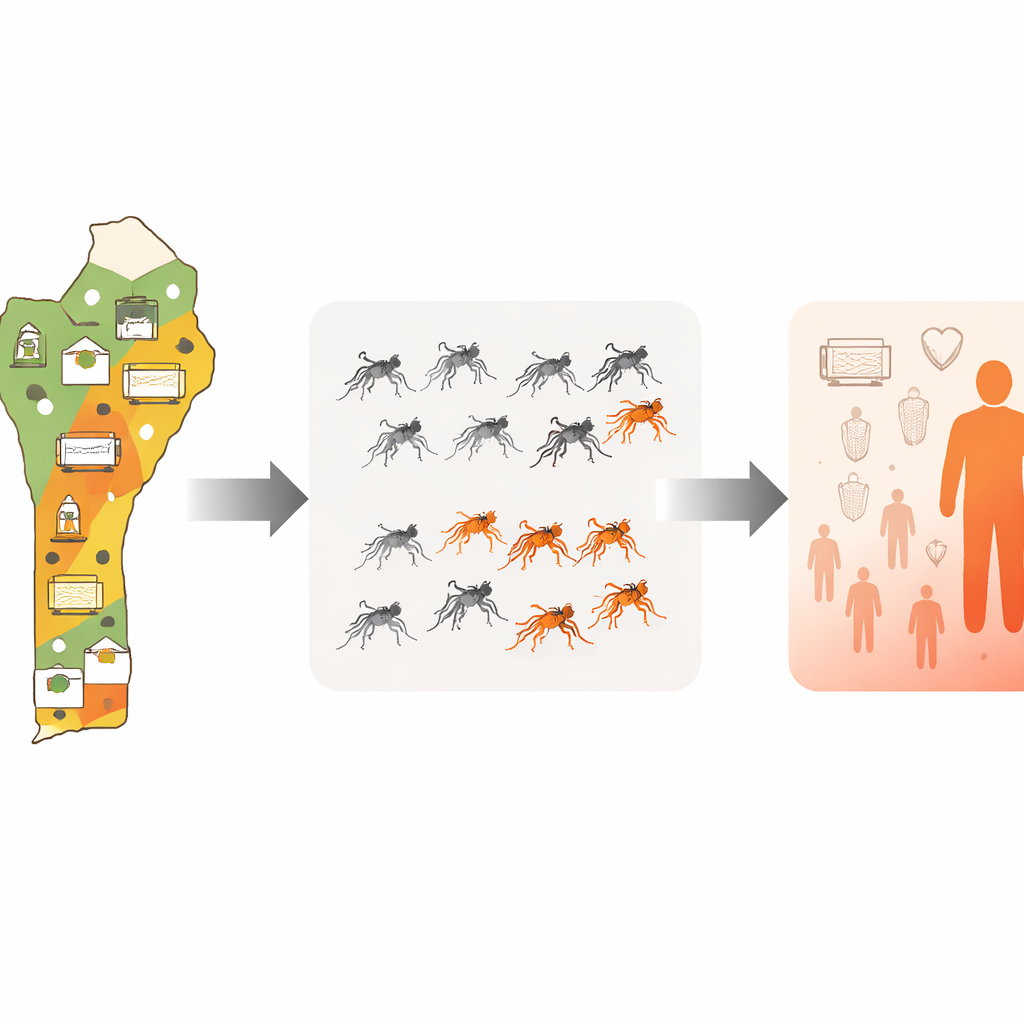
To find out what was happening, the team collected mosquito larvae from water pools and puddles in 20 districts stretching from the coastal south of Benin to the drier north. They raised these larvae into adult female mosquitoes under controlled conditions and then followed World Health Organization test procedures. Groups of mosquitoes were placed for one hour in tubes lined with paper treated with a standard dose of pirimiphos‑methyl, while control groups touched untreated paper. After a day, the scientists counted how many mosquitoes died. At the same time, they extracted DNA from a subset of mosquitoes to identify which closely related species were present and to look for a known genetic change, called Ace‑1R, that can make insects less sensitive to this class of insecticide.
What they discovered about resistance
The results show that full sensitivity to pirimiphos‑methyl is no longer guaranteed. In eight of the 20 districts, almost all mosquitoes still died after exposure, indicating that the product remains effective there. But in another eight districts, death rates dropped into a warning zone, and in four districts they fell below 90 percent—enough for the World Health Organization to consider the mosquitoes resistant. Worryingly, some of these problem areas are places where indoor spraying has been heavily used. Genetic tests revealed three main mosquito species that spread malaria in the region, with two dominant ones present almost everywhere. The Ace‑1R mutation, however, was rare, suggesting that other, more subtle biological tricks—such as boosted detoxification enzymes—are probably helping mosquitoes survive.
Why the pattern varies from place to place
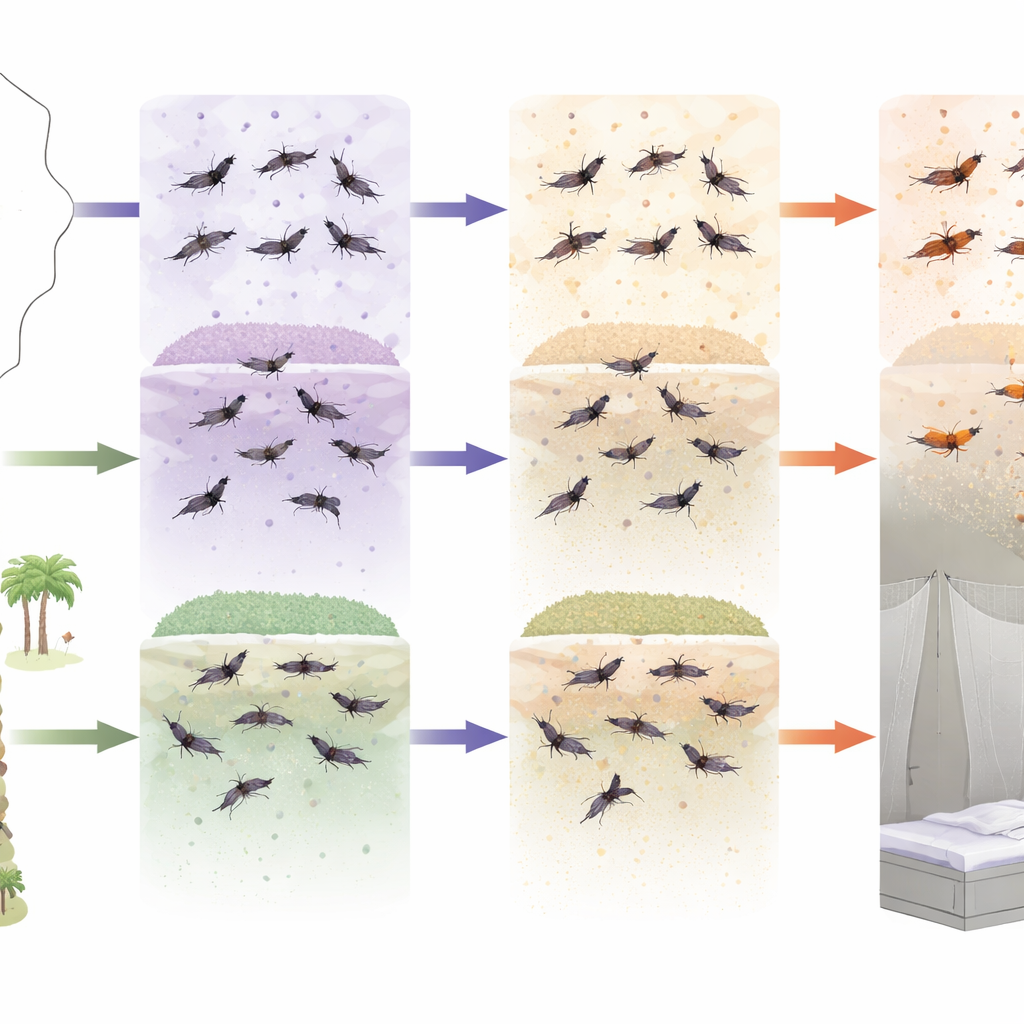
Resistance was not evenly spread across the country. Districts with intense farming, especially those growing cotton, maize, and vegetables, often showed lower mosquito death rates. In these areas, farmers frequently apply insecticides to their crops, including chemicals related to those used for public health. Mosquito larvae developing in nearby water can be exposed to these farm chemicals, unintentionally training them to withstand similar products sprayed inside homes. This overlap between agriculture and public health raises the risk that valuable mosquito‑control tools will wear out more quickly than expected.
What this means for future malaria control
For non‑specialists, the take‑home message is that the mosquitoes are adapting, and a once‑reliable spray is beginning to lose force in parts of Benin. The study is the first to clearly document this trend for pirimiphos‑methyl in the country. The authors argue that health authorities should not wait until failure is widespread. Instead, they recommend closer, routine tracking of mosquito sensitivity, switching or rotating to newer insecticides like clothianidin or chlorfenapyr, and combining tools such as improved bed nets with updated spraying strategies. In simple terms, to keep ahead of malaria, we must keep changing our tactics as the mosquito changes, using evidence from studies like this one to guide each step.
Citation: Hougbe, S.Z., Ossé, R.A., Kpanou, C.D. et al. Detection of reduced susceptibility of Anopheles Gambiae s.l. to pirimiphos-methyl in Benin. Sci Rep 16, 7926 (2026). https://doi.org/10.1038/s41598-026-39346-1
Keywords: malaria, mosquito resistance, indoor residual spraying, pirimiphos-methyl, Benin