Clear Sky Science · en
Metapanax delavayi extract as a neurocutaneous modulator via CRHR1/POMC/MC1R signaling
Why your skin and mood are connected
Many people describe their skin as "sensitive"—easily turning red, prickly, or itchy after heat, cosmetics, or even stress. This study explores an intriguing idea: that a traditional edible plant, Metapanax delavayi, may help calm both irritated skin and stress-related signals in the body. By looking at nerve cells, skin cells, and tiny zebrafish, the researchers show how an extract from this plant might ease stinging and redness while also dialing down stress hormones. 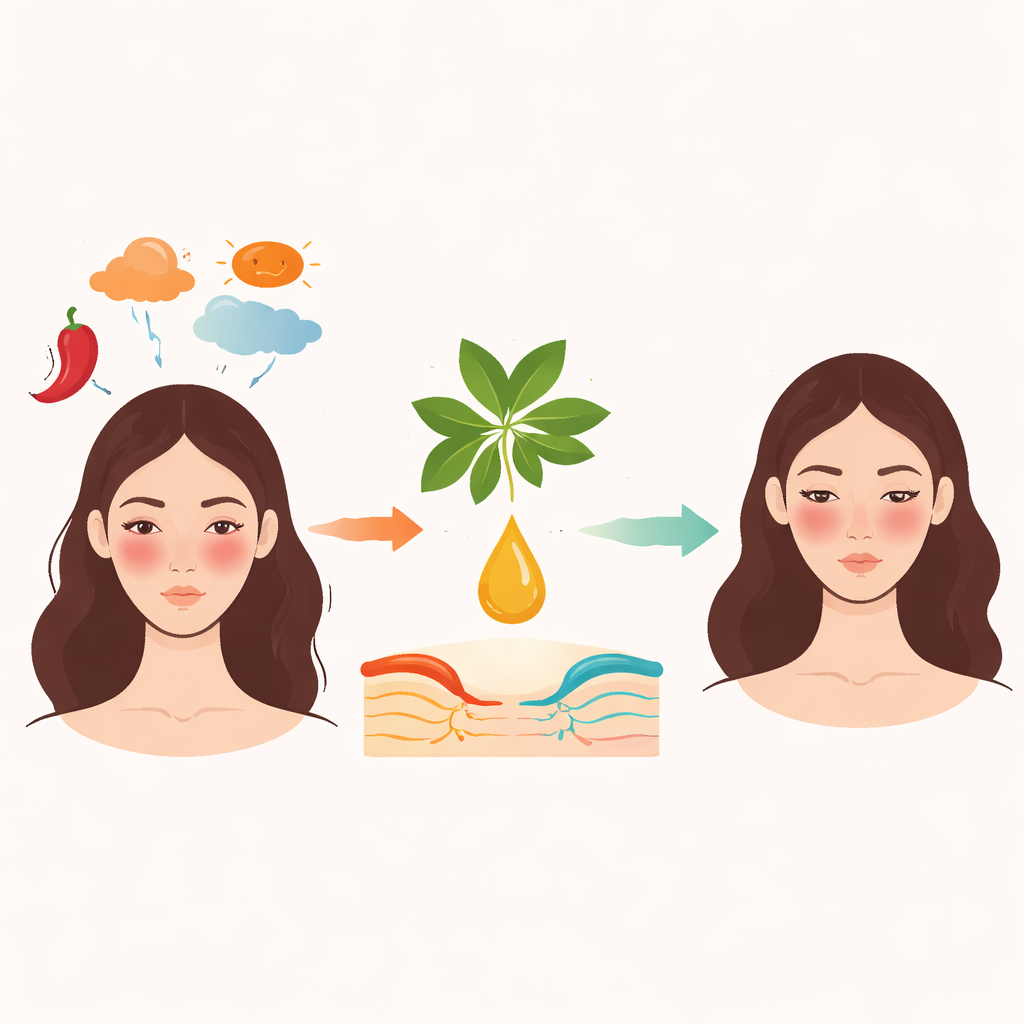
A plant from the mountains meets modern science
Metapanax delavayi grows in parts of China and Vietnam, where it has long been used as a herbal tea and wild vegetable for clearing heat and easing aches. The team first prepared an extract from its leaves and analyzed its chemical makeup. They found several well-known plant compounds—hyperoside, chlorogenic acid, and two forms of isochlorogenic acid—that are already linked to anti-inflammatory and nerve-protective effects. This gave a strong hint that the extract might be able to calm overactive skin nerves and reduce irritation.
Quieting irritated nerves that make skin sting
Sensitive skin often starts with overexcited nerve endings that sit right under the surface. To mimic this, the researchers used human nerve-like cells and switched on a key "hot and spicy" sensor called TRPV1 using capsaicin, the ingredient that makes chili peppers burn. When this sensor is triggered, cells flood with calcium and release signaling molecules that the brain reads as pain, itch, or burning. The Metapanax extract sharply reduced TRPV1 activity, cut the calcium surge, and lowered the production of several nerve messengers, including substance P, CGRP, and NGF. Together, these changes point to a strong ability to dampen nerve-driven discomfort.
Soothing the skin’s stress and inflammation loop
The skin does not just sense the outside world; it also mirrors our emotional state. Stress hormones such as cortisol can thin the skin barrier and amplify redness, while natural painkillers like beta-endorphin can bring relief. In nerve cells, the extract lowered genes that make cortisol and boosted those that help break it down, leading to less cortisol and more beta-endorphin. In a separate set of experiments, the team turned to human skin cells and stimulated them with substance P, a messenger that links nerves to inflammation. This caused the cells to release classic inflammatory molecules associated with redness and swelling. Metapanax extract not only proved safe for these cells but also reduced their inflammatory signals, suggesting direct protection for the skin surface.
A skin-based stress switch that the plant extract can turn down
Deep in the skin lies a miniature version of the body’s stress axis, built around three key players: CRHR1, POMC, and MC1R. Together, they act like a local control panel that senses stress, releases small hormone-like fragments, and influences pigment, immunity, and inflammation. The researchers found that nerve activation and heat stress strongly turned up this pathway in both nerve cells and zebrafish. When treated with the plant extract, expression of CRHR1, POMC, and MC1R dropped, and heat-stressed zebrafish swam less frantically and showed lower levels of nerve messengers. Computer docking studies further suggested that the main plant molecules can physically bind to CRHR1, hinting that they may directly interfere with this stress switch. 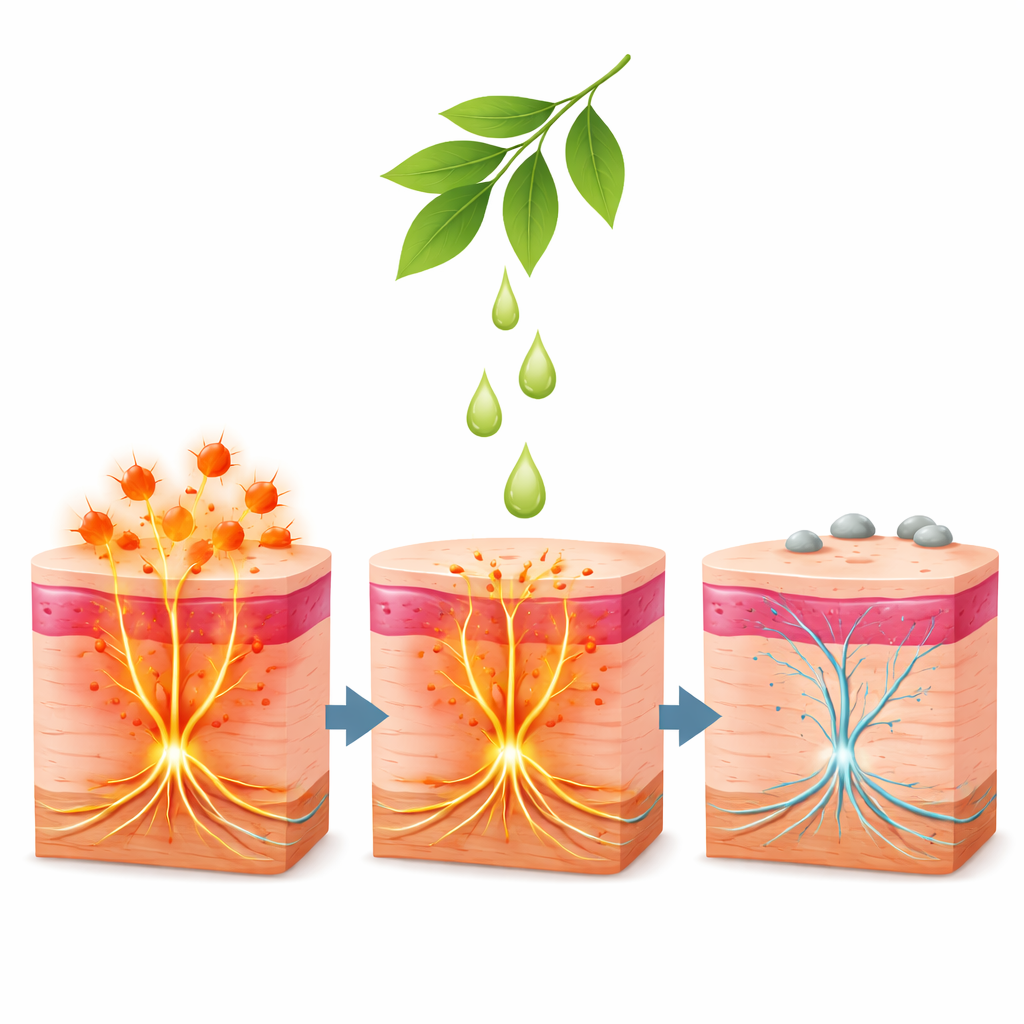
What this could mean for people with sensitive skin
Taken together, the findings indicate that Metapanax delavayi extract acts on two tightly linked fronts: it calms the nerve signals that drive stinging and itch, and it softens the skin’s own stress response, including cortisol production and inflammatory molecules. For everyday life, this points to a future in which skincare products might not just moisturize the surface, but also gently rebalance the skin–nerve–stress network underneath. While more work in humans is needed, this plant extract emerges as a promising natural ingredient for people whose skin reacts strongly to stress, heat, or minor irritation.
Citation: Zhu, A., Liu, J., Liu, Y. et al. Metapanax delavayi extract as a neurocutaneous modulator via CRHR1/POMC/MC1R signaling. Sci Rep 16, 7851 (2026). https://doi.org/10.1038/s41598-026-39343-4
Keywords: sensitive skin, plant-based skincare, neurogenic inflammation, stress and skin, natural anti-inflammatory