Clear Sky Science · en
Thermoregulatory strategies in the heat varies among Australian insectivorous bats
Why hot days matter for small night fliers
Heatwaves are becoming more frequent and intense, and they are especially hard on small animals that lose water quickly and can easily overheat. In Australia’s semi‑arid woodlands, tiny insect‑eating bats spend the day hidden in tree hollows or under strips of bark, where temperatures can soar above those outside. This study asks a simple but crucial question: how do different bat species, and even males and females of the same species, keep cool and hydrated when the heat is on—and what does that mean for their survival as the climate warms?
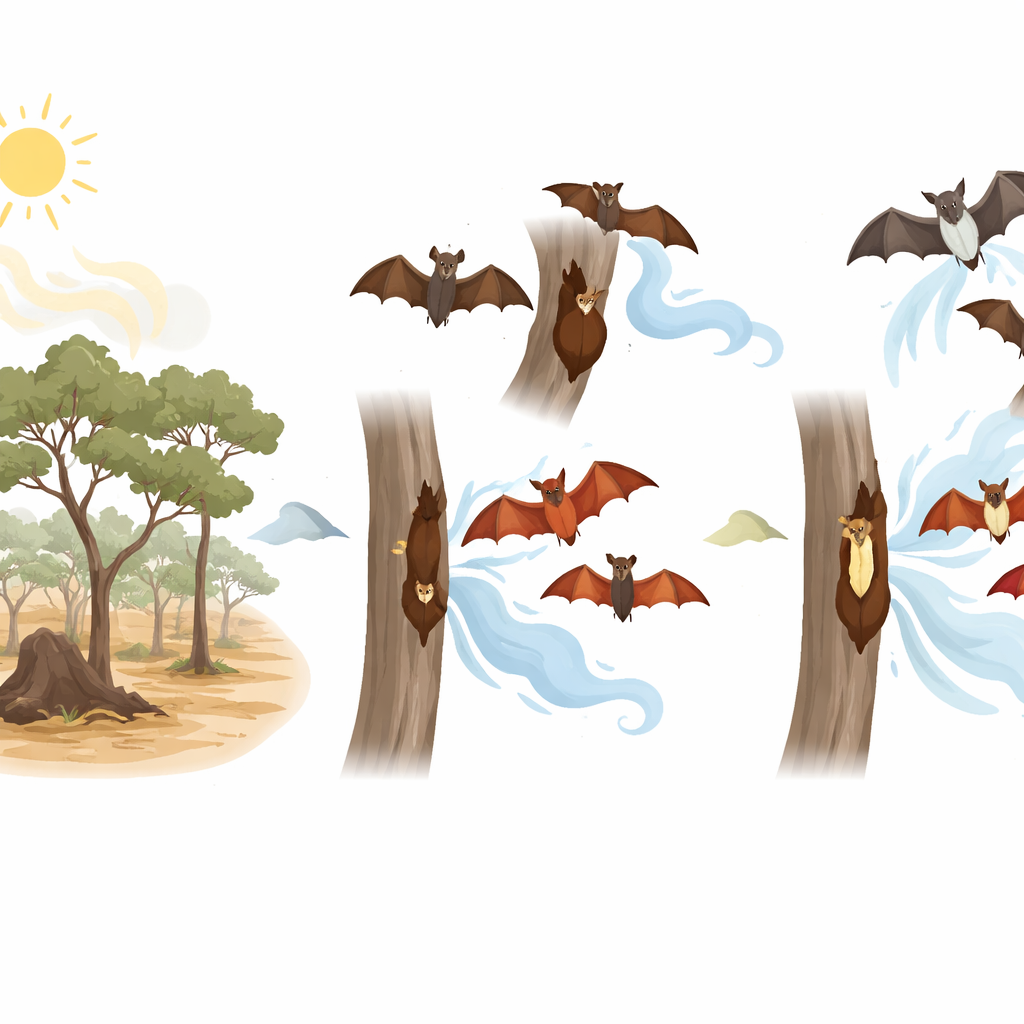
Different bat homes, different heat challenges
The researchers focused on five common Australian insect‑eating bats that all roost in trees but use them in different ways. Some species, such as Gould’s wattled bat and the inland free‑tailed bat, live inside enclosed tree hollows that are relatively shaded and insulated. Others, including the lesser and south‑eastern long‑eared bats, often roost beneath loose bark that is exposed to direct sun and tends to heat up and cool down more dramatically over the day. Because roost temperatures shape how much heat and dryness bats must cope with, the team predicted that bats from hotter, less sheltered roosts would have evolved higher heat tolerance and more powerful cooling abilities than those from cooler, more buffered hollows.
Measuring breath, sweat, and body warmth
To test this idea, the scientists captured bats from a semi‑arid floodplain in South Australia during the summer. In a field lab, they placed each bat in a small chamber where air temperature was gradually raised from a comfortable level up toward the extremes that bats might face in nature. Sensitive instruments tracked how much oxygen each bat used (a measure of energy use), how much water vapor it breathed or panted out (its evaporative cooling), and a tiny implanted sensor tracked its body temperature just under the skin. Experiments stopped as soon as a bat showed signs of distress, which defined its personal heat tolerance limit. This allowed the team to compare how species and sexes differed in the temperatures they could withstand and the cooling tactics they used.
How species share the heat load
All five bat species tolerated surprisingly high temperatures: many individuals remained stable at air temperatures around 46 °C, and some reached 48 °C, with body temperatures above 44 °C. These levels are similar to heat‑hardy bats in deserts on other continents, showing that Australian bats are equally tough. Yet the way they managed heat differed. Species associated with hotter, less protected bark roosts showed higher heat tolerance and could dump more of their internal heat through evaporation when needed. Others, like the inland free‑tailed bat that favors cooler hollows, began ramping up evaporative cooling at lower temperatures, essentially starting to “sweat” earlier. Very small bats such as the little forest bat seemed to allow their body temperature to track the hot air more closely, delaying heavy evaporative cooling until the heat became extreme—likely a water‑saving strategy that gambles with short bursts of very high body temperature.
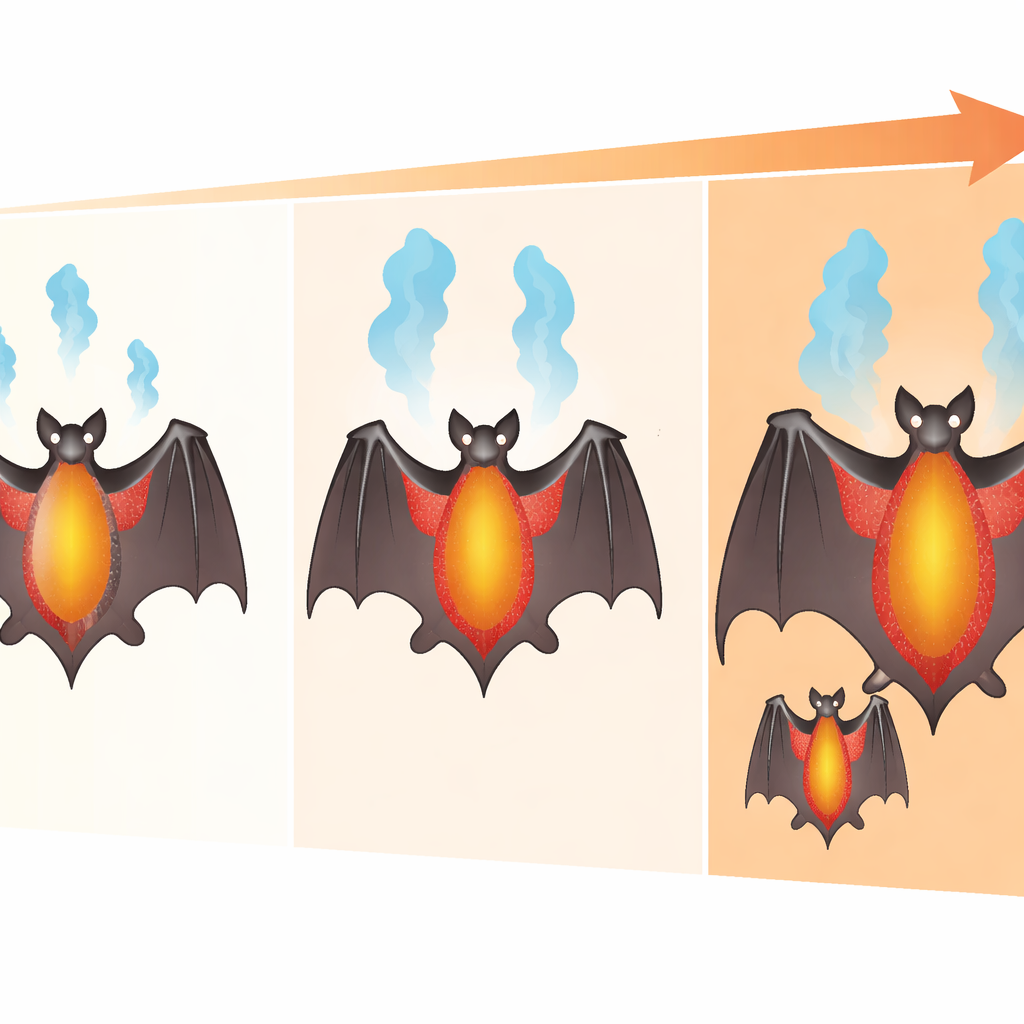
Females walk a finer line between heat and thirst
The study also compared males and females in three species. Females tended to be more likely to tolerate the highest test temperatures, echoing earlier work from other regions. Importantly, females of two species—the little forest bat and the lesser long‑eared bat—waited until higher air temperatures before turning on strong evaporative cooling, suggesting they are more sparing with their water loss. At first they kept their water use lower than males; only at the very hottest temperatures did some females sharply increase evaporative cooling to shed dangerous levels of body heat. This pattern fits with the demands of motherhood: in summer, females gather in crowded, warm maternity roosts and must also reserve water for producing milk, so there is strong pressure to stretch limited water supplies without succumbing to overheating.
What these findings mean for bats in a warming world
Together, the results show that both the choice of daytime shelter and sex‑specific lifestyles leave clear fingerprints on how bats cope with heat. Bats from hotter, more variable roosts are generally better equipped to endure severe heat and boost evaporative cooling, while females often push their tolerance further and use water more carefully than males. However, these strategies have limits. As climate change brings more intense heatwaves and greater fire risk, bats that use exposed bark or very small species with little water in reserve could face increasing danger from dehydration and lethal overheating, as well as loss of key roost trees. Identifying and protecting roost sites that provide cooler, more stable microclimates will be essential if these night‑time insect controllers are to persist in a hotter, drier future.
Citation: de Mel, R.K., Baloun, D.E., Baniya, S. et al. Thermoregulatory strategies in the heat varies among Australian insectivorous bats. Sci Rep 16, 9314 (2026). https://doi.org/10.1038/s41598-026-39338-1
Keywords: bats, heat tolerance, evaporative cooling, roost microclimate, climate change