Clear Sky Science · en
Synergistic effects of ABCG2 Q141K variant in combination with alcohol consumption and male sex on gout risk in a rare-event Taiwanese cohort
Why this study matters for everyday health
Gout is often seen as an old-fashioned disease, but it is increasingly common and can seriously affect quality of life. This study looks at why some people with high uric acid in their blood go on to develop painful gout attacks while others do not. Focusing on a Taiwanese population, the researchers show how a specific gene change, being male, and drinking alcohol can combine to sharply raise gout risk, and they test a more reliable way to measure that risk when actual gout cases are rare in a dataset.
A closer look at gout and its hidden triggers
Gout is a form of arthritis caused by needle-like crystals of uric acid collecting in joints, often in the big toe. Many people have high uric acid, but only about one in ten ever develops gout, suggesting that other factors help tip the balance. The study highlights three major influences: inherited differences in how the body removes uric acid, lifestyle habits such as drinking alcohol, and simple traits like being male. In Taiwan and other East Asian populations, gout and high uric acid are especially frequent, making this a pressing public health issue.
The gene that acts like a uric acid gate
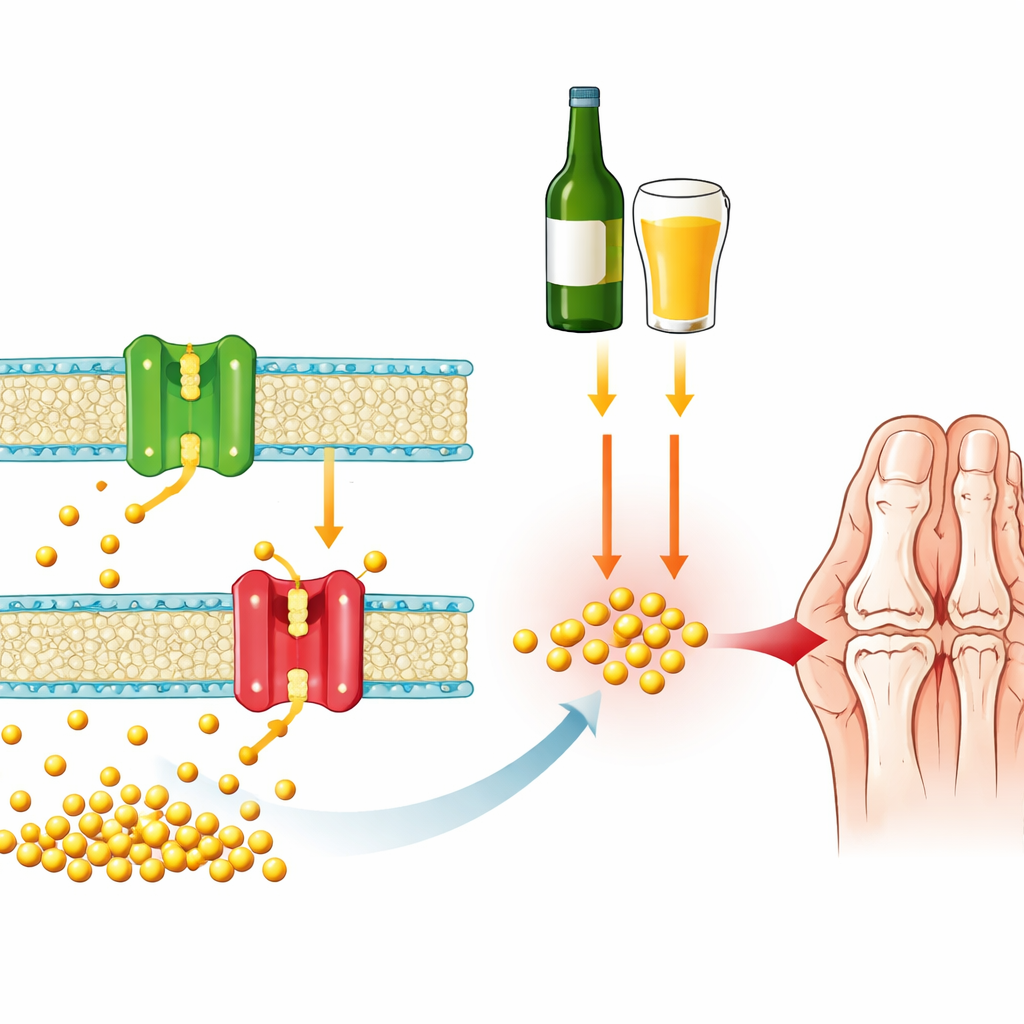
The work focuses on a gene called ABCG2, which helps pump uric acid out of the body through the kidneys and intestines. A common version of this gene, called Q141K, weakens this pump, so uric acid tends to build up. In this health-fair study of 324 volunteers, about 28 percent of ABCG2 gene copies carried the weaker version, while another, much rarer defect (Q126X) was almost never seen. When the researchers grouped people by how well their ABCG2 gene should work, they found that those with only half the usual function had several-fold higher odds of having gout than those with full function, even in this small sample.
How sex and drinking pile onto genetic risk
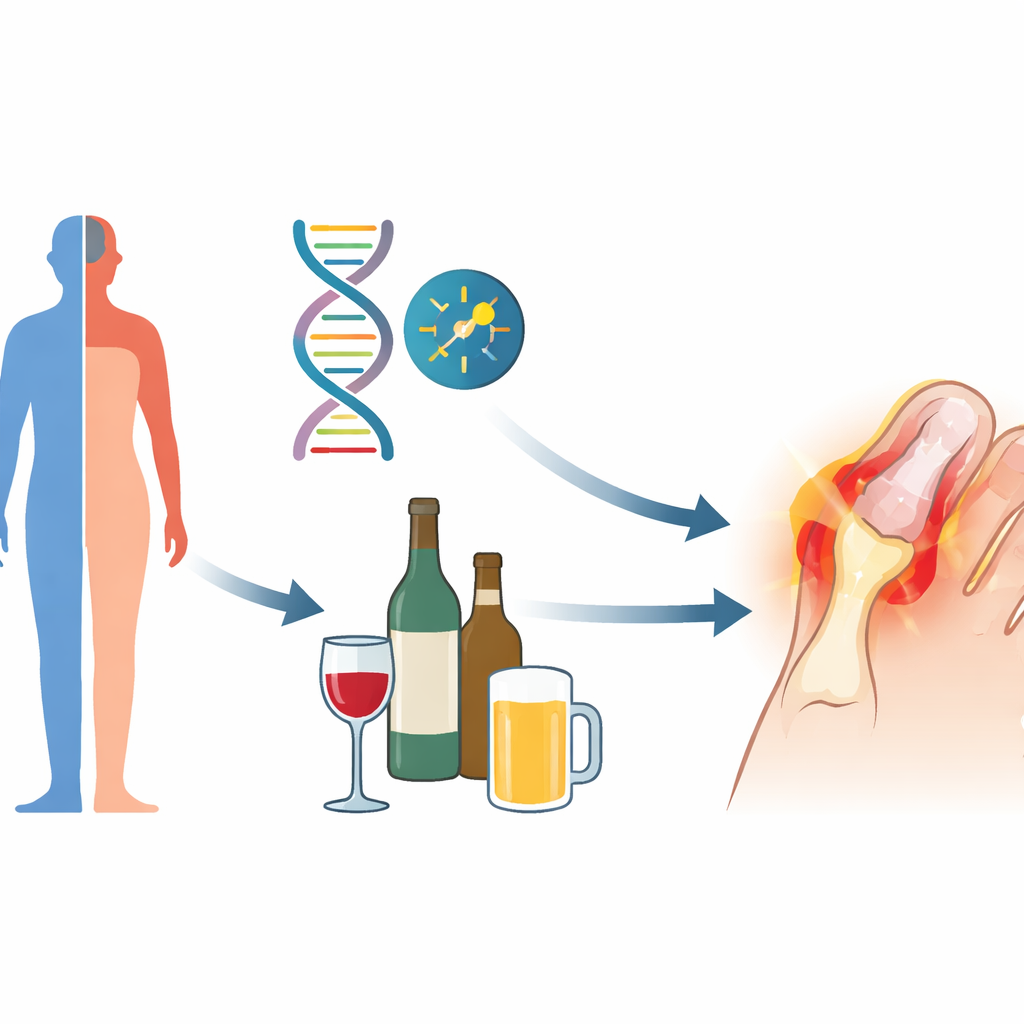
The strongest single signal was being male. Men in the study were roughly nine times more likely to have gout than women, mirroring the male dominance of the disease worldwide. Alcohol added more risk. People who reported even infrequent drinking (no more than once a week) had about five times the odds of gout compared with non-drinkers, after accounting for age, sex, and ABCG2 status. When reduced ABCG2 function was combined with male sex or alcohol use, the joint risk appeared greater than simply adding the individual risks. Although the numbers were too small to prove interaction with high precision, the pattern suggested that genes, sex, and drinking can work together in a harmful way.
Making statistics work when cases are rare
Because only 15 of the 324 participants had gout, standard statistical methods can easily exaggerate risk estimates or even fail when certain combinations of traits occur only in one group. The team therefore used a technique called Firth-corrected logistic regression, which gently penalizes extreme estimates and is designed for small, unbalanced datasets. This approach pulled some very high initial risk numbers down to more realistic levels—for example, lowering the alcohol-related odds from about eightfold to about fivefold—while still showing clear patterns. When the researchers tested their model using repeated internal resampling, it continued to distinguish gout cases from controls well, with a performance score (AUC) above 0.8, which is considered strong for prediction.
What this means for prevention and future care
For a lay reader, the take-home message is simple: in this Taiwanese group, men who carried a weaker version of the ABCG2 gene and who drank alcohol were much more likely to have gout than people without this combination. The study also shows that careful statistical methods are crucial when researchers work with rare outcomes or small samples, so that risk is not overstated. While the authors stress that their findings need confirmation in larger groups, the results support the idea that a mix of modest genetic testing and lifestyle counseling—especially about alcohol use and weight control—could help identify people at high risk and prevent painful gout attacks before they start.
Citation: Lai, ZL., Hung, YH., Su, YD. et al. Synergistic effects of ABCG2 Q141K variant in combination with alcohol consumption and male sex on gout risk in a rare-event Taiwanese cohort. Sci Rep 16, 9323 (2026). https://doi.org/10.1038/s41598-026-39327-4
Keywords: gout, uric acid, ABCG2 gene, alcohol consumption, genetic risk