Clear Sky Science · en
Effects of single and mixed metal exposure on neurocognitive health and quality of life among adults from Bihar India
Why everyday metals matter for the mind
Many of us think of heavy metals as something confined to factories or polluted rivers, far removed from daily life. This study shows that the story is far more personal: in parts of Bihar, India, people are constantly exposed to a cocktail of metals through water, food, and the local environment, and this silent exposure is linked to how clearly they think and how well they live day to day.
People, place and a hidden chemical burden
Researchers examined 218 adults from five districts in Bihar, an area known for metal contamination in the Ganga river basin. Instead of focusing on one pollutant at a time, they measured thirteen different metals and metalloids, including arsenic, chromium, cobalt, selenium, lead, cadmium, and uranium. To capture longer-term exposure, they analyzed hair samples, which record months of contact with these substances. At the same time, they tested memory and thinking using a standard clinical tool and asked detailed questions about physical health, mood, social life, and living conditions to gauge overall quality of life. 
Measuring thinking skills and daily wellbeing
The team used the Montreal Cognitive Assessment to screen how well people remembered words, focused attention, solved simple problems, and oriented themselves in time and place. Scores can range from 0 to 30, with 26 or higher usually considered normal. In this group, over a third of participants met criteria for cognitive impairment. The researchers also applied the World Health Organization’s brief quality-of-life survey, which looks at four areas: physical health (such as pain, fatigue, and sleep), psychological health (such as feelings and concentration), social relationships, and the quality of the surrounding environment, including safety and access to transport.
When more metals mean cloudier minds
After converting metal levels to a form suitable for statistical analysis, the scientists found a clear pattern: higher concentrations of nearly all measured metals in hair were linked to lower thinking scores. Arsenic, cesium, selenium, and vanadium showed particularly strong negative relationships, with increases in these metals associated with sharp drops in cognitive performance. When the researchers used advanced models designed to handle mixtures of pollutants, arsenic, cobalt, and chromium consistently emerged as the most influential substances dragging down thinking scores. A model that considered all thirteen metals together suggested a substantial combined effect, far larger than one would expect from any single metal alone.
Everyday functioning suffers alongside memory
Thinking problems rarely occur in isolation, and this study reflected that reality. People with poorer cognitive scores also reported worse quality of life in nearly every domain. Lower scores on memory and attention went hand in hand with more physical complaints, worse mood, strained social relationships, and less satisfying living conditions. Several metals, especially arsenic, cesium, selenium, and vanadium, were strongly tied to worse physical and psychological wellbeing and showed weaker but still notable links to social difficulties. The researchers also saw differences by body weight and district, with underweight individuals and residents of certain areas faring worst, hinting that nutrition and local environmental conditions may shape the impact of metal exposure. 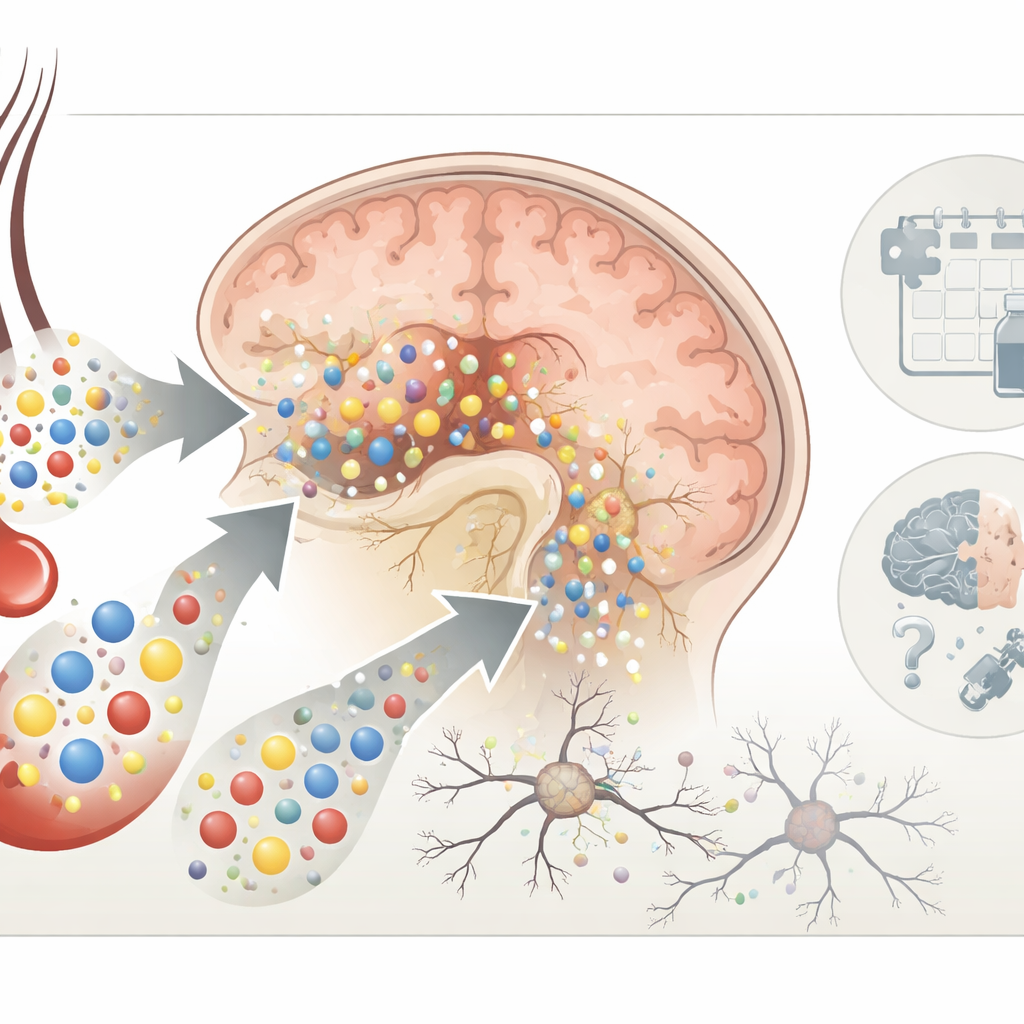
What this means for communities and health
Put simply, the study shows that living with a steady stream of multiple metals in the environment can dull thinking and erode everyday wellbeing, even in adults who may not consider themselves sick. In Bihar, chronic exposure to arsenic, cobalt, chromium, and other metals appears to be an important, modifiable factor linked to cognitive decline and reduced quality of life. The authors argue that regular clinical monitoring of metal exposure, safer water and food systems, and long-term follow-up studies are urgently needed, both to protect at-risk communities and to better understand how mixtures of pollutants, rather than single substances, shape brain health over time.
Citation: Kumar, V.U., Pandey, K., Kumar, A. et al. Effects of single and mixed metal exposure on neurocognitive health and quality of life among adults from Bihar India. Sci Rep 16, 7887 (2026). https://doi.org/10.1038/s41598-026-39326-5
Keywords: heavy metal exposure, cognitive impairment, arsenic contamination, environmental health, quality of life